Best Exterior RV Accessories (2026)
A practical review of RV covers, tire protectors, roof vent covers, and awning lighting – exterior accessories that protect your rig from UV damage and weather, and improve usability at the campsite.
The exterior of an RV takes more sustained punishment than almost any other part of the rig. UV radiation degrades tires, decals, and rubber seals. Rain finds its way into any opening left unprotected. Road debris chips paint and lenses. And the sheer exposure that comes with parking a large vehicle outside for months at a time adds up in ways that are easy to underestimate until a repair bill arrives.
Exterior RV accessories are the products that attach to or cover the physical surfaces of the rig itself – protecting what is already there and extending the life of the materials beneath. This guide focuses on four categories that address real, recurring problems: full RV storage covers, tire UV protectors, roof vent covers, and entry step upgrades. For each, we explain what the product does, what to look for, and which specific option is commonly recommended in each category. If you are building out your RV setup beyond exterior upgrades, our Best RV Accessories guide covers the broader categories RV owners commonly prioritize, including electrical, water, leveling, storage, and safety gear.
If you are still working out which exterior accessory categories matter most for your rig before choosing specific products, the Exterior RV Accessories Guide covers the full range – RV covers, tire protection, roof vent covers, slide-out accessories, awning accessories, and entry upgrades – in category-level detail without product recommendations.
Quick Picks
Four commonly recommended exterior accessories across four categories. Jump to a full review using each card link.
These four products were selected because they address the most common exterior RV problems: UV damage to tires and surfaces, general weather exposure during storage, rain intrusion through roof vents, and safe and comfortable RV entry. Each covers a distinct problem area, so together they represent a practical starting point for most owners rather than overlapping in function.
How We Chose These Products
The four products in this guide were selected by evaluating each against the factors that matter most for exterior RV accessories. No single product is right for every rig or situation – these are widely used options in each category, not universal endorsements.
-
Weather and UV protection Does the product materially reduce UV exposure, moisture intrusion, or both? Protection accessories that only address one of these two main threats score lower than those that address both.
-
Ease of installation and use Products requiring professional installation or complex setup are noted. Accessories that most owners can deploy without tools or special skills are given weight when options are otherwise similar.
-
RV compatibility Exterior accessories are highly size- and configuration-dependent. Products available across a wide range of sizes or with clear fit guidance score better for general recommendation.
-
Long-term value Cost per year of useful life is more meaningful than sticker price alone. A durable cover at a higher price point often represents better value than a cheaper one that degrades within a season or two.
-
User feedback patterns We reviewed publicly available owner feedback to identify recurring strengths and concerns. Patterns in feedback – not individual reviews – informed which products to include and what to flag.
-
Maintenance requirements Accessories that require significant ongoing maintenance reduce their own net value. We note maintenance demands where relevant so readers can factor that into their decision.
Quick Comparison
| Product | Category | Protection Type | Main Purpose | Installation | Best For | Link |
|---|---|---|---|---|---|---|
| ADCO Olefin HD RV Cover | Best RV Cover | UV + Weather | Full exterior protection during storage | No tools required | Outdoor long-term storage | Review |
| Camco Vinyl Wheel & Tire Protectors | Best Tire Protection | UV Protection | UV protection for tire sidewalls | No tools required | All RV types during storage | Review |
| Maxxair II Roof Vent Cover | Best Roof Vent Cover | Ventilation + Rain Protection | Rain-proof roof vent ventilation | Minimal; screwdriver | All-weather ventilation | Review |
| MORryde StepAbove RV Step System | Best Entry Step Upgrade | Entry Safety | Safer, more stable RV entry step system | Moderate; hardware required | Travel trailers and fifth wheels | Review |
Verify all specifications, sizing, and compatibility details on the current product listing before purchasing.
Detailed Reviews
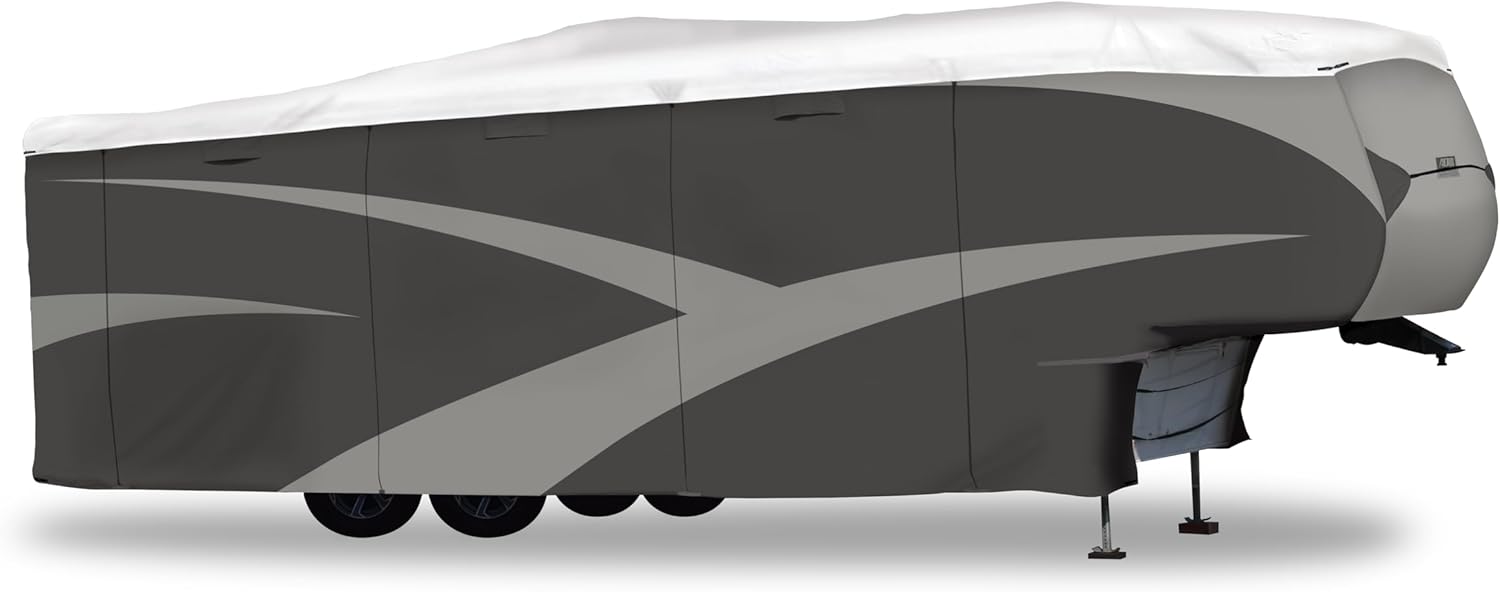
The ADCO Olefin HD RV Cover is one of the more widely referenced storage covers in the mid-to-upper price tier. ADCO has manufactured RV covers for several decades, and the Olefin HD line uses a proprietary multi-layer fabric that combines a polypropylene inner layer, a breathable middle layer, and a woven Olefin outer shell designed to resist UV degradation while allowing moisture vapor to escape. Breathability is an important distinction – a cover that traps moisture against the RV’s exterior can cause as much damage as no cover at all.
The Olefin HD is available in configurations for travel trailers, fifth wheels, and motorhomes across a wide range of length categories. Sizing is specific, so buyers need to measure the overall length of their rig carefully and match it to the appropriate size range in ADCO’s sizing guide. Roof-mounted equipment such as A/C units and antennas can affect fit and coverage.
ADCO covers are sized by RV length ranges, but the overall height, slide configurations, and roof-mounted equipment on your specific rig also affect fit. Use ADCO’s sizing guide and verify dimensions on the product listing before purchasing.
- Olefin HD outer layer designed for UV and weather resistance
- Breathable multi-layer construction reduces trapped moisture
- Available across a wide range of RV types and lengths
- ADCO is a long-established manufacturer with broad coverage options
- No tools required for installation
- Higher price point than entry-level covers
- Sizing requires careful measurement to avoid poor fit
- Coverage of roof-mounted equipment varies by configuration
- Can be challenging to install solo on larger rigs
and specifications on the product listing.
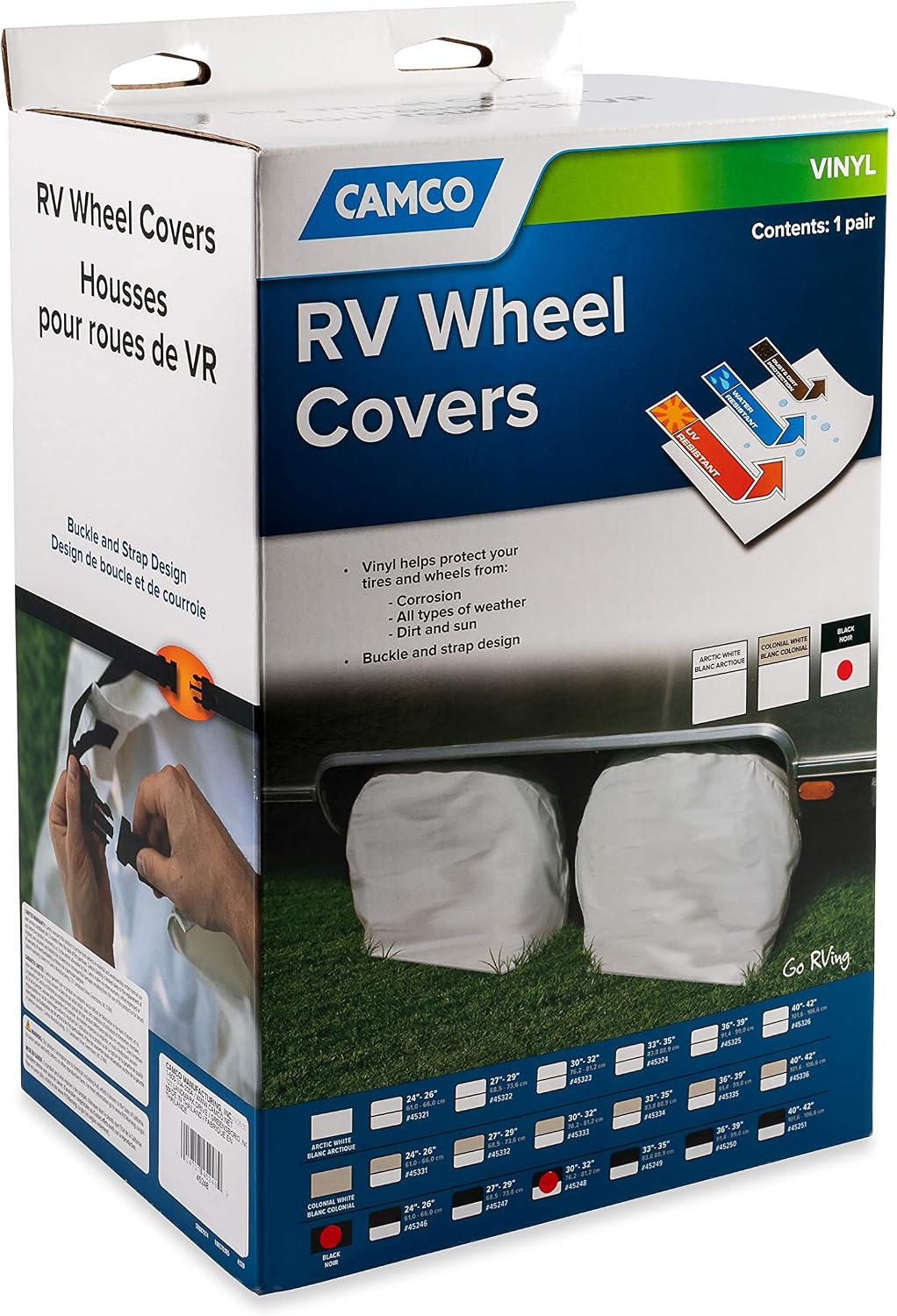
Camco Vinyl Wheel & Tire Protectors are among the most widely available tire covers in the category and are commonly found in campground supply stores and online. The covers are simple in design – fitted vinyl panels with elastic or buckle closures that wrap around the outer face of each tire to block UV from reaching the sidewall. They are not waterproof barriers; their function is specifically UV shielding.
Tire covers address a genuine and often underestimated problem. RV tire sidewalls contain antiozonant compounds that migrate to the surface to resist UV degradation, but this process slows when a tire sits stationary for extended periods. UV-induced sidewall cracking can compromise structural integrity even when tread depth appears adequate – a condition that does not always announce itself visibly until it is significant. Covering tires during storage or extended parking is a low-cost intervention relative to the cost of premature tire replacement.
Tire covers must be removed before the RV is moved. A cover left on a rolling tire will be destroyed within seconds and can create a road hazard. Include tire cover removal in your pre-departure checklist.
- Low cost relative to the problem being addressed
- Straightforward installation with no tools
- Available in multiple sizes to match common tire dimensions
- Camco is a widely available brand with accessible customer support
- Effective UV block for the tire sidewall
- Vinyl can become brittle over time in extreme heat
- Not waterproof – designed for UV protection, not all-weather sealing
- May not fit tires at the outer edges of common size ranges
- Loose fit in wrong size can trap moisture against sidewall
and specifications on the product listing.
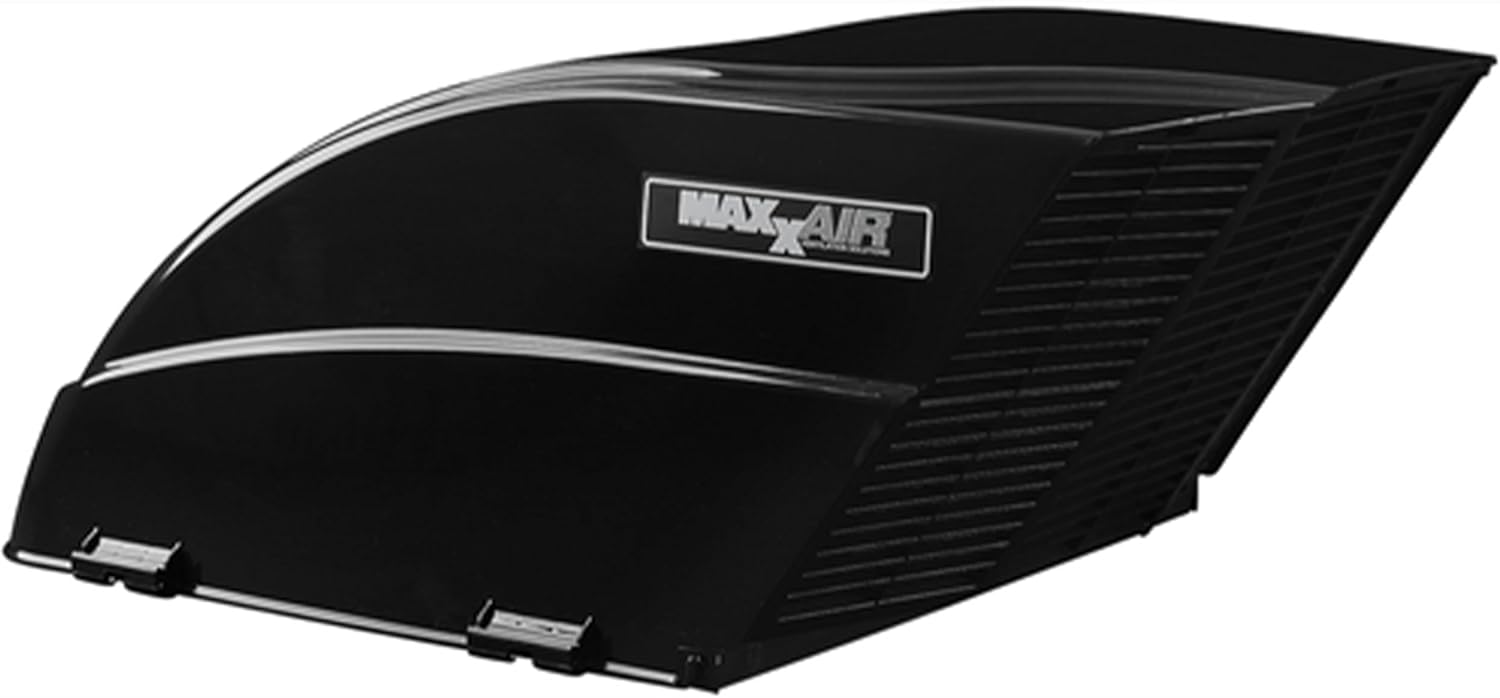
Roof vent covers are one of the more straightforward exterior RV accessories in terms of the problem they solve: they allow roof vents to remain open during rain, enabling ventilation when it would otherwise be impossible without water intrusion. The Maxxair II is among the most widely referenced options in this category, recognized for its low-profile dome design and broad compatibility with standard 14-inch x 14-inch roof vent openings – the size found on the majority of RVs.
The cover mounts over the existing vent opening and is secured with screws at the base. Once installed, it remains in place permanently and does not need to be removed for travel. The dome profile directs rain away from the vent opening while allowing air to move freely in and out. This changes the practical ventilation options considerably – instead of choosing between fresh air and staying dry during rain, the vent can remain cracked or fully open in most conditions.
Beyond rain protection, a vent cover addresses several other wear factors that are easy to overlook. Exposed vent lids are subject to continuous UV exposure, which degrades the plastic housing and latch mechanisms over time. Debris – leaves, pine needles, dust, and road grime – accumulates around uncovered vent openings during travel and storage, creating a surface that retains moisture and accelerates seal wear. Year-round ventilation control is also a practical benefit in winter camping situations, where managing interior humidity without opening a vent to weather is genuinely useful. For these reasons, roof vent covers are commonly installed on newer RVs as a routine addition, not just as a repair for aging equipment.
Most RV roof vents use a 14″ x 14″ opening, but not all. Measure your vent opening before ordering. Maxxair produces covers in multiple sizes – confirm the correct fit for your specific vent on the product listing before purchasing.
- Allows ventilation during rain – a meaningful practical improvement
- Fits the majority of standard RV roof vent openings
- Permanent installation; no removal needed for travel
- Low-profile design with minimal wind resistance
- Protects vent lid from UV degradation and debris
- Requires basic tools and roof access for installation
- May require sealant around base screws to prevent water intrusion
- Does not fit non-standard vent sizes without verification
- Working on the roof carries inherent safety considerations
and specifications on the product listing.
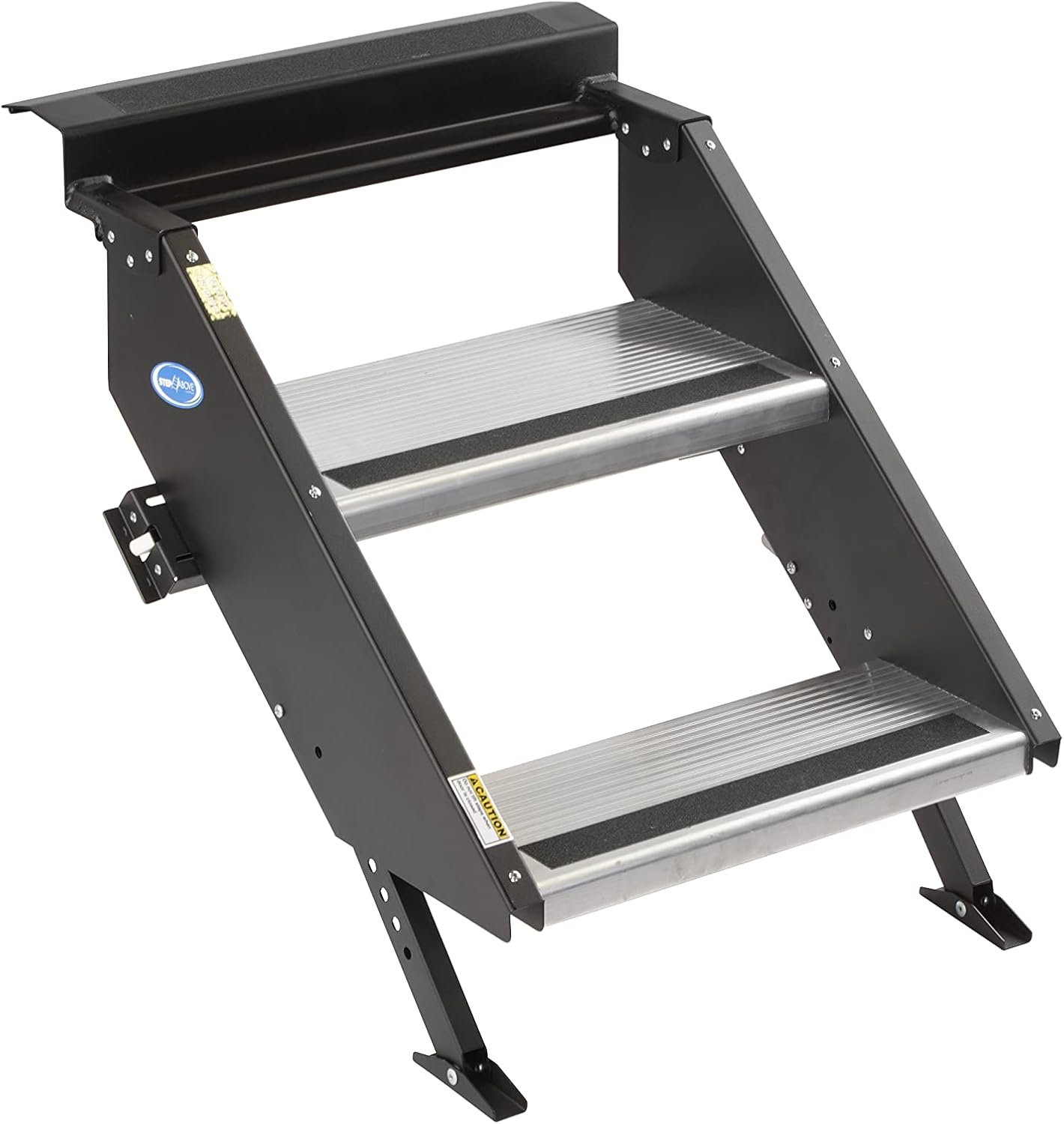
The MORryde StepAbove is a widely referenced aftermarket step system designed to replace or supplement the factory entry steps found on most travel trailers and fifth wheels. Factory RV steps are typically narrow, steep, and lack handrail support – functional enough for occasional use but noticeably inadequate on rigs that are entered and exited frequently. The StepAbove addresses this by providing wider, deeper step treads with a handrail system that improves stability, particularly for children, older adults, or anyone carrying items in both hands.
The narrow tread depth on standard fold-down RV steps is one of the more consistent complaints among owners who camp regularly. Most factory steps are sized for compact storage rather than comfortable use – a tread that is eight to ten inches deep gives the foot very little platform to land on, which requires more attention and effort on each step than most users expect. The steepness of the staircase angle compounds this. In wet conditions, on dark evenings, or when carrying groceries or a sleeping child, a narrow factory step presents real friction. User feedback on aftermarket step systems consistently reflects that the upgrade is noticed immediately and every time the step is used, rather than being a periodic convenience.
The addition of a handrail changes the entry experience noticeably. Factory RV doors typically include a grab handle on the door itself, but this requires opening the door before having anything to hold onto – an awkward sequence when descending. A dedicated handrail mounted to the step assembly provides support at the point where it is actually needed. This detail is particularly valued by full-time RVers and frequent travelers who may enter and exit the coach dozens of times per day, and by owners who camp with older family members or guests unfamiliar with the entry dynamics of a travel trailer or fifth wheel.
MORryde manufactures the StepAbove in multiple configurations to fit different entry door setups and step counts. Compatibility is not universal – the correct model depends on your RV’s entry door opening, existing step bracket configuration, and the number of steps required. MORryde’s compatibility guide and the product listing should be consulted carefully before purchasing. Installation is more involved than most accessories in this guide and typically requires basic hand tools.
The StepAbove is available in multiple configurations and is not a universal fit. Verify your entry door dimensions, existing bracket type, and required step count against MORryde’s compatibility guide before purchasing. Incorrect fitment is the most common reason for returns in this product category.
- Wider, deeper treads meaningfully improve entry stability
- Handrail system addresses a gap in most factory step designs
- Safety improvement at the highest-use exterior contact point
- MORryde is a recognized aftermarket RV component manufacturer
- Available in multiple configurations to fit various entry setups
- More installation effort than other accessories in this guide
- Compatibility requires careful verification before purchasing
- Higher price point than basic step cover alternatives
- Not compatible with all RV entry door configurations
and specifications on the product listing.
How to Choose Exterior RV Accessories
The right exterior accessories depend on how you use your RV, where you store it, and what climate conditions it regularly faces. These factors help narrow the decision before looking at specific products.
-
Outdoor storage vs. covered storage A rig stored outdoors year-round needs significantly more protection investment than one stored in an enclosed building. UV covers, tire covers, and weatherproofing products provide far more value when the RV faces continuous outdoor exposure.
-
Full-time RVing vs. occasional camping Full-timers who move frequently have less need for storage protection products but benefit more from accessories that improve daily usability and durability of high-wear components like entry steps. Occasional campers storing their rig for months between trips benefit more from protection-focused accessories.
-
UV exposure level UV intensity varies significantly by geographic location. RVs stored in desert climates or at high altitude face substantially greater UV stress than those in northern or coastal regions. Higher UV exposure moves tire covers, full covers, and UV protectants up in priority.
-
Rain and snow exposure Roof vent covers and storage bay seal accessories become more valuable in wetter climates. Snow load can also stress awnings and slide-out toppers in ways that are less relevant in dry regions. Consider your typical weather patterns when prioritizing.
-
Roof protection needs The roof is the highest-stakes exterior surface on any RV. Vent covers and slide-out toppers reduce wear on roof penetration points and slide seals respectively. If your rig parks under trees, slide-out toppers become particularly relevant.
-
Entry safety The entry step is one of the most used components on any RV. Worn, flexible, or undersized factory steps are a common source of minor accidents. If your current step feels unstable or shows significant wear, an entry upgrade is worth prioritizing over more comfort-oriented accessories.
-
Maintenance commitment Some exterior accessories require periodic maintenance to remain effective – covers need proper cleaning and storage, vent cover seals should be inspected annually, and step hardware should be checked for tightness. Factor in how much ongoing upkeep you are willing to do when deciding what to add.
-
Climate considerations Extreme cold affects vinyl covers and rubber components differently than extreme heat. If your rig is stored in a climate with significant temperature swings, look for covers and accessories rated for a broad temperature range. Verify climate suitability on the product listing.
Common Mistakes to Avoid
-
✕
Buying a cover without measuring the RV first RV covers are sized by length ranges, but overall height, roof equipment, and slide configurations all affect fit. A cover that does not fit properly will flap in wind, pool water in low points, or abrade the surfaces it is meant to protect. Measure carefully and verify against the manufacturer’s sizing guide before ordering.
-
✕
Ignoring tire UV protection until cracks appear UV-induced sidewall degradation builds gradually over seasons of exposure. By the time visible cracking appears, the damage is already done. Tire covers are inexpensive relative to replacement tires, and the right time to start using them is before damage is evident – not after.
-
✕
Leaving the awning extended unattended or overnight Wind conditions can change quickly and without much warning. Awning tie-down accessories improve stability but are not a substitute for the habit of retracting the awning before sleeping or leaving the campsite. Awning damage is one of the most common preventable RV repair expenses.
-
✕
Skipping roof vent covers in a wet climate Without a vent cover, the choice between ventilation and staying dry is binary – you can have one or the other during rain, not both. Vent covers are low-cost, permanent installations that meaningfully expand your ventilation options in any weather.
-
✕
Buying accessories before identifying actual needs The RV accessory market is large and easy to spend in without focus. Camping a few times before making major purchases helps clarify what problems you are actually experiencing, which leads to better buying decisions than pre-loading based on forum recommendations.
-
✕
Choosing incompatible sizes Most exterior accessories are sized to specific RV or component dimensions – not universally. RV covers, tire covers, vent covers, and step replacements all require size verification before purchasing. Assuming a size will fit without checking is the most consistent source of returns in this category.
-
✕
Prioritizing appearance over protection function Accessories with attractive designs but inferior materials or poor fit will not protect your rig effectively. In protection-focused categories like covers and tire protectors, material quality and fit accuracy matter more than color options or visual style.
-
✕
Using a cover that does not breathe Non-breathable covers can trap moisture against the RV’s exterior, which creates conditions for mold, mildew, and accelerated seal degradation – the opposite of the intended effect. Look for covers that specify breathable fabric construction, and verify this detail on the product listing.
-
✕
Treating roof accessories as a substitute for roof inspection Vent covers and slide-out toppers reduce wear on roof components, but they do not seal cracked caulk or degraded seam tape. Annual roof inspection and resealing of all penetration points remains necessary regardless of what exterior accessories are installed.
Frequently Asked Questions
What are the most useful exterior RV accessories?
The accessories that provide the most consistent value are those that address the two main threats to RV exteriors: UV exposure and moisture. A good storage cover, tire covers, and roof vent covers cover those two threats effectively across most RV types and camping styles.
Entry step upgrades are worth considering for any rig with an unstable or worn factory step – they address a genuine safety concern at a high-use contact point. Beyond those four categories, priority depends heavily on how you camp and where you store your rig.
Do RV covers really help?
For RVs stored outdoors for significant periods, yes. A quality, breathable cover slows UV degradation of paint, decals, rubber seals, and roofing materials. The key word is quality – a poorly fitted or non-breathable cover can cause the moisture-related damage it is meant to prevent.
For RVs stored in enclosed, climate-controlled facilities, the benefit of a cover is less clear. The primary protection benefit comes from blocking UV, which is not a factor in covered storage.
Are tire covers worth it?
For most RV owners who store their rig outdoors between trips, yes. RV tires are expensive, and UV-induced sidewall degradation is a real cause of premature failure – one that can be difficult to detect visually until the damage is advanced. Tire covers are low-cost relative to the problem they prevent.
The important caveats are correct sizing and removing the covers before moving the RV. A tire cover on a rolling tire is a hazard. Verify tire dimensions and select the right size for your specific tires.
Do roof vent covers work in rain?
Yes, within their design intent. Roof vent covers like the Maxxair II allow roof vents to remain open during rain by directing water away from the vent opening. They are not rated for extreme conditions, and very heavy rain driven sideways by high wind can introduce some moisture even with a cover installed.
In normal rain conditions, a quality vent cover allows meaningful ventilation without water intrusion at the vent opening. Verify specific performance claims on the product listing.
What exterior accessory should I buy first?
For most new RV owners who store their rig outdoors, tire covers are the most immediate and cost-effective starting point. They address a real, ongoing problem at low cost and with no installation complexity.
If outdoor storage is a significant part of your situation, a full RV cover is worth prioritizing early. If you camp in weather that requires roof ventilation, a vent cover is an early investment that pays off consistently. The right first purchase depends on your specific storage and camping situation.
What is the best exterior RV accessory for outdoor storage?
A combination of a quality RV cover and tire covers addresses the two primary outdoor storage threats – UV and general weathering. The cover should be breathable and correctly sized for your rig. The tire covers should match your actual tire dimensions.
Neither of these substitutes for periodic inspection. Even under a cover, seals, roof membranes, and rubber components should be checked seasonally and resealed as needed.
How often should exterior accessories be replaced?
Replacement intervals vary by product, material quality, and how the accessory is used and stored.
RV covers typically last two to six seasons depending on material quality, UV exposure, and whether the cover is properly cleaned and stored when removed. Vinyl tire covers may become brittle after several seasons in extreme heat climates. Roof vent covers, once installed, generally last many years with minimal maintenance. Entry steps typically last the life of the RV with occasional hardware inspection.
Inspect accessories at the start of each season for signs of wear, brittleness, or UV degradation, and replace when function is compromised rather than on a fixed schedule.
Can I use a car cover on my RV?
No. Car covers are not sized, constructed, or rated for the scale, profile, or exposure conditions of an RV. An RV cover needs to accommodate the height, length, slide configurations, roof-mounted equipment, and structural features of a much larger and more complex vehicle. Using an undersized or improperly fitted cover creates more problems than it solves.
Do I need to remove roof vent covers for highway travel?
Generally no – vent covers like the Maxxair II are designed to remain in place during travel and are low-profile enough to handle highway speeds without removal. However, verify this for the specific product you are using by checking manufacturer guidance on the product listing. Some vent cover designs are not intended for travel installation.
What exterior RV accessory provides the best value for most owners?
It depends on how you store and use your rig, but a few patterns hold for most owners. Tire covers are typically the most cost-effective starting point – they address a real and ongoing problem at low cost with no installation required. Roof vent covers offer strong daily usability value, particularly for owners who camp in variable weather and want ventilation control without water intrusion. For rigs stored outdoors for extended periods, a quality RV cover offers the largest single long-term protection benefit by slowing UV and weather damage across the entire exterior.
The best value for any specific owner depends on storage conditions, climate, and how often the RV is used. Owners with covered storage need different priorities than those with year-round outdoor storage.
Related Guides
Looking for deeper coverage on a specific category, or the informational guide behind this buying guide?