Best RV Accessories: A Practical Decision Guide
Not a ranking of “top picks.” A guide to understanding what actually matters for your specific RV, how you travel, and where you go – so you buy less and get more out of what you own.
If you’ve spent any time searching for RV accessories online, you’ve already seen the problem: an endless stream of “top 10” lists, each one confidently declaring the same six products as essential for every RV owner on earth. The problem isn’t that those products are bad. It’s that the lists ignore almost everything that actually matters – your specific RV, your travel style, your power setup, and how much storage you realistically have.
A 45-foot Class A diesel pusher and a 17-foot hybrid travel trailer are both called “RVs.” They share almost no accessory needs. Someone dry camping three weeks a month in Arizona needs entirely different gear than a weekend warrior plugging into shore power at state parks. Generic “best accessories” lists don’t make this distinction. They can’t – and they end up steering people toward purchases that don’t fit their situation.
This guide takes a different approach. Rather than ranking products in a vacuum, we’ve organized recommendations by use case, travel frequency, and RV setup constraints. We explain what each category of gear actually does, who needs it, what people commonly get wrong, and where cheaper options hold up fine versus where cutting corners causes real problems.
Recommendations here are based on product research, technical specifications, aggregated user feedback across RV communities, and comparative analysis – not hands-on lab testing. Where data is limited or user opinion is divided, we say so. The goal is decision quality, not affiliate revenue.
How to Choose RV Accessories That Actually Matter
Before adding anything to your cart, it helps to run through a quick self-assessment of your specific situation. Most bad RV accessory purchases fail on one of the following dimensions.
Storage is the real constraint
RV storage looks generous in showrooms. In practice, once bedding, clothing, food, tools, and water gear are packed, the “storage” is largely spoken for. Many accessories that seem clever – folding chairs, portable tables, collapsible cookware – take up more real-world space than buyers anticipate. When evaluating anything bulky, ask where it will live on travel days, not just at the campsite.
Power draw compounds quickly
Electric kettles, Instant Pots, hair dryers, and coffee makers are all individually fine. Together, they can strain your inverter, blow a shore-power breaker, or drain a battery bank overnight. If you frequently dry camp or boondock, power draw must be evaluated as a system, not per item. A 1,200-watt device used once a day matters less than a 40-watt device running continuously.
Weight has real consequences
Many Class B and smaller travel trailers have surprisingly tight cargo-carrying capacity (CCC) ratings. Cast iron cookware, tool collections, and multiple sets of outdoor furniture add up. Weigh purchases against your GVWR headroom, particularly if you frequently travel at or near capacity.
| Your Situation | What to Prioritize | What to Deprioritize |
|---|---|---|
| Full-timer, frequent mover | Durability, packability, lightweight options | Bulky “campsite luxury” items |
| Weekend warrior, hookups | Comfort, kitchen gear, awning setup | Off-grid power equipment |
| Dry camper / boondocker | Solar, battery, water filtration, waste management | High-draw appliances |
| Seasonal camper, new RVer | Safety essentials first, then comfort | Everything on every list |
| Small RV (Class B, teardrop) | Compact, multi-use, collapsible | Full-size versions of anything |
Travel frequency changes the math
Someone who camps 50+ nights a year can justify better gear – both financially and functionally, since higher-quality items earn their cost through repeated use. Someone doing four trips a year often gets more value from mid-range picks and spending the difference elsewhere. Premium isn’t always the right call; it depends on the volume of use you’ll put items through.
Installation complexity is underrated
Some accessories are genuinely plug-and-play. Others require drilling, wiring, or professional installation – and that changes the real cost dramatically. A $200 backup camera becomes a $450 purchase after installation. Factor that in before comparing prices across categories.
Maintenance matters too
Accessories that require frequent maintenance, replacement parts, or careful storage (like certain awning types or canvas products) can become sources of frustration. Consider how something will perform six months in, not just unboxing day.
Essential RV Accessories for Beginners
New RV owners face a specific problem: every forum, Facebook group, and YouTube channel has a different “must-have” list, and the lists rarely agree. The truth is that most first-year RVers over-purchase. They buy campsite comforts before they’ve figured out their camping style, and then discover half of it doesn’t suit how they actually travel.
The practical advice: buy the safety and utility essentials first. Add comfort and convenience items after your first few trips, when you know what you actually miss.
Don’t buy outdoor furniture, kitchen gadgets, or “campsite accessories” before your first trip. Take a weekend with what you have, then note what you genuinely lacked. That list is what you actually need.
The non-negotiable starting kit
Regardless of RV type, some items are genuinely universal and worth buying before your first trip. This list was deliberately kept short. We excluded categories like outdoor furniture, rugs, and awning accessories because those depend entirely on how you camp – and you won’t know that until after your first few trips. What’s here covers the items that every RV owner needs regardless of travel style:
- Drinking water hose – a standard garden hose is not rated for potable water. Get a dedicated white or blue RV drinking water hose.
- Water pressure regulator – campground water pressure varies wildly and can damage RV plumbing. A regulator ($10-$25) is cheap insurance.
- Sewer hose kit – if your RV has a black tank, you need this before you leave. Don’t assume you already have one.
- Leveling blocks – for trailers and motorhomes without auto-leveling. Wood chocks work; interlocking plastic blocks are more versatile.
- 30-amp or 50-amp adapters – campground pedestals don’t always match your RV’s plug. A dog-bone adapter set saves you from being unable to connect.
- Surge protector / EMS – this is discussed in the safety section, but it belongs on the beginner list. Campground power can spike, and the damage is not covered under warranty.
What beginners commonly over-buy
Outdoor rugs are a common impulse purchase that often get left at home after the first few trips – they’re also awkward to dry when wet and take up a full bay on travel days. Portable fire pits are bulky, and roughly half of campgrounds ban them outright. Full outdoor kitchen setups look appealing online but require dedicated storage that most RVs simply don’t have. None of these are bad products – they’re just better purchased once you know your campsite habits.

Inline Water Filter (NSF-Certified)
you have a whole-house RV filtration system already installed, or you’re camping exclusively at sites with treated municipal water.
Full water system guide →
EMS Surge Protector – Portable or Hardwired
you exclusively dry camp or boondock and never connect to shore power – in that case, it offers no protection benefit.
Full electrical guide →Of these two, the EMS matters more. A water filter is a convenience improvement; an unprotected electrical system at a campground with a miswired pedestal can cost thousands. If you’re choosing between them on a tight first-trip budget, prioritize the EMS and use bottled water for drinking until you sort the filter.
For a comprehensive checklist of everything to bring on your first trip, see our RV Essentials Checklist for New Campers. It’s organized by priority so you can stage purchases across your first season rather than buying everything at once.
RV Accessories for Off-Grid and Dry Camping
Off-grid camping – whether boondocking on BLM land, dispersed forest service camping, or simply staying at campgrounds with no hookups – changes almost everything about which accessories matter. The limiting factors shift from comfort to resource management: power, water, and waste become the primary concerns.
Power: start with your actual consumption
Before buying any solar panel or battery bank, calculate your daily power consumption. Add up the watt-hours of every device you typically run (lights, fan, phone charging, laptop, small appliances) and that gives you a realistic battery-bank sizing target. Most first-time off-grid setups are undersized because buyers calculate peak need, not continuous use. The result is frustration on day two when the battery hits 20% by mid-afternoon and everything has to be rationed.
A 200Ah lithium battery sounds like a lot. At 50% depth of discharge (the recommended limit for LiFePO4), you have 100Ah of usable capacity. A 12V compressor refrigerator running continuously draws roughly 4–6A on average – that’s 96–144Ah per day before you add anything else. Do the math before assuming a battery is “enough.”
Solar: panels vs. portable generators
Solar works silently, requires no fuel, and produces power continuously during daylight. It’s the right long-term choice for frequent off-grid campers, especially in sunny regions. Portable generators are better for cloudy climates, short trips, or running high-draw appliances you can’t otherwise power. The two aren’t mutually exclusive – many experienced dry campers use both. We excluded large portable solar kits above 400W from this section because they become a storage problem in most rigs and require proper charge controller matching that trips up most beginners.
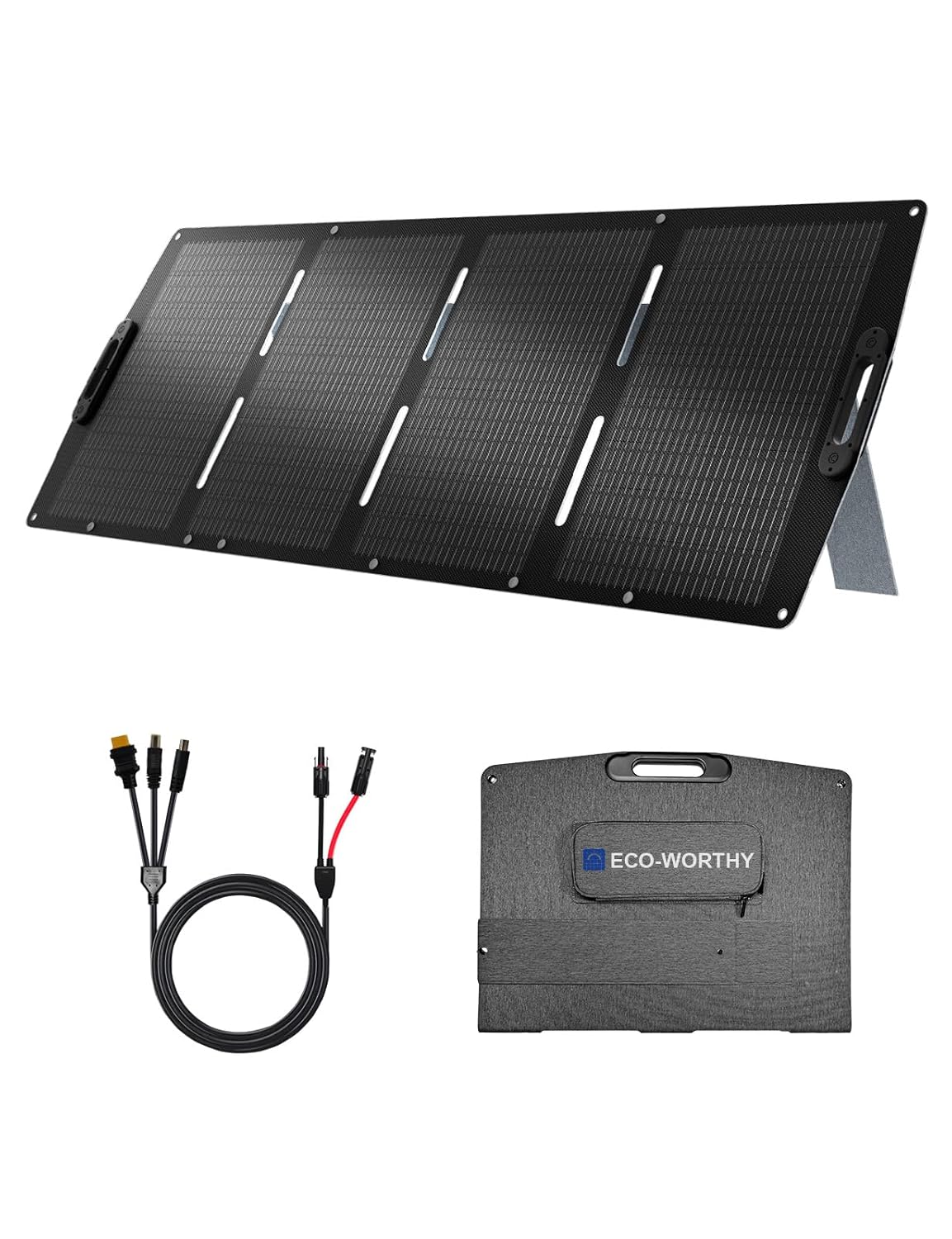
Portable Folding Solar Panel (100-200W)
you camp in heavily wooded or consistently cloudy regions, or if you run an air conditioner off-grid – a portable panel alone won’t cover that load.
Full solar panel guide →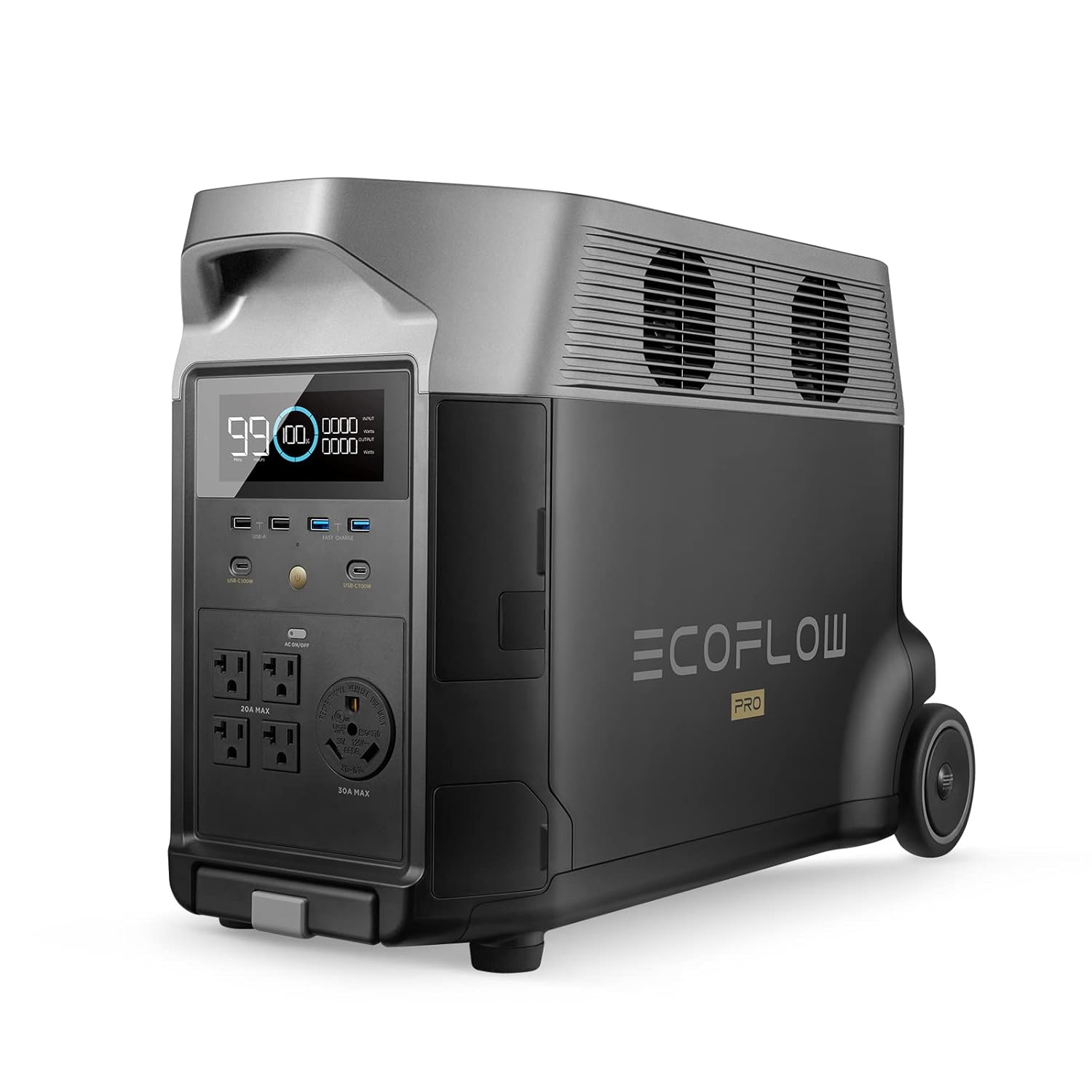
Portable Power Station (1-2kWh)
you dry camp more than 5-7 nights per month – at that frequency, a dedicated installed battery system becomes more cost-effective and capable.
Full power station guide →The portable power station and the generator aren’t really competing options – they solve different problems. A power station handles quiet, sustained loads efficiently. A generator handles short bursts of high-wattage demand, like running the AC for two hours in the afternoon heat. Many serious dry campers run both, treating the generator as a “recharge tool” rather than a primary power source.
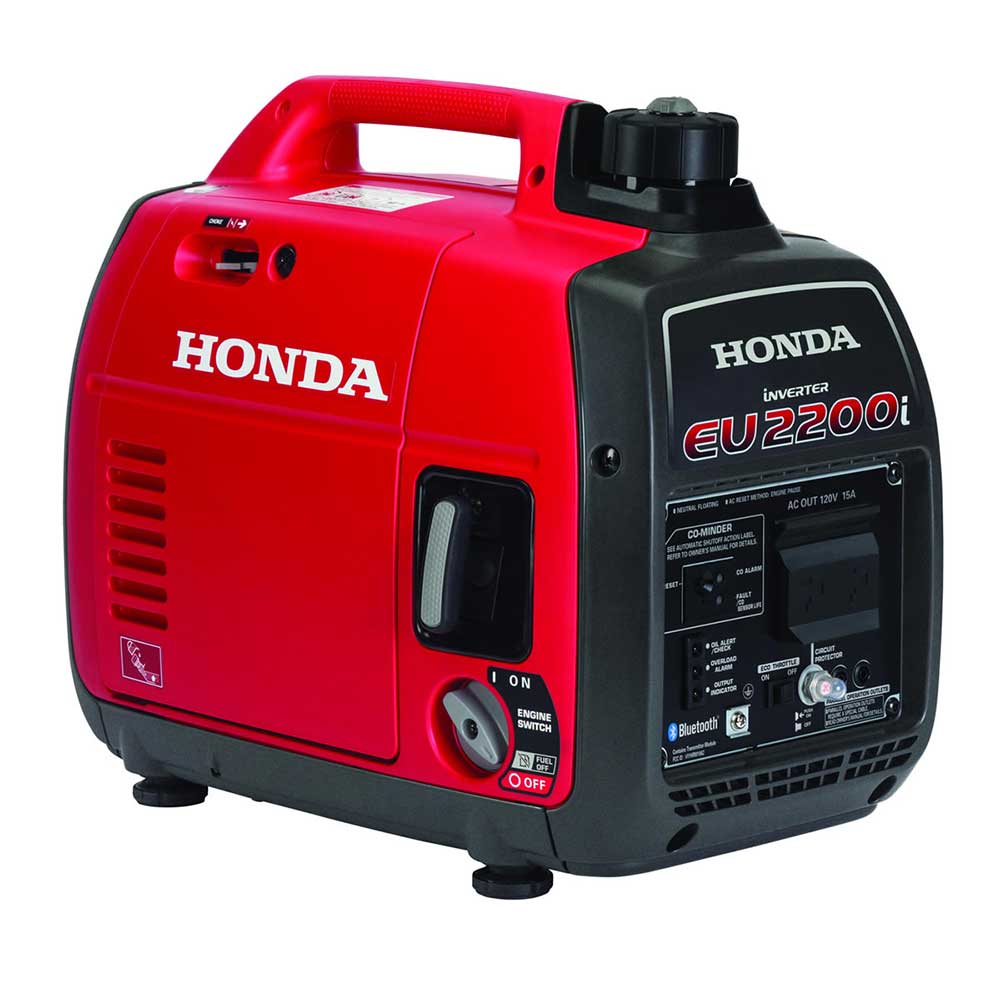
Inverter Generator (2,000-3,500W)
you camp primarily at full-hookup sites, stay in mild climates without AC needs, or your campground prohibits generator use during quiet hours – in those cases, a battery-solar system is a quieter and lower-maintenance solution.
Full generator guide →Water management off-grid
Fresh water capacity becomes a true constraint when there’s no hookup – and it runs out faster than most new campers expect when you factor in cooking, washing dishes, and basic hygiene. Beyond your built-in tank, a collapsible 5-7 gallon jug for top-offs is practical and doesn’t eat much storage when empty. Water filtration matters more in off-grid settings where source quality is variable. A gravity filter (like Sawyer or similar camp-grade products) is worth keeping as backup regardless of your inline filter setup. We did not include countertop water filtration systems in this section – they’re useful in full-hookup settings but take up limited counter space and require a dedicated water source connection that’s impractical at dispersed sites.
RV Safety and Maintenance Essentials
Safety accessories don’t generate much excitement, but they’re the category where a bad decision – or no decision – has the most serious consequences. The good news: most RV safety essentials are inexpensive and require little ongoing maintenance. They deserve to be bought first, not added as afterthoughts. If you’re working with a limited first-trip budget and have to choose between a comfort item and a safety item, the safety item wins every time.
Life-safety gear that’s non-negotiable
The items below were selected because they address real, documented RV-specific risks. We excluded general camping gadgets often grouped into “safety kits” – reflective triangles, emergency radios, and the like – because those serve useful purposes but are not specific to the unique hazards inside a sealed RV living space. Carbon monoxide and propane are the primary threats that standard home equipment isn’t designed to catch.
- CO and propane detector combo – many RVs ship with only a smoke detector. Carbon monoxide is odorless and propane sinks to floor level; a combination detector that tests for both is essential for any RV with propane appliances.
- Smoke alarm – verify yours is functional before every season. Dated units lose sensitivity.
- Fire extinguisher rated for Class B/C fires – a 2.5 lb unit is the practical minimum for an RV kitchen.
- First aid kit – pre-made kits are fine; the key is knowing where it is and that it’s stocked.
- Tire pressure monitoring system (TPMS) – tire blowouts are a leading cause of RV accidents. A basic TPMS monitoring all tires adds early warning you otherwise wouldn’t have.
Some older RVs have CO detectors that are past their rated lifespan (typically 5–7 years). Check the manufacture date on yours. An expired detector may still chirp to signal a dead battery but won’t reliably detect CO at low concentrations. When in doubt, replace it.
Electrical safety
A surge protector or EMS (Electrical Management System) guards against low voltage, high voltage, miswired pedestals, and power surges. These are real campground hazards – not hypothetical ones. A $150–$300 EMS can prevent thousands of dollars in damage to air conditioners, televisions, and the converter. It’s one of the few RV purchases that’s both undeniable and underrated.
Maintenance tools worth keeping on board
A basic toolkit, a can of rubber roof sealant, spare fuses, and basic hose repair fittings cover the majority of common on-the-road fixes. You don’t need an extensive toolkit – but being 60 miles from a hardware store with a leaking hose fitting changes the math on “I’ll fix it at home.”
For a complete breakdown of recommended safety gear, see our Safety & Emergency Gear guide.
RV Kitchen and Comfort Accessories
Comfort accessories are where personal preference matters most, and where online lists are least useful. What feels essential to one camper is dead weight to another. That said, there are a few practical principles that help filter the noise.
Kitchen: compact and multi-use over specialized
RV kitchens are small. The better approach is one item that does three things than three items that each do one. A good 12-inch skillet handles 80% of stovetop cooking. A single pot with a lid that doubles as a colander eliminates two items. An Instant Pot is genuinely useful if you cook from scratch – but if you mostly heat packaged food, it’s just a heavy appliance taking up cabinet space and creating a balance problem when the cabinet door opens on a moving trailer.
Stand-alone electric grills, blenders, and air fryers are frequently recommended in RV communities. In practice, most of these require 1,000+ watts, create additional dishes, and take significant storage space. If you have shore power always, fine. If you ever dry camp, they’re often the first things to stay home.
Bedding: fit matters more than brand
RV mattresses are frequently non-standard sizes – short queens, RV king (narrower than residential king), and bunk mattresses are common. Before buying any bedding, measure your actual mattress. Many “RV queen” sheets sold online fit poorly or bunch at the corners. Look specifically for “short queen” sizing if that’s your mattress dimension. We excluded mattress toppers from the featured recommendations because sizing varies too much between RV models, and a poorly fitted topper in a tight sleeping space is more disruptive than the thin factory mattress it’s meant to improve.

Short Queen RV Sheet Sets
your RV has a residential queen (60″ x 80″) mattress – some larger Class A and fifth wheel floor plans use full residential sizes, in which case standard sheets work fine.
Full bedding guide →The sheet question sounds minor until it isn’t. A set that doesn’t fit means disrupted sleep and a daily bedmaking struggle in a space too tight to tuck properly. Getting the bedding right has a bigger daily quality-of-life impact than most accessories that cost ten times as much.

Nesting Non-Stick Cookware Set
you mostly heat packaged food or eat out – in that case, a single 10-inch skillet and one pot covers 90% of needs without the full set.
Full kitchen guide →Interior accessories: organization first
The most impactful “interior accessory” in many RVs is a better organizational system. Drawer dividers, over-the-door organizers, tension-rod cabinet dividers, and under-sink storage systems do more for livability than most gadgets. These are low-cost, immediately useful, and transferable to any future RV. We deliberately excluded decorative interior accessories from this guide – not because they’re wrong, but because they’re purely personal and add no functional value worth generalizing.
For a full guide including space-saving ideas and recommended products, see our Interior Accessories guide.
RV Electrical and Power Accessories
Power is one of the most complex RV accessory categories, and also one where mistakes are expensive. Buying the wrong solar charge controller, incompatible battery chemistry, or undersized inverter can create real problems – or simply result in expensive gear that underperforms quietly for years without you realizing it. We excluded specific product recommendations from this section intentionally: power systems are highly dependent on your existing RV wiring, battery type, and usage patterns. Generic picks in this category do more harm than good.
Before buying any power accessories
Understand what you’re building toward. A basic solar setup (one 200W panel, one 100Ah lithium battery, a proper MPPT charge controller) costs $400–$800 and covers phone charging, lighting, and a small fan. An off-grid system capable of running a residential refrigerator and working space for a full-timer costs considerably more. The gap between these is large, and the gear from one doesn’t scale seamlessly into the other.
What to prioritize – and what most people get wrong first
Most buyers focus on the panel wattage first. In practice, the charge controller and battery quality matter more. A 400W panel paired with a cheap PWM controller and undersized battery bank will underperform a 200W system with properly matched components. Start with the battery, work backward to the panel size you need to replenish it daily, then size the controller accordingly.
- Charge controller quality matters – a cheap PWM controller wastes 20-30% of available solar energy versus a good MPPT unit. On a $1,000 panel install, that’s real efficiency loss over time.
- Battery chemistry is a real decision – AGM batteries are cheaper upfront; LiFePO4 batteries cost more but offer more usable capacity, longer cycle life, and lighter weight. For frequent campers, lithium usually pays off within a few seasons.
- Inverter sizing matters – size for what you actually plan to run simultaneously, not theoretically. An inverter that runs at 100% of rated capacity continuously runs hot and fails early.
Off-brand battery kits sold as “complete solar packages” online frequently pair mismatched components and use battery capacity ratings that don’t reflect real-world performance. Buying components separately from reputable brands (Renogy, Victron, Battle Born) and assembling your own kit typically yields better performance per dollar – and is better supported by the RV community if something goes wrong.
Our Electrical & Power Solutions guide covers surge protectors, inverter-chargers, solar kits, and generator compatibility in detail.
Common RV Accessory Buying Mistakes
Most RV owners – particularly in their first year – make at least a few of these. The good news is they’re predictable and avoidable if you know what to watch for.
Buying too much gear before your first trip
The temptation to be “prepared for everything” leads to a packed RV with gear you’ll rarely use. One experience trip tells you more than any forum post about what you actually need.
Ignoring power draw
New RV owners often buy appliances without considering their wattage. A coffee maker, hair dryer, and air fryer running simultaneously on a 30-amp connection can trip the breaker. Know your amperage before adding appliances.
Buying products too large for the RV
Full-size outdoor rugs, 6-person dining sets, and large portable grills look great in campsite photos – from people with 40-foot fifth wheels. Measure your slide-out space and storage bay before purchasing anything large.
Prioritizing features over usability
The generator with the most features isn’t always the easiest to start in the rain. The most advanced water filter isn’t always the one that gets used. Practical simplicity often wins in an RV context.
Underestimating storage impact
Every accessory needs a home. Collapsible products that don’t fully collapse, bulky cases for small items, and accessories without natural storage locations become clutter quickly. Think about where it lives before you buy it.
Chasing “best overall” in the wrong category
The best surge protector for a 50-amp Class A is not the same as the best for a 30-amp travel trailer. The best mattress for a fixed queen doesn’t help if your slide bed has a different dimension. Specificity matters.
Campground Access & Membership Programs
Membership programs occupy a different category than gear or accessories – they don’t go in your RV, but they directly affect how much you pay to camp and where you can go. Whether a membership is worth its annual fee depends entirely on how you camp: how often you go, what kind of sites you prefer, and whether you’re trying to save on campground fees or access specific types of experiences.
A few worth knowing about: Passport America ($49/year) gives 50% off at 1,800+ campgrounds – the easiest ROI of any membership if you pay for sites at all. Harvest Hosts ($84/year) provides overnight access to farms, wineries, and museums – experiential, not financial value. Boondockers Welcome ($79/year) connects members with private hosts offering free overnight parking. Escapees RV Club ($50–150/year) is purpose-built for full-timers who need mail forwarding, domicile support, and a community infrastructure that weekend campers simply don’t need.
None of these is universally worth it. Each serves a specific type of camper. We’ve broken down the math, the limitations, and who should skip each one in our dedicated guide.
Most RV owners don’t realize memberships exist until their second or third year of camping. If you’re in year one, start with Passport America – $49 is low enough risk that a single campground night covers the cost.
Browse All RV Accessory Categories
Each guide below covers its category in depth – with decision frameworks, product comparisons, and notes on what to avoid. Use the decision table above to identify which categories apply to your setup, then go deeper where it matters for you.
Planning Resources
Current pricing and verified buyer reviews across all RV accessory categories
Recreation.govReserve campsites at national parks, forests, and federal lands
National Park ServiceCampground rules, size restrictions, and permit information
RV Life Trip WizardRoute planning and campground directory with RV-specific filters