RV Interior Accessories Guide
A practical decision framework for making your RV feel like a real living space – not a showroom display that slowly exhausts you.
Introduction: The Showroom Problem
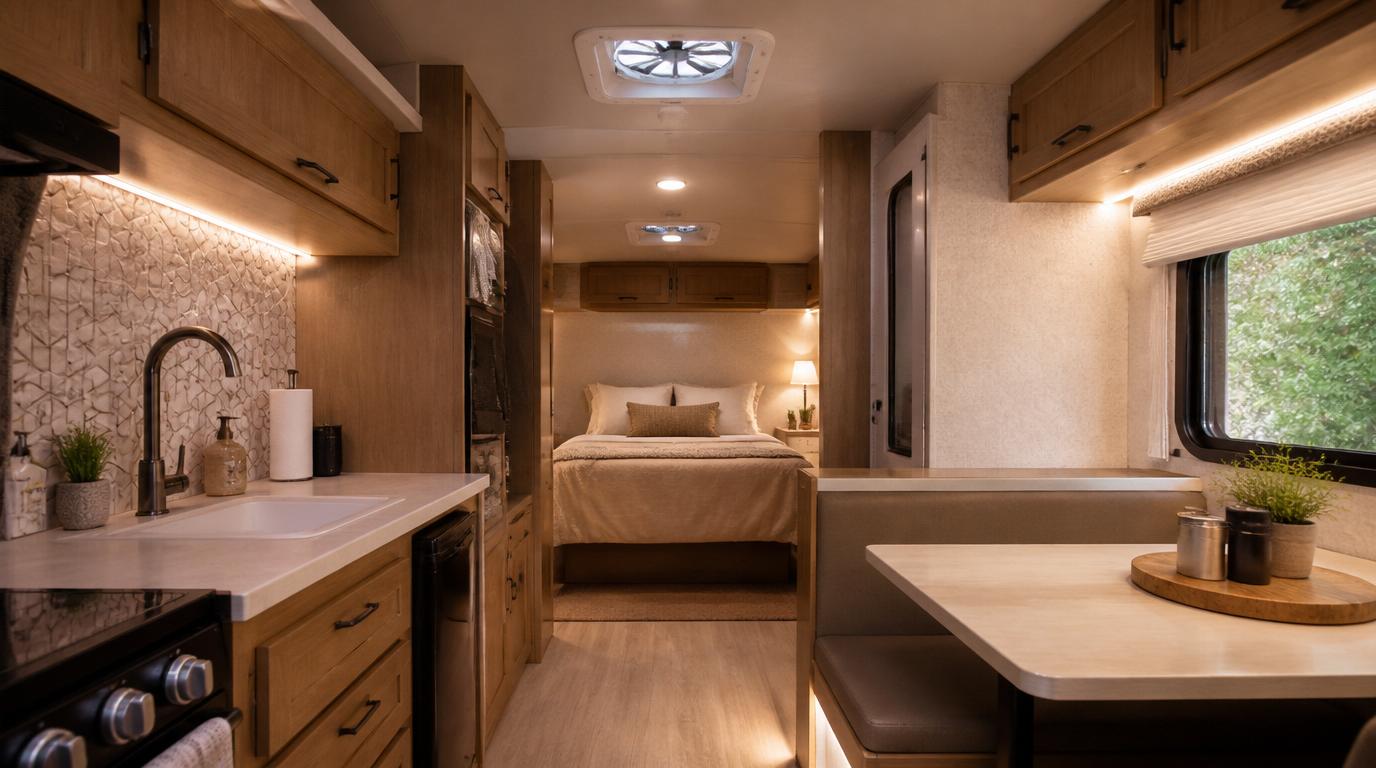
Walk through any RV dealership and the interiors look perfectly livable. The lighting is warm and deliberate. The cushions are plump. Nothing is cluttered. It feels, for a moment, like a smart and comfortable small home.
Then you buy one, take it on a three-day trip, and realize something is off. The space feels tighter than you remember. The lighting is harsh. The air sits still and slightly stale. You sleep badly. You feel cramped in ways that are hard to name.
If you have ever felt that your RV should be more comfortable than it actually is, you are not alone – and the fix is usually not what you think.
This disconnect is not a coincidence. Showrooms are staged for a brief visual impression – not for extended living. The accessories that would actually improve comfort are invisible in that environment, because they are functional rather than decorative.
This guide is not a product roundup. It is a decision framework. It explains why RV interiors so often feel uncomfortable, what categories of change actually improve daily living, and where most people waste money by solving the wrong problems. For a broader look at how to set up your RV interior from the ground up, see the RV Comfort and Interior Setup Guide.
Why RV Interiors Feel Different from Home
Before you can improve your RV’s interior, it helps to understand what you are actually dealing with. The discomfort most people experience is not random – it comes from a set of predictable physical conditions that are built into the way RVs are designed and manufactured.
Limited Space and Proportional Stress
Even a large RV is a fraction of a typical home’s square footage. The human body adapts to this, but it takes adjustment. More importantly, small spaces are punishing for clutter. Items that would disappear into the background of a full-size room become visually loud in a compact one. This is not just aesthetic – it creates a low-grade psychological friction that accumulates over days.
Poor Airflow as a Factory Default
Most stock RV ventilation systems were designed to meet minimum code, not to create genuinely comfortable air circulation. The result is air that feels still, especially in warm weather. This stuffiness makes temperatures feel worse than they are, contributes to moisture buildup, and generally makes the interior feel less pleasant to inhabit for long periods.
Lighting That Works Against You
Factory lighting in RVs tends to be functional rather than livable. Bright overhead LED strips do their job as task lighting, but they make it difficult to relax, create unflattering ambient conditions, and eliminate the sense of evening that helps your body shift toward rest. Many RV owners spend months wondering why they feel vaguely tense, when the answer is sitting right above their heads.
Noise and Vibration
RV walls are thin – thinner than almost any residential construction. Road noise, campground neighbors, wind, rain, and mechanical vibration all come through more clearly than people expect. This is not something accessories will eliminate entirely, but it is something worth addressing in practical ways.
Temperature That Swings Widely
The thermal mass of an RV is very low compared to a house. It heats and cools quickly, which makes HVAC work harder and means that the temperature inside can shift noticeably within an hour as external conditions change. This creates a constant background management task that, over days, contributes to fatigue.
What Actually Improves RV Comfort
Comfort improvements in an RV fall into a small number of categories that matter far more than most of the accessories marketed toward RV owners. Understanding these categories helps you make better decisions about where to spend time and money. If you want a curated breakdown of practical items that actually improve RV comfort, see the Best RV Interior Accessories guide.
Airflow and Ventilation
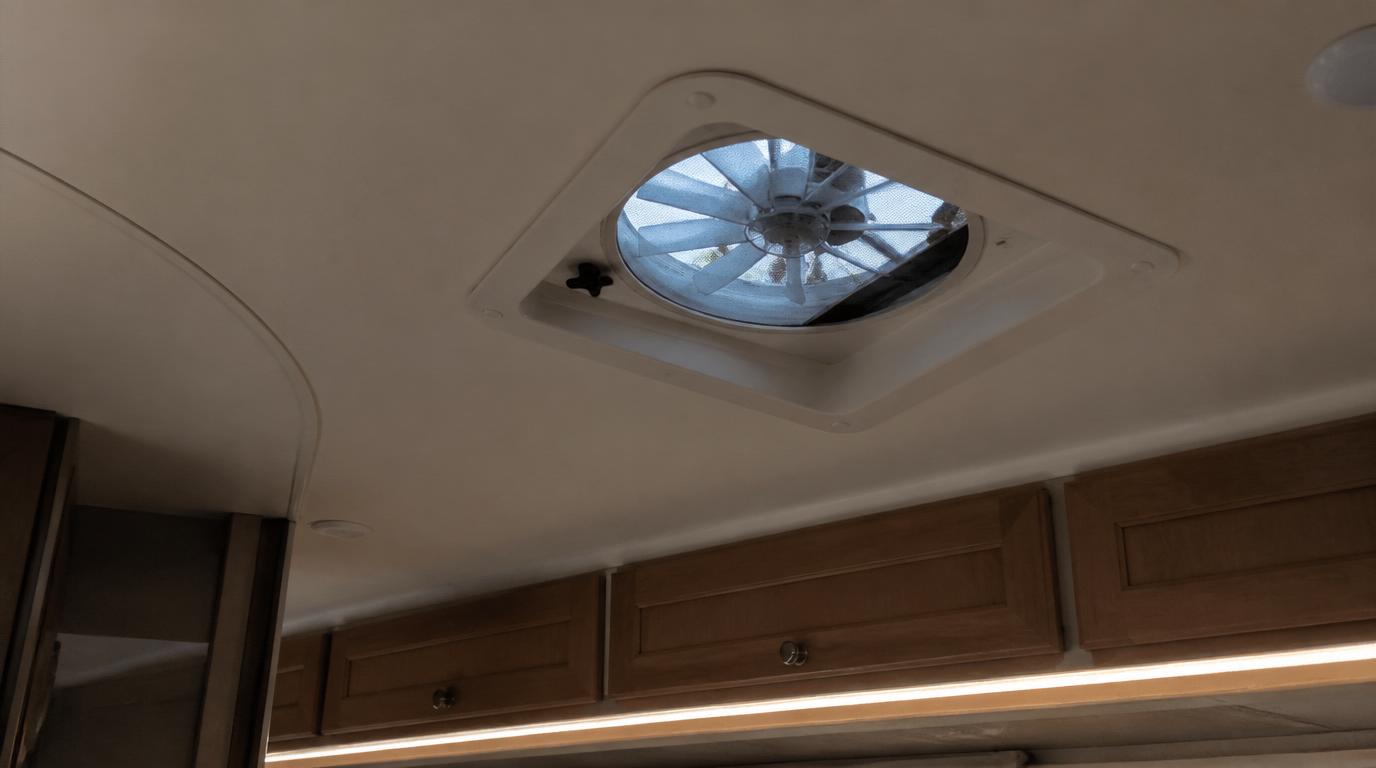
This is consistently the highest-return area for improvement. A quality fan – either a roof vent fan or a well-positioned interior fan – transforms how an RV feels. The improvement is not just about temperature. Moving air changes perceived comfort dramatically, reduces the stale feeling that accumulates in enclosed spaces, and helps manage moisture. The direction of airflow matters: drawing air through the space rather than just circulating it in one area is more effective.
Lighting That Adapts to Context
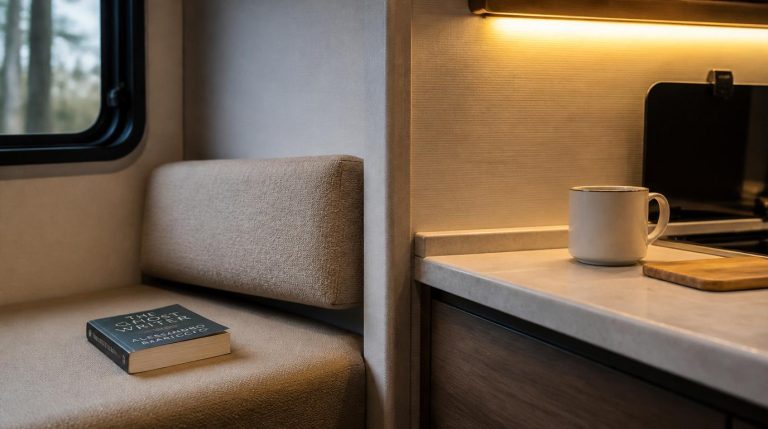
Swapping harsh factory lighting for warmer, dimmable alternatives is one of the most impactful changes most RV owners can make. The goal is not decoration – it is having light that matches what you are doing. Bright light for tasks, warm ambient light for evening, and the ability to reduce intensity as the day winds down. This directly affects sleep quality and how long you can comfortably spend inside.
Temperature Control Beyond the Factory HVAC
Factory air conditioning and heating systems work, but they are rarely sufficient on their own for comfort across varied conditions. Addressing this means thinking about insulation – window covers, reflective shades, and door draft management all reduce the thermal swings that make HVAC systems work constantly. These are not glamorous solutions, but they make a measurable difference in how stable and manageable the interior temperature feels.
Sleeping and Seating Quality
RV mattresses and stock seating are almost universally the weakest physical comfort element in any factory build. These are areas where targeted improvement pays back quickly. A mattress that actually supports sleep changes everything about how you feel during the day. For a deeper look at this specific area, the RV Bedding and Sleep Comfort Guide covers mattress selection and overnight temperature management in practical detail. Seating that allows you to sit comfortably for several hours without shifting constantly affects how you experience time spent inside. These are functional investments, not aesthetic ones.
Usability of the Space Itself
Small-space usability comes down to how easily you can do ordinary things without friction. Reaching items, storing things where you can find them, having surfaces available when you need them – these small frictions compound over days. The goal is to reduce the number of micro-decisions and minor physical obstacles that accumulate into tiredness. Often, removing items creates more functional improvement than adding them.
Lighting and Atmosphere: A Disproportionate Return
Lighting deserves its own discussion because its impact on comfort is disproportionately large and consistently underestimated.
Factory LED strips in most RVs produce light in the 5,000 to 6,500 Kelvin range – a cool, clinical white that is efficient but not restful. In a home, you would never use this as your primary evening light. In an RV, many people live under it for weeks without realizing it is contributing to tension and poor sleep onset.
The solution is not complicated. Strip lights or puck lights in the 2,700 to 3,000 Kelvin range placed low in the space – under cabinets, along the floor, or at furniture level – create an entirely different atmosphere. Paired with a dimmer on existing overhead lights, you get genuine flexibility: task lighting when you need it, and something closer to natural evening light when you do not.
The effect on perceived spaciousness is also real. Lower-placed warm light makes a space feel intentional and livable rather than institutional. This is not about decoration. It is about how your nervous system responds to its environment over hours and days.
Airflow and Ventilation: The Most Overlooked Upgrade
The single most common report from experienced RV owners who have systematically improved their rigs is that improving airflow made the biggest difference. This consistently surprises people who expected the answer to be furniture, storage, or decor.
RVs feel stuffy for a structural reason: they are sealed boxes with minimal passive ventilation. Factory roof vents provide some exchange, but without a powered fan creating directional airflow, the air inside stratifies and stagnates quickly.
A quality roof vent fan changes this fundamentally. The key is understanding airflow direction. In warm weather, exhausting hot air from the highest point while drawing cooler air through lower openings creates a thermal draft that moves air through the entire space. In shoulder-season conditions, reversing flow to bring fresh air in can reduce condensation. Neither of these effects happens with stock ventilation.
Humidity management is the secondary benefit. Moisture from cooking, breathing, and showering accumulates in RV interiors and creates condensation that leads to odor, mold risk, and material degradation over time. Active airflow during and after activities that generate moisture is a simple preventive habit that most new RV owners learn only after dealing with the consequences.
Noise and Privacy: Managing What You Cannot Eliminate
Thin walls are a physical reality of RV construction. There is no practical way to achieve residential sound isolation in a vehicle, and approaching this problem with that expectation leads to frustration and wasted money.
The more useful framing is management rather than elimination. For road noise and mechanical vibration, some targeted acoustic mat material in high-contact areas – typically slide floors and storage compartments – reduces the transmission and rattling that makes highway driving fatiguing. This is not a full solution, but it reduces the lowest-frequency and most annoying components of road noise.
For campground noise and privacy, the most effective tools are simple: window coverings that block both light and muffle sound to a small degree, white noise or a fan running overnight, and positioning your rig to take advantage of natural barriers when site selection allows it.
Privacy inside the RV – between sleeping and living areas, or simply having visual separation – often matters more than people realize before a multi-week trip with another person. Simple curtain dividers or tension-rod panels provide a functional and low-cost solution that improves how livable a shared small space feels over time.
Space and Clutter: Why Less Is Usually More
Visual clutter in a small space creates a kind of constant low-level cognitive load. Your brain processes everything in its field of view. In a home, most objects recede into the background. In an RV, the visual field is small enough that objects stay present.
This is one reason why the common impulse to fill an RV with accessories – decorative or functional – often backfires. Each item that does not earn its presence actively makes the space feel smaller and more stressful to inhabit.
The practical approach is to be honest about what you actually use and what you brought because it seemed like it might be useful. Items that are used weekly earn their space. Items that are used rarely should be evaluated against the visual and physical cost of keeping them aboard.
Storage is genuinely important, but the goal is not maximizing storage – it is making frequently used items accessible and infrequently used items invisible. A space where everything you need is reachable without moving three other things is meaningfully more comfortable to live in than one where storage is technically ample but practically frustrating.
What Most People Get Wrong
The RV accessory market is large and very good at making products look essential. Most experienced full-timers and long-trip veterans have a version of the same story: they bought a lot in the first year that they no longer use, and the things that actually improved comfort were often simpler and less expensive than what they initially pursued.
The most consistent patterns worth knowing about:
Decorative Accessories Over Functional Ones
Throw pillows, wall decor, faux plants, and coordinated kitchen sets photograph well and feel like improvements in a showroom. In daily life, they add weight, take up surface and storage space, and require maintenance. They do not improve sleep, airflow, temperature management, or any of the things that actually determine comfort. This is not a reason to live in an austere space – but it is a reason to be honest about whether a purchase improves function or only appearance.
Overloading the Space
The impulse to bring everything you might need is understandable, especially for early trips. The result is almost always a space that feels cramped and difficult to use, with the mental overhead of managing and locating items adding to the friction of daily life. Most experienced RV travelers describe the process of gradually removing things as more impactful than adding them.
Ignoring Airflow and Lighting
These two factors account for a large portion of perceived comfort in any interior environment, and they are consistently the last things people address because they are invisible in product listings and showrooms. A rig with excellent ventilation and well-chosen lighting feels significantly more livable than one with premium furniture and poor air quality.
Optimizing for Appearance Over Daily Function
The question worth asking before any accessory purchase is: does this make something I do every day easier or more comfortable? If the answer is no, the purchase is unlikely to improve your actual experience. Function compounds over days and weeks. Appearance provides a brief positive impression and then fades into the background.
If You Only Remember This
- Comfort comes from function, not decoration. Items that solve a real daily friction improve your experience. Items that look good in photos usually do not.
- Airflow and lighting matter more than almost any accessory. These two factors shape how every hour inside your RV feels, and they are consistently underaddressed.
- Less is almost always better in a small space. The cognitive and visual cost of objects that do not earn their place is real and cumulative.
- Address the basics first. Sleep quality, air quality, and thermal comfort are the foundation. Everything else is secondary.
- The showroom is not a reliable guide. Spaces staged for brief impressions are optimized for appearance, not for the experience of living in them over days and weeks.