Best RV Macerator Pumps (2026 Guide)
RV macerator pumps grind waste into a liquid slurry that can be pumped through a standard garden hose – useful when a gravity sewer hose won’t reach, runs uphill, or the dump point is far from your rig.
A standard RV sewer hose relies on gravity. That works well at most full-hookup sites and dump stations – but not always. If your rig sits lower than the sewer inlet, if the dump station is a long run away, or if you need to empty your tanks into a home cleanout or septic system, gravity isn’t enough. That’s where a macerator pump comes in.
An RV macerator pump connects to your tank outlet, grinds solid waste into a fine slurry, and pumps it under pressure through a standard 3/4-inch garden hose. This opens up dumping options that a gravity hose simply can’t reach – uphill runs, long distances across a campsite, or connections to a home sewer cleanout when returning from a trip.
That said, a macerator pump is not something every RVer needs. If you mostly camp at sites with standard hookups and a convenient dump station, a quality sewer hose is simpler and less expensive. This guide is aimed at RVers who have hit the limits of gravity dumping and need a practical solution.
Products were selected by evaluating manufacturer-listed specifications, user feedback patterns, and suitability for different RV use cases. We did not conduct hands-on testing. Confirm current specs on the product listing before purchasing.
Jump to the quick picks, the detailed reviews, or how to choose below.
Recommended RV Macerator Pumps
Three well-reviewed options across different use cases and budgets:
Flojet 18555-000A
A commonly recommended portable macerator pump with a compact design, 12V operation, and a reputation for reliability across a wide range of RV setups.
Check price →SewerFlo Quick Release Pump
Well-regarded for its quick-connect design and solid build at a competitive price. A practical choice for RVers who want macerator capability without a large upfront investment.
Check price →Thetford Sani-Con Turbo 400S
A factory-installed or retrofit macerator system designed for permanent mounting. Strong performance and a clean installation for full-timers and serious RVers.
Check price →How We Evaluated
Products were assessed based on the following criteria using manufacturer-listed specifications, product descriptions, and available user feedback. All spec claims should be verified on the current product listing before purchasing.
Portable pumps connect temporarily to your tank outlet and store away when not in use. Permanent/integrated systems mount to the RV and are always available. Each has different installation requirements and convenience trade-offs.
How quickly the pump moves waste, typically measured in gallons per minute or gallons per hour. Higher flow rates empty tanks faster but may draw more power. Confirm manufacturer-listed flow rate before comparing models.
Manufacturer-listed claims about how far and how high a pump can move waste vary widely. These figures are typically based on ideal conditions. Real-world performance depends on hose diameter, hose length, tank height, and waste consistency.
Most RV macerator pumps output through a 3/4-inch connection compatible with standard garden hoses. Confirm inlet connection size and whether adapters are included for your RV’s sewer outlet.
Most portable RV macerator pumps run on 12V DC and connect to the RV’s battery or a power outlet. Amperage draw affects how long you can run the pump and whether you need a dedicated circuit.
Macerator pumps can overheat if run continuously for too long. Models with thermal protection shut off automatically before damage occurs. Check the manufacturer’s recommended duty cycle before use.
After pumping waste, the pump and hose must be flushed with fresh water. Pumps that allow easy reverse-flow or backflushing are simpler to maintain and less prone to odor buildup.
Pumps from established brands with widely available replacement blades, seals, and impellers have a longer practical service life. Consider parts availability alongside initial build quality.
Note: Spec claims for lift height, pumping distance, and flow rate vary significantly across listings and conditions. Always confirm manufacturer-listed specs on the current product page and treat distance/lift figures as general guidance rather than guaranteed performance.
Comparison Table
Side-by-side overview of the recommended RV macerator pumps:
| Pump | Type | Power | Key Feature | Best For | Link |
|---|---|---|---|---|---|
| Flojet 18555-000A Best Overall | Portable, 12V | 12V DC | Compact, widely recommended, simple setup | Most RV setups needing flexible dump options | Check price |
| SewerFlo Quick Release Best Value | Portable, 12V | 12V DC | Quick-connect design, solid build | Budget-conscious RVers, occasional macerator use | Check price |
| Thetford Sani-Con Turbo Built-In System | Permanent / retrofit | 12V DC | Clean installation, high-output macerator | Full-timers, serious upgraders, permanent installs | Check price |
Detailed Reviews
A closer look at each pump – what it does well, who it suits, and where to be aware of its limits. All specs are manufacturer-listed; confirm current details before purchasing.
1. Flojet 18555-000A Portable RV Waste Pump
A compact, 12V portable macerator – commonly recommended for flexible RV dump setups
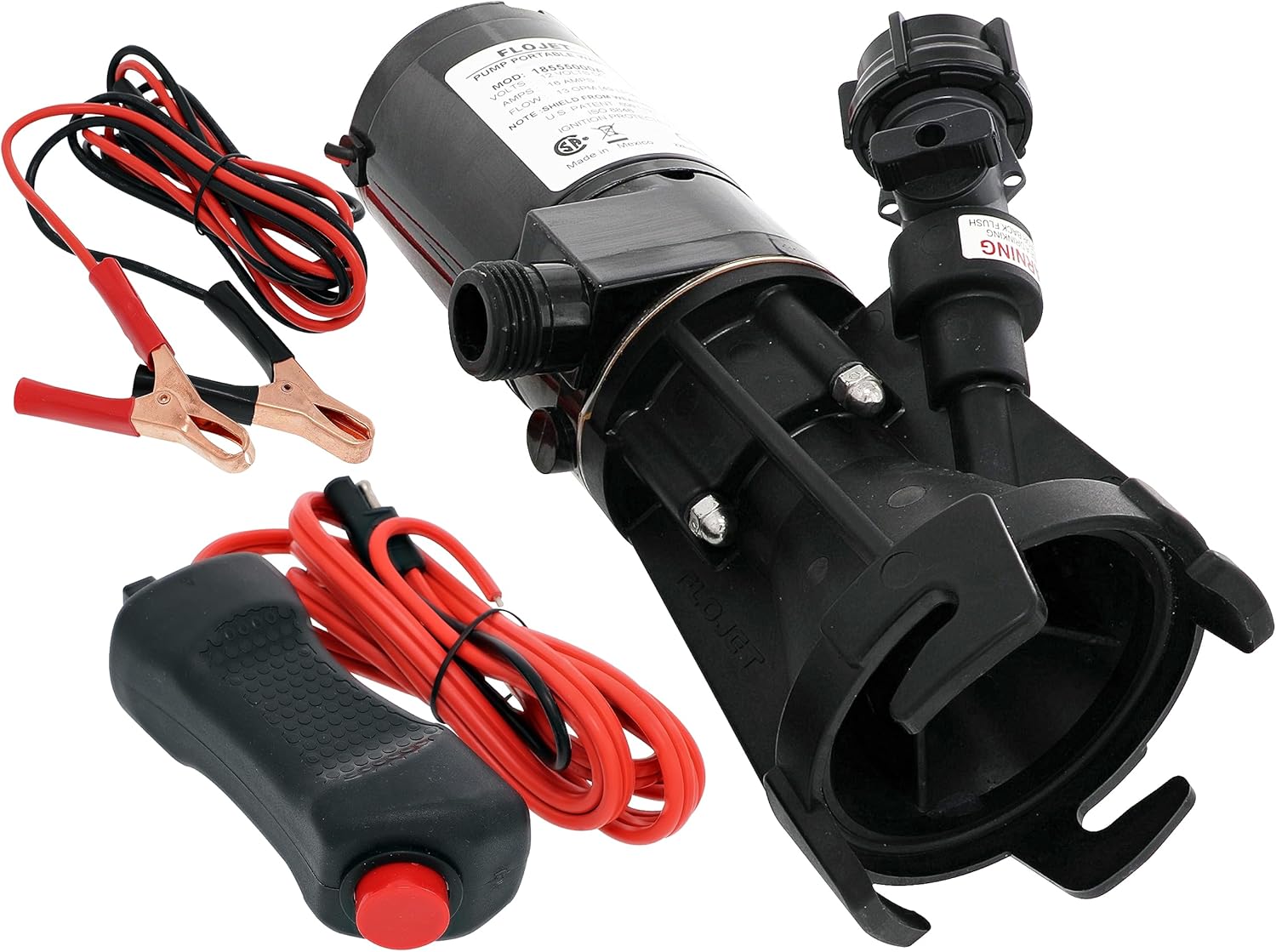
The Flojet 18555-000A is one of the more commonly reviewed portable macerator pumps in the RV space. Its 12V design means it connects directly to your RV’s power without a separate inverter, and its compact size makes storage straightforward between uses. It connects to your RV’s sewer outlet and outputs through a standard 3/4-inch garden hose connection. Flojet’s reputation for pump reliability across marine and RV applications contributes to its strong user feedback history. As with all macerator pumps, performance is affected by hose length, tank fill level, and waste consistency – confirm manufacturer-listed specs for the current version before purchasing.
Pros
- Compact and easy to store between uses
- 12V operation – no inverter required
- Garden hose output fits most standard connections
- Strong user feedback history in RV applications
- Flojet brand widely supported with replacement parts
Cons
- Portable setup requires connection before each use
- Performance varies with hose length and waste consistency
- Duty cycle limits – not designed for continuous uninterrupted use
- Confirm current specs and included adapters on listing
2. SewerFlo Quick Release RV Macerator Pump
Quick-connect design with solid build quality – a practical value-tier option
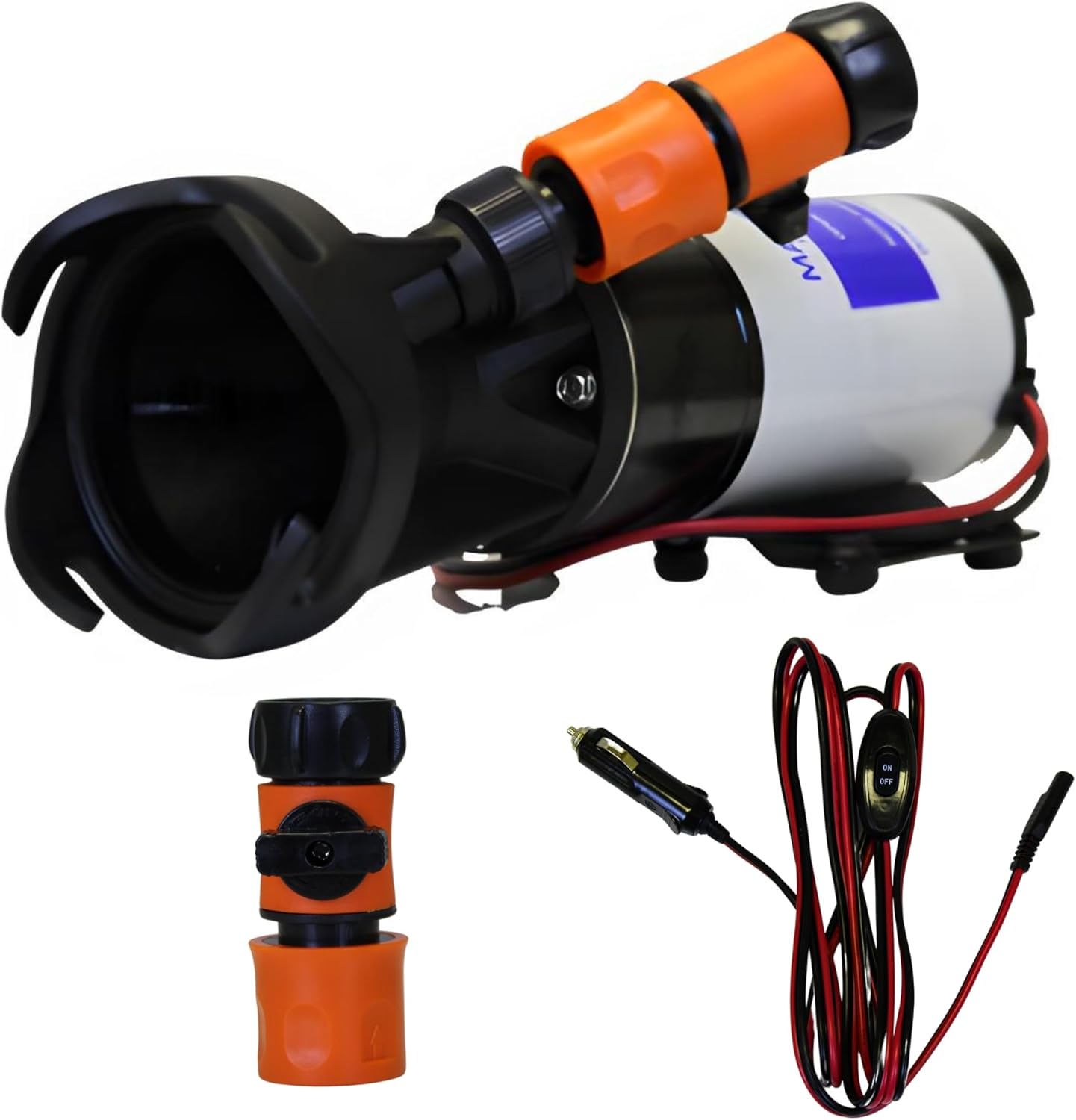
The SewerFlo Quick Release is noted in RV communities for its straightforward quick-connect attachment to the sewer outlet, which simplifies setup compared to pumps that require more involved connection steps. It operates on 12V DC and outputs through a garden hose connection. For RVers who use a macerator pump occasionally rather than as part of a daily routine, the SewerFlo offers competitive capability at a price point below the established premium brands. Confirm current specs, included hose length, and adapter compatibility on the product listing before purchasing.
Pros
- Quick-release connection simplifies attachment
- Competitive price compared to premium alternatives
- 12V operation compatible with most RV power setups
- Solid build for its price tier based on user feedback
Cons
- Less established brand history than Flojet or Thetford
- Parts and replacement blades may be harder to source
- Confirm adapters and included accessories on current listing
3. Thetford Sani-Con Turbo 400S Macerator System
A permanent or retrofit built-in macerator system for serious RV use
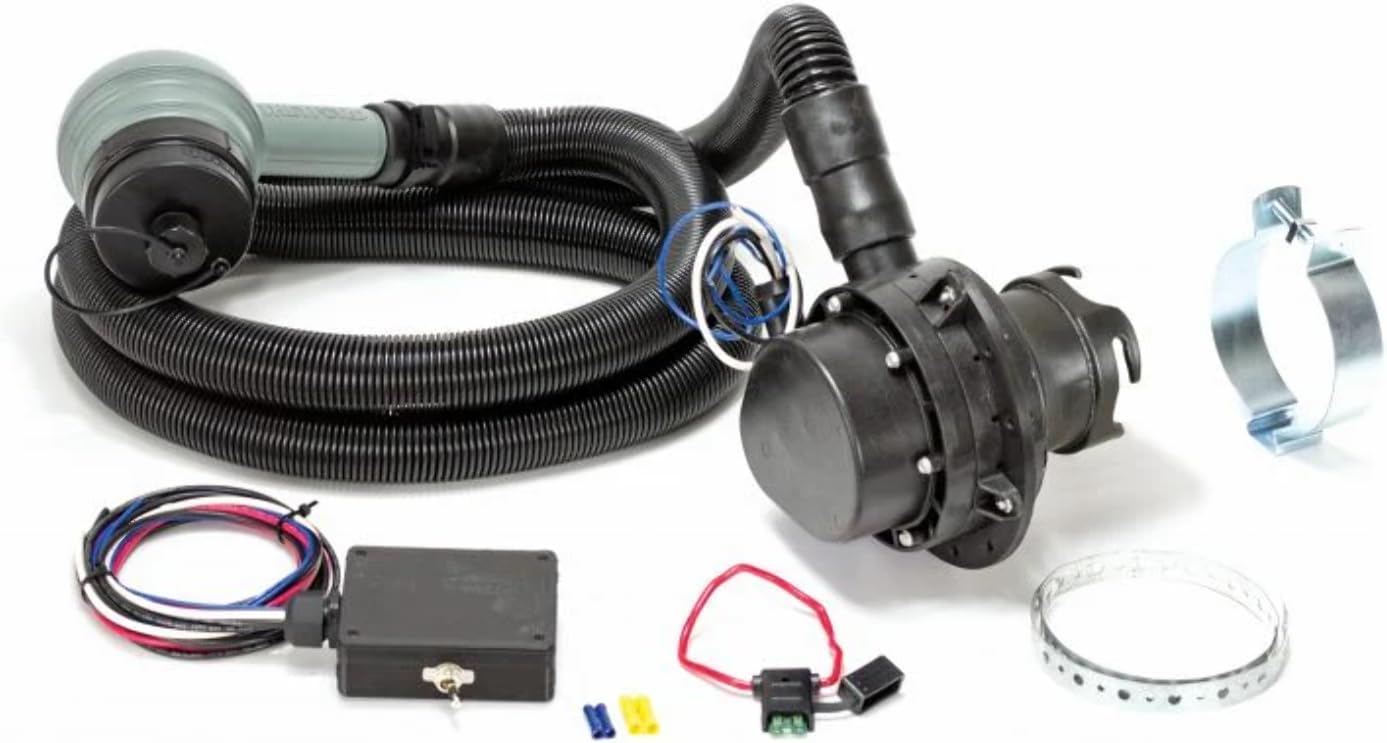
The Thetford Sani-Con Turbo 400S is a permanently mounted macerator system rather than a portable unit. It mounts to your RV’s sewer outlet assembly and is always connected – when you need to dump, you connect a garden hose to the output port, open the tank valve, and run the pump. This eliminates the setup time of portable units and is a good fit for full-timers or frequent travelers who use macerator capability regularly. Thetford is a well-established name in RV waste management. Installation typically requires drilling and mounting work; confirm compatibility with your RV model and the manufacturer’s installation requirements before purchasing.
Pros
- Always connected – no setup required before dumping
- Clean, integrated installation with no loose components
- Thetford is a well-established RV brand with strong support
- A good fit for full-timers who dump frequently
Cons
- Requires installation – not a drop-in solution
- Higher upfront cost than portable alternatives
- Confirm compatibility with your specific RV model before ordering
- Overkill for occasional or weekend campers
How to Choose an RV Macerator Pump
The right macerator pump depends on how often you’ll use it, your installation preference, and your specific dumping challenges. Here’s what to think through:
Portable pumps connect to your sewer outlet when needed and store away between uses – no installation required. Permanent systems mount to your RV and are always available, but require a one-time installation. If you use macerator capability daily, a permanent system is more convenient. For occasional use, portable is simpler and less expensive.
Occasional use: portable – Daily or frequent use: permanent systemManufacturer-listed pumping distances are typically based on ideal conditions – level ground, clean waste, and a specific hose diameter. In practice, longer hose runs and uphill pumping reduce effective distance. Treat distance specs as general guidance and confirm with the manufacturer if you have a specific long-run requirement.
Confirm manufacturer-listed distance specs match your actual use caseA macerator pump can move waste uphill – unlike a gravity hose – but elevation gain reduces flow rate and pumping distance. Manufacturer-listed lift specifications (measured in feet of head) indicate how much elevation the pump can manage. More elevation requires more pump capacity. Confirm the manufacturer-listed lift spec covers your situation.
Check manufacturer-listed lift/head specs before relying on uphill pumpingMost RV macerator pumps output through a 3/4-inch connection for a standard garden hose. The inlet connects to your RV’s sewer outlet – typically 3 inches. Confirm whether an inlet adapter is included or needs to be purchased separately for your specific RV outlet configuration.
Verify inlet adapter compatibility with your RV’s sewer outlet before orderingMost portable RV macerator pumps run on 12V DC. Amperage draw varies by model – check the manufacturer-listed amperage and ensure your battery or power outlet can sustain it through a full tank dump. Using an undersized extension cord or power source is a common failure point.
Match your power source capacity to the pump’s listed amperage drawAfter pumping, you need to flush fresh water through the pump and hose. Some pumps support a backflush connection that reverses flow for easier internal cleaning. If you’ll use the pump frequently, easy cleaning capability matters more than it does for occasional use.
Frequent use: look for models with a dedicated backflush or rinse portMacerator pumps are not designed for continuous operation. Running them beyond the manufacturer’s recommended duty cycle can cause overheating and damage. Models with thermal protection shut off automatically. Check the manufacturer’s guidance on run time before use.
Prioritize thermal protection if you’re emptying large tanks in a single sessionPortable macerator pumps store in your RV’s bay or a storage bag. After use, the pump must be flushed clean and stored dry. Residual waste left in the pump housing causes odor and can shorten component life. Storage with end caps fitted on all ports prevents residual dripping.
Flush and dry thoroughly before storing – use caps on all portsDo you actually need a macerator pump? If a standard 20-foot gravity sewer hose reaches your dump station at a level or downhill angle, a sewer hose is simpler, less expensive, and requires no power. Consider a macerator pump only when gravity dumping genuinely won’t work for your situation. See our best RV sewer hoses guide for sewer hose options.
Common RV Macerator Pump Mistakes
Most macerator pump problems come from incorrect expectations, improper use, or inadequate maintenance:
Buying a macerator pump when a gravity hose is enough
A macerator pump is a solution for specific problems – uphill runs, long distances, home cleanout connections. If your sites have a nearby dump station and standard hookups, a quality sewer hose is simpler, less expensive, and requires no power. Buy a macerator pump when you have a genuine need for it.
Ignoring lift and distance limits
Manufacturer-listed pumping distance and lift specs are based on ideal conditions. Real-world performance – with a partially full tank, longer hose runs, or more elevation – will differ. Don’t assume the listed maximum distance means that’s what you’ll achieve in practice.
Using the wrong hose diameter
Most macerator pumps output through a 3/4-inch garden hose connection. Using a larger-diameter hose reduces flow velocity and can cause waste to settle in the line. Using a hose with restrictions or kinks will reduce effective pumping distance. Match the hose diameter to the pump’s specifications.
Running the pump dry
Operating a macerator pump without waste or water flowing through it can damage the internal blades and seals quickly. Ensure waste is flowing before extended operation, and stop the pump as soon as the tank is empty. Never run it dry as a test.
Letting solids build up before pumping
Macerator pumps work best with a tank that has adequate liquid to suspend solids. A tank that’s mostly dry solids puts more strain on the blades and increases the risk of a jam. Keep tanks at a reasonable liquid level and use tank treatment to break down solids before pumping.
Not flushing the pump after use
Waste left inside the pump housing after use causes odor, corrodes seals, and shortens blade life. After emptying the tank, run fresh water through the pump until the output runs clear. This is not optional – it’s a required part of using a macerator pump.
Using an underrated extension cord or weak 12V connection
Macerator pumps draw significant current under load. An undersized extension cord creates voltage drop that reduces pump performance and can damage the motor over time. Use a properly rated 12V connection and check the manufacturer’s amperage requirements before connecting.
Expecting a macerator pump to replace proper tank maintenance
A macerator pump moves waste – it doesn’t clean your tank. Regular tank treatment, flushing after dumps, and proper valve management still apply. RVers who skip tank maintenance and rely on the pump to compensate end up with more pump problems and more persistent tank odors.
Frequently Asked Questions
What does an RV macerator pump do?
An RV macerator pump connects to your black or gray tank outlet and grinds solid waste into a fine slurry using rotating blades. It then pumps that slurry under pressure through a standard 3/4-inch garden hose connection to a dump point. This allows you to empty your tanks when gravity-fed dumping isn’t practical – uphill, over long distances, or into connections that a large sewer hose won’t fit.
Is an RV macerator pump worth it?
It depends on your situation. If you regularly camp at sites where a standard sewer hose reaches a dump station at a level or downhill angle, a macerator pump is probably unnecessary. It becomes genuinely useful when you need to dump uphill, run a long distance to a drain point, connect to a home sewer cleanout, or reach a dump station that’s far from your RV’s sewer outlet. For occasional use, a portable unit is a practical investment. For daily full-time use, a permanently installed system is more convenient.
Can a macerator pump pump uphill?
Yes – unlike a gravity sewer hose, a macerator pump can move waste uphill because it operates under pressure. However, elevation gain reduces effective pumping distance. Manufacturer-listed “lift” or “head” specifications indicate how much elevation the pump can handle. Confirm these specs match your actual situation, and treat manufacturer maximums as figures achieved under ideal conditions rather than guaranteed real-world performance.
How far can an RV macerator pump pump waste?
This varies significantly by model, hose diameter, elevation change, and waste consistency. Manufacturer-listed maximum distances are based on ideal conditions. In practice, a combination of distance and elevation will reduce what a pump can achieve. Check the manufacturer’s specifications for your specific model and treat distance figures as approximate guidance. If you have a specific long-run requirement, confirm with the manufacturer or a dealer before purchasing.
Can I use a garden hose with an RV macerator pump?
Yes – that’s the point of a macerator pump. The pump grinds waste fine enough to move through a standard 3/4-inch garden hose, which is far smaller than a sewer hose. Use a hose rated for waste or at minimum a heavy-duty garden hose. Dedicate that hose to waste use only and label it clearly. Do not use it for fresh water afterward.
Do macerator pumps work with black water?
Yes – black water is the primary use case. Macerator pumps are designed to handle toilet waste (black water) and can also handle gray water (sink and shower waste). Some RVers run gray water through first and black water second to help flush the pump. Always follow the manufacturer’s guidance for your specific pump.
How do you clean an RV macerator pump?
After emptying the tank, run fresh water through the pump until the output runs clear. Some pumps support a backflush function that reverses flow for more thorough internal cleaning. After flushing, allow the pump to drain fully, then cap all ports before storing. Do not store a pump with residual waste inside – this is the primary cause of odor and accelerated blade wear.
Is a macerator pump better than a sewer hose?
For most campground setups, a sewer hose is simpler and more reliable. A macerator pump is better when a sewer hose genuinely won’t work – uphill runs, long distances, or home cleanout connections. Think of them as complementary tools for different situations rather than one replacing the other. Many RVers carry a sewer hose as their primary dump method and a macerator pump for situations where the hose isn’t practical.
Disclosure: This guide contains affiliate links. If you purchase through these links, we may earn a small commission at no extra cost to you. Recommendations are based on available product information, user feedback patterns, and suitability for different RV use cases – not commission rates. Always confirm current specs on the product listing before purchasing.