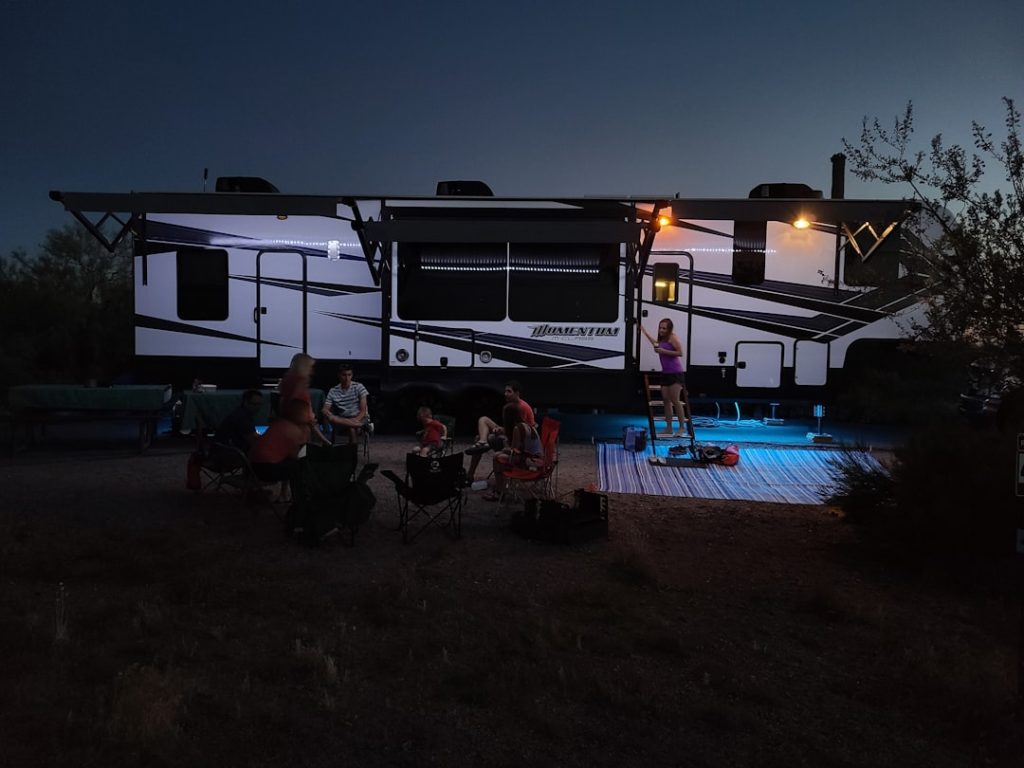
Most campers automatically request corner sites, assuming they’ll have more privacy and space. In practice, corner sites often come with hidden drawbacks that experienced RVers have learned to spot on campground maps. Corner lots frequently sit next to service roads, dumpsters, or maintenance areas that aren’t clearly marked on reservation websites but generate noise and traffic throughout the day.
The better strategy is learning to read site maps for practical details. Sites numbered in the middle of loops often have the most consistent spacing and fewest surprises. Look for sites that back up to natural barriers like treelines or hillsides rather than other campsites — these provide genuine privacy without the service area complications that corner sites sometimes inherit.
Reservation systems typically show site dimensions, but they don’t highlight which sites are actually level or which direction the utilities are oriented. Sites with utilities on the ‘wrong’ side of your rig can leave you stretching connections or positioning awkwardly just to reach hookups. If you have flexibility in your arrival date, calling the campground directly often gets you better intel than the online map provides.
Seasonal campers and campground employees consistently choose sites that aren’t corners but aren’t dead center either — typically sites about one-third of the way around a loop, positioned to avoid both the entrance traffic and the back corner service areas. These sites tend to be booked less automatically, leaving them available when the obvious corner spots are already taken.