Carbon Monoxide Safety in Your RV
CO is colorless, odorless, and lethal-and RVs are uniquely vulnerable. Propane stoves, furnaces, and nearby generators all create risk in a small, sealed space. We reviewed the top-rated detectors for RV use, focusing on placement flexibility, dual-gas detection, and fast alarm response.
Why RV CO Risk Is Different from Home
In a stick-built home, CO detectors are hardwired and professionally placed. In an RV, you’re working with tight spaces, 12V or AC power constraints, propane appliances, and the constant risk of generator exhaust drifting in while you sleep. Placement matters more than any other factor-the wrong location can delay an alarm by critical minutes.
Each product below solves a distinct part of this problem: whole-rig coverage, sleeping area protection, and dual gas (CO + propane) detection near appliances.
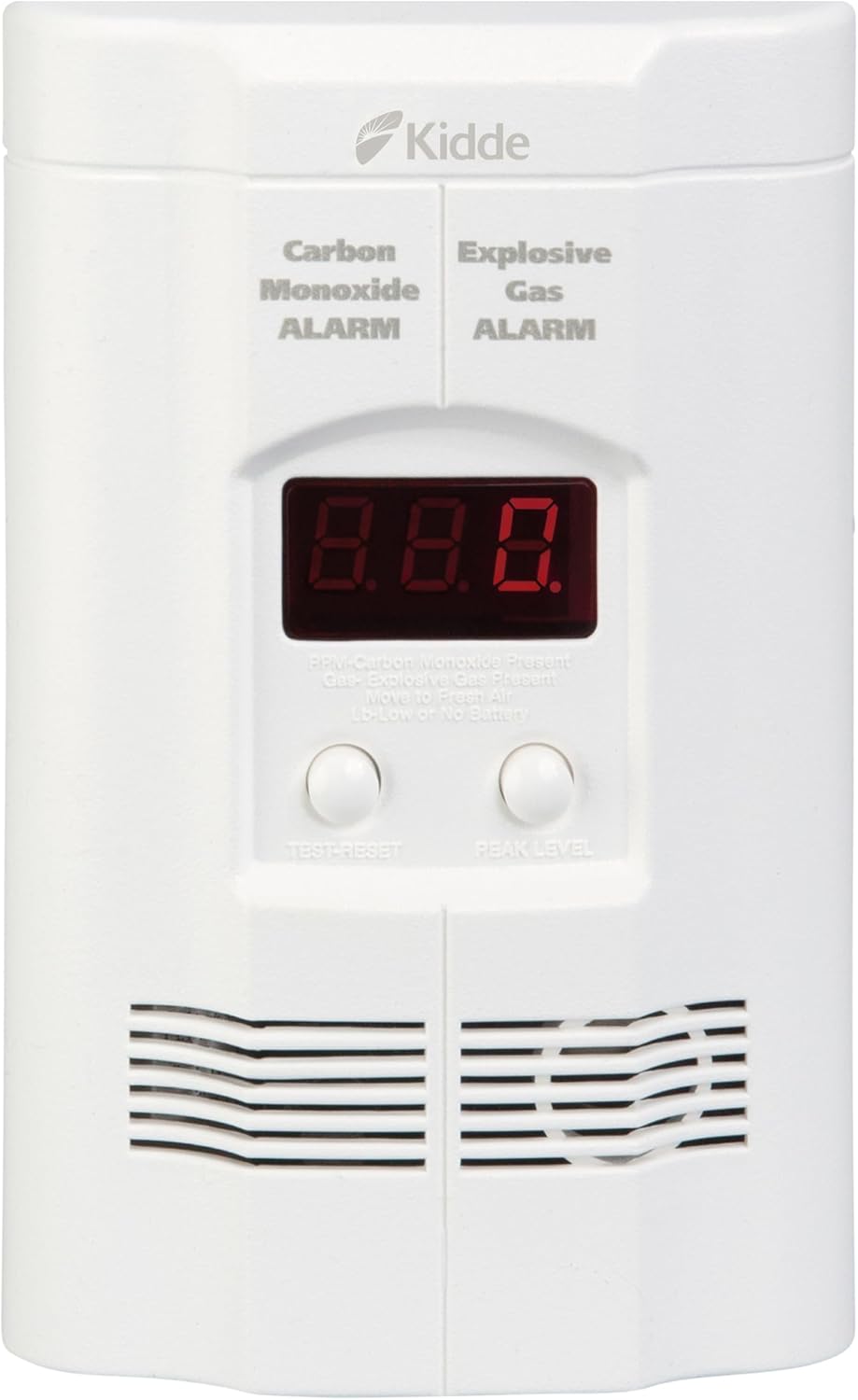
Kidde Carbon Monoxide + Explosive Gas Alarm
Best for: Full-rig protection near appliances and outlets
Why Appliance Zones Are the Highest Risk
Propane stoves, water heaters, and furnaces are all potential CO sources. In an RV, these appliances share space with your living and sleeping areas-there’s no basement or utility room to isolate them. If a burner runs low on oxygen or a connection is slightly loose, CO builds quickly in an enclosed rig.
Plug-In with Battery Backup
The Kidde COPDLG plugs directly into a standard AC outlet and adds a battery backup for shore power outages. The rotating plug lets you orient it correctly on any outlet regardless of panel position-a practical detail that matters in RV cabinetry. The backlit digital display shows real-time CO levels in parts per million, not just an alarm state.
📍 Placement Tip
Mount near your kitchen/galley area at counter height (2–5 ft from floor). CO from cooking or a faulty stove concentrates here first. Keep at least 5 ft from the stove itself to avoid false alarms from cooking fumes.
- Detects CO, propane, methane, and other explosive gases
- 85 dB alarm with LED status indicators
- Real-time digital display refreshes every 15 seconds
- Rotating plug fits any outlet orientation
- 9V battery backup for power outages
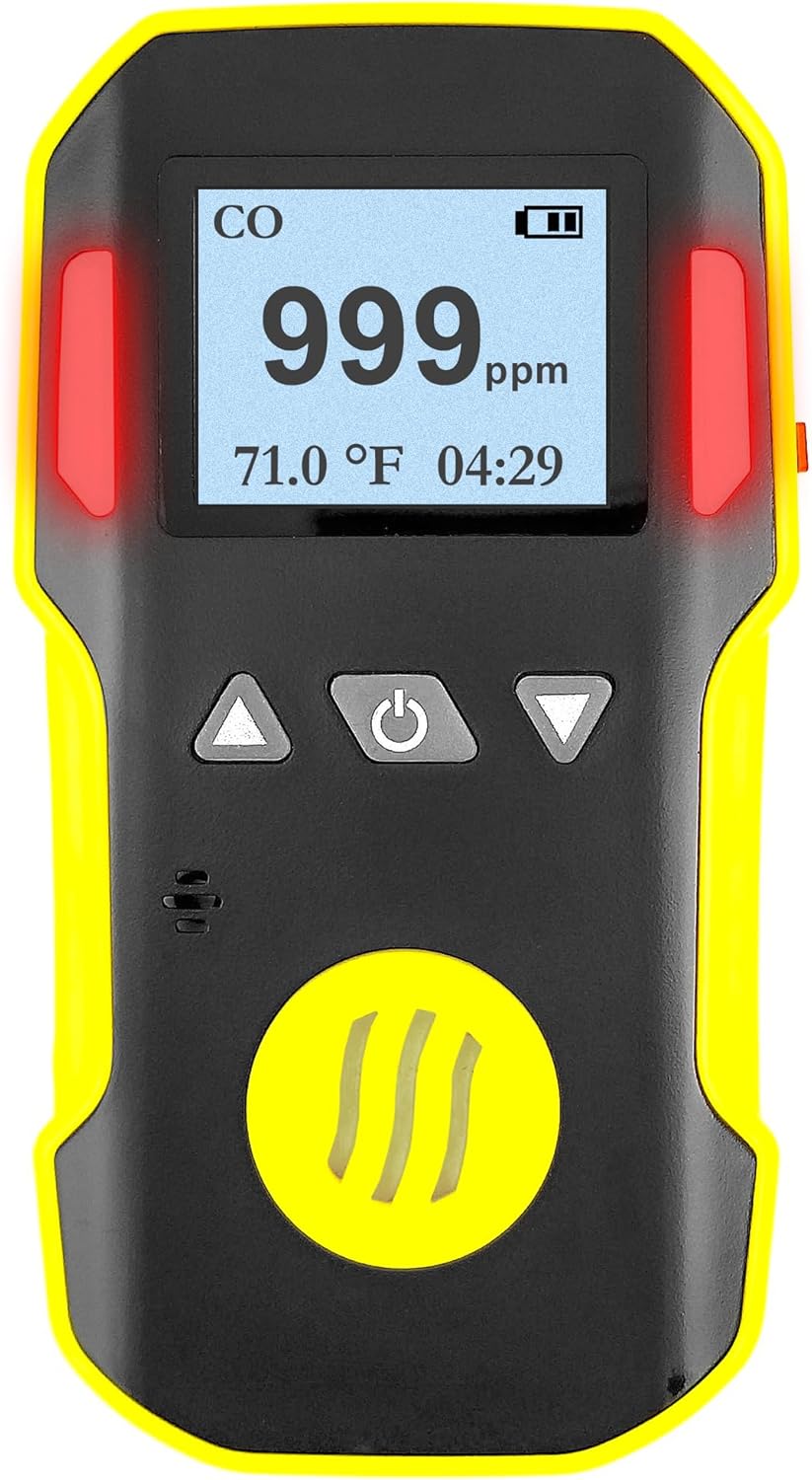
Forensics Detectors Portable CO Detector
Best for: Bedside monitoring and overnight generator exposure
The Overnight Generator Problem
Many RVers run a generator during sleep for AC power or climate control. If a neighboring rig’s generator is upwind-or your own exhaust is near a window-CO can seep in while you’re unconscious. Standard detectors placed at appliance height may not alarm fast enough for bedside protection. You need a dedicated sleeping-area unit that alarms at lower thresholds.
Lab-Tested, Consumer Reports Recommended
Consumer Reports rated this among their top portable detectors for speed of alarm and CO level accuracy across multiple test concentrations. It uses an electrochemical sensor-the same technology used in professional-grade monitors-rather than the cheaper metal oxide sensors found in most budget units.
📍 Placement Tip
Place on your nightstand or clip to the bed frame at breathing height. CO is roughly the same density as air, so it distributes evenly-the key is proximity to where you’re breathing while asleep, not floor vs. ceiling.
- Electrochemical sensor for accuracy at low CO levels
- Battery-powered-no outlet needed, fully portable
- Compact enough for a nightstand or gear bag
- Loud alarm tested to respond within minutes at 100 ppm
- Consumer Reports top-rated portable model (2026)
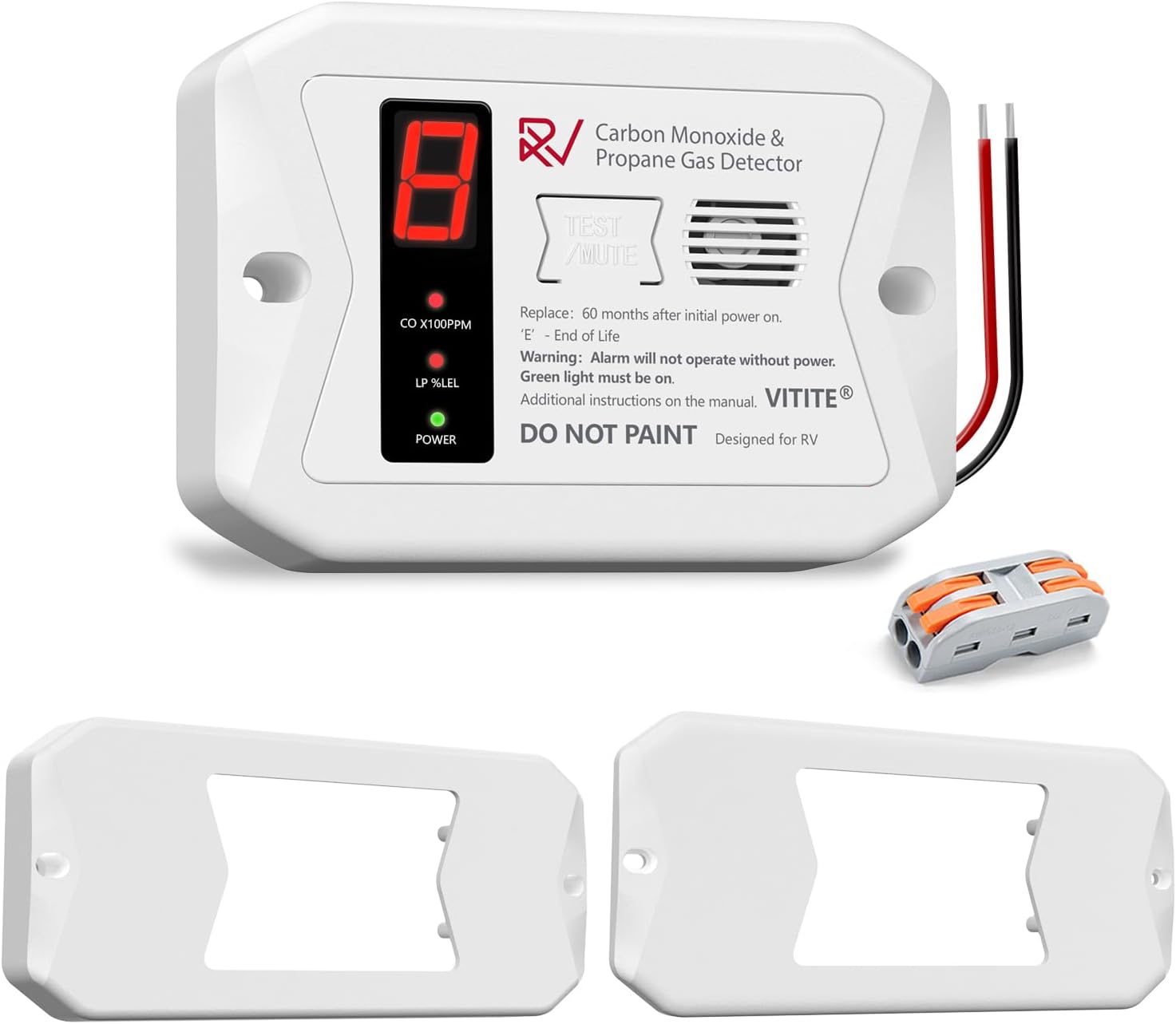
Vitite RV Carbon Monoxide & Propane Detector
Best for: Hardwired 12V RV systems and propane dual-threat coverage
Propane Is a Separate Risk-and It Sinks
Unlike CO, propane is heavier than air. It collects at floor level, which means a propane leak can pool invisibly under your dinette or near your floor vents while a CO-only detector mounted at counter height misses it entirely. RV-specific detectors are designed with both threats in mind and calibrated for the gas profiles found in motorhomes and travel trailers.
Designed Specifically for RV 12V Systems
The Vitite hardwires directly into your RV’s 12V DC system-no shore power dependency, no battery to replace. It’s compatible with most standard RV detector mounting holes, making it a straight swap for aging OEM units. Lever-nut connectors mean no splicing or electrical tape. Response time runs 0.5–2 seconds from gas detection to alarm.
📍 Placement Tip
Mount 4–20 inches above the floor, near your propane appliances (stove, furnace, refrigerator). This low placement catches propane pooling at floor level. Don’t mount it directly behind the stove-the airflow will create false alarms from cooking.
- Detects both carbon monoxide and propane gas
- 12V DC hardwired-no batteries or shore power needed
- Replaces most OEM RV detector units (compatible mounting)
- 0.5–2 second response time with real-time concentration display
- 5-year warranty with free repair or replacement service
Where to Place CO Detectors in Your RV
Placement is the most overlooked factor in RV CO safety. This walkthrough covers exactly where to put detectors for sleeping areas, appliance zones, and generator exposure scenarios.

A practical guide to RV carbon monoxide detector placement and setup.
Frequently Asked Questions
At minimum, one near your sleeping area and one near propane appliances. In larger Class A or Class C rigs, consider a third unit near any slideout with a gas appliance. The goal is coverage at both sleeping height (for CO) and floor level (for propane, which sinks).
You can use portable battery or plug-in detectors from home brands-Consumer Reports-rated models like the Forensics Detectors unit work well. However, hardwired home detectors won’t work in 12V RV systems. For a permanent installation, use an RV-rated 12V unit like the Vitite to match your rig’s power system.
Avoid placing detectors directly next to cooking appliances (causes false alarms from cooking fumes), inside cabinets or storage compartments, near air vents that could dilute gas readings, or in areas with extreme heat or humidity that can degrade sensors faster.
Most electrochemical CO sensors degrade after 5–7 years regardless of whether they’ve alarmed. Check the manufacture date on your unit-many RV owners discover their OEM detector is well past its service life. The Vitite carries a 5-year warranty and the Forensics unit’s sensor life is clearly labeled on the device.
No-they require different sensor types and different placement heights. CO is similar in density to air and distributes evenly, so detectors can be mounted at counter height. Propane is heavier than air and sinks to the floor, requiring detectors mounted 4–20 inches from the ground. A 2-in-1 unit like the Vitite handles both in one device.
Yes. The portable and plug-in units (Kidde and Forensics Detectors) are eligible for Amazon’s standard 30-day return policy. The Vitite hardwired unit also ships via Amazon-check the product page for current return terms, as hardwired items may have slightly different policies.