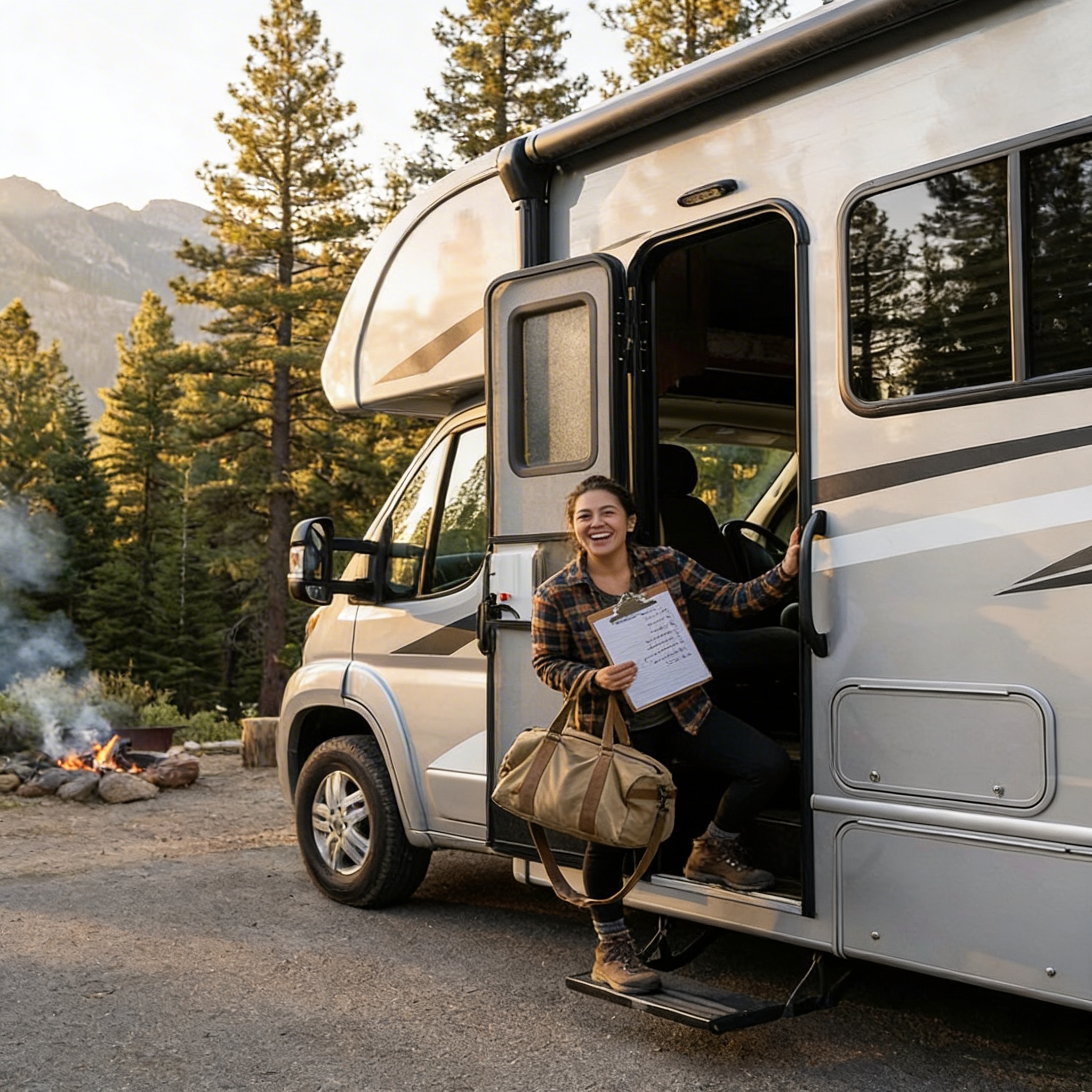
RV Camping Necessities Every Beginner Needs on Day One
The 7 RV Camping Necessities Every Beginner Needs on Day One
🧪 Black Tank Treatment
Your RV’s black tank holds all toilet waste. Without treatment, it smells, sensors malfunction, and waste doesn’t break down properly. This is one of the most critical rv camping necessities that new owners overlook — until it’s too late.
- Add treatment after every dump, immediately before your next use
- Enzymatic treatments break down solid waste and control odor-causing bacteria
- Drop-in pods are the easiest format for beginners — no measuring, no spilling
🚰 Inline Water Filter
Campground water quality varies wildly. Without a filter, you’re drinking and showering in water that may be heavily chlorinated, full of sediment, or carrying bacteria from aging pipes. An inline water filter is one of the most important trailer camping necessities — and one of the cheapest.
- Connects between the campground spigot and your RV inlet — no tools needed
- Removes chlorine, sediment, and odor-causing compounds before they enter your tank
- Always use a white NSF-certified drinking water hose alongside the filter
🚿 Sewer Hose Kit
No sewer hose = no dumping your tanks. This is the single most common thing first-time RVers forget to bring — and it’s an unforgettable lesson. A quality sewer hose kit is a non-negotiable item on any rv setup checklist and a core part of your camping necessities for camper list.
- Get at least 20 feet — some dump stations are farther than you’d expect
- Look for steel-wire reinforced hoses with a clear elbow so you can see when the tank is empty
- A 4-in-1 adapter ensures it connects to any dump station fitting
💧 Water Pressure Regulator
Campground water pressure can spike to 100 PSI or more. Your RV’s plumbing is built to handle 40–60 PSI. Without a regulator, you risk blowing out hose connections, damaging your water pump, or cracking fittings — an expensive repair that’s 100% preventable.
- Screws onto the spigot before your hose — takes 10 seconds
- Get an adjustable brass regulator so you can fine-tune the pressure
- A must-have item in any rv pre delivery checklist or rv setup checklist
📐 Leveling Blocks
An unlevel RV causes sliding drawers, uncomfortable sleeping, poor refrigerator performance, and uneven water heater operation. Leveling blocks are one of the most overlooked rv camping necessities — until your first night sleeping at a weird angle.
- Interlocking plastic blocks are lightweight, stackable, and work on any surface
- Drive slowly onto them — have a partner guide you
- Use wheel chocks after leveling to prevent rolling
🧹 RV-Safe Cleaning Solution
Standard household cleaners can damage RV surfaces, rubber seals, and tank sensors. An RV-specific multi-surface cleaner is a must-have for rv essentials for beginners — inside and out. This is one of the camping necessities for camper owners that protects your investment long-term.
- Use RV-safe cleaners on counters, walls, and bathroom surfaces
- Never use bleach on rubber seals or tank sensors — it causes damage over time
- Keep a small spray bottle inside and a larger one for exterior cleaning
🧤 Disposable Gloves + Hose Accessories
Handling the sewer hose without gloves is a mistake you only make once. A box of disposable nitrile gloves and a few basic hose accessories round out your setup and make every hookup and dump cleaner, faster, and less stressful.
- Nitrile gloves — more durable than latex, better grip when wet
- 90-degree hose elbow — makes connecting the water hose much easier at awkward spigot angles
- Hose cap/plug — keeps the end of your drinking water hose clean when not in use
- Sewer hose support — keeps the hose off the ground and ensures proper downhill flow
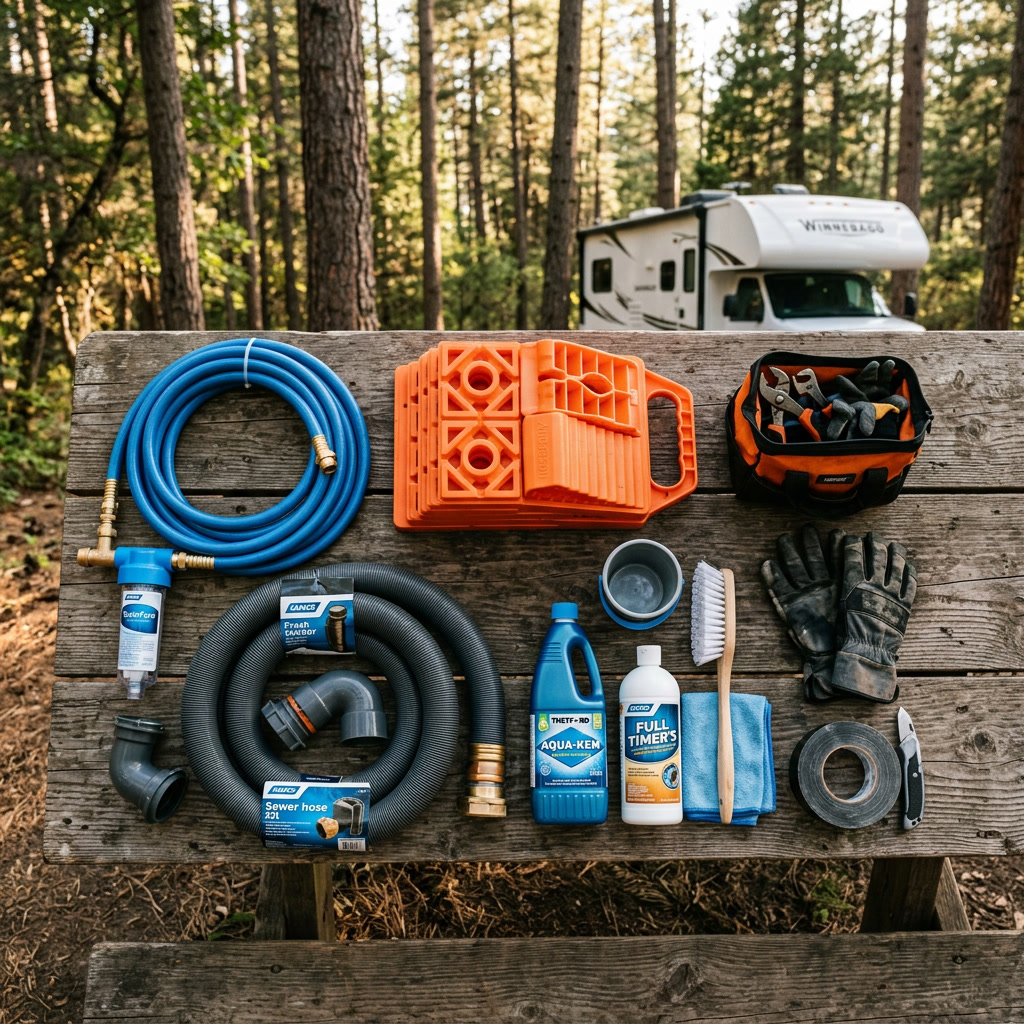
Quick RV Setup Checklist for Beginners
Before you leave the driveway on your first trip, run through this rv setup checklist to make sure you have all your rv camping necessities covered:
- ✅ Black tank treatment — in the tank and a spare supply on board
- ✅ Inline water filter — connected and within replacement date
- ✅ Sewer hose kit — 20 feet minimum, with 4-in-1 adapter
- ✅ Water pressure regulator — on the spigot before the hose
- ✅ Leveling blocks + wheel chocks — packed and accessible
- ✅ RV-safe cleaning supplies — interior and exterior
- ✅ Disposable gloves + hose accessories — in the sewer compartment
- ✅ Drinking water hose — white, NSF-certified, separate from sewer gear
FAQ — RV Essentials for Beginners & Camping Necessities
Final Thoughts
Your first RV trip should be about the experience — not scrambling for gear at a campground store that closed at 5pm. These 7 trailer camping necessities are the difference between a smooth Day One and a stressful one.
You don’t need to spend a fortune. Most of these rv essentials for beginners cost between $10 and $40, and together they cover every essential system in your RV — water, waste, leveling, and cleaning. Get them before you go, keep them organized, and you’ll be set for every trip after this one too.
👉 I put together a simple list of beginner-friendly rv camping necessities here — everything above is linked directly to Amazon so you can build your kit in one order.