Best RV Tank Treatments (2026 Guide)
RV tank treatments help control odor, break down waste and toilet paper, reduce buildup in black and gray tanks, and keep holding tank sensors working more reliably – compared here by format, effectiveness, and use case.
Your RV’s black tank is a sealed environment that needs active management. Without treatment, solid waste and toilet paper don’t break down effectively, odors build up and find their way back into the living space, sensors get coated with residue and start reading inaccurately, and the tank becomes harder to clean over time.
RV tank treatments address these problems – but not all of them work the same way. Enzyme-based treatments use beneficial bacteria to biologically break down waste over time. Chemical deodorizers mask odors quickly but don’t necessarily break down solids. Some products combine both approaches. The format matters too: liquid treatments go in immediately, drop-in packets are convenient to store and use, and tablets dissolve slowly over multiple days.
Choosing the right treatment depends on how often you dump, what climate you camp in, how much you’re concerned about septic-safe compliance, and whether sensor buildup is a recurring issue for your rig.
This guide compares RV tank treatments by type, odor control approach, waste breakdown capability, ease of use, and best use case. Products were selected by evaluating manufacturer-listed claims, format, user feedback patterns, and suitability for different RV situations. We did not conduct hands-on testing. Confirm current formulas and dosage instructions on the product listing before use.
Recommended RV Tank Treatments
Five well-reviewed options across different treatment formats and use cases:
Camco TST Ultra-Concentrated Drop-Ins
A widely used drop-in packet treatment combining enzyme action with deodorizer. Convenient, effective for most RVers, and consistently recommended across the RV community.
Check price →Walex Porta-Pak Drop-Ins
Pre-measured dissolvable packets that are mess-free and easy to store. A practical choice for part-time RVers who want simple, no-measuring convenience.
Check price →Happy Campers Organic Holding Tank Treatment
A granular treatment with strong user feedback for odor control – especially in hot weather. Works in black and gray tanks and is designed to be septic-safe.
Check price →Thetford Aqua-Kem Original
A long-established liquid chemical deodorizer that controls odors quickly. Widely available and commonly used as a reliable standby treatment for black tanks.
Check price →Unique RV Digest-It Ultra
An enzyme/bacteria-based treatment with a strong reputation for breaking down the residue that coats tank sensors and causes inaccurate readings over time.
Check price →How We Evaluated
Products were assessed based on manufacturer-listed claims, treatment format, available user feedback, and suitability for different RV use patterns. All claims should be verified on the current product listing before use.
Some treatments mask odors with fragrance (deodorizers). Others break down the organic matter that causes odor (enzyme/bacteria). Some combine both. We noted which approach each product takes and how that affects performance in different conditions.
Enzyme and bacteria-based treatments are designed to biologically break down waste and paper over time. Chemical treatments primarily deodorize rather than break down solids. Better waste breakdown generally means easier dumping and fewer clogs.
Liquids work immediately but require measuring and risk spills during storage. Drop-in packets and pods are pre-measured, mess-free, and easy to store. Granular treatments dissolve in water and can cover multiple tank sizes with dose adjustment.
Biological treatments slow down significantly in cold temperatures and may work faster than expected in extreme heat. Chemical deodorizers are more temperature-stable. Hot-weather camping puts more demand on any tank treatment.
Tank sensors get coated with residue over time, causing false readings. Treatments that break down solids effectively help reduce sensor fouling. Some products are marketed specifically for sensor cleaning – confirm this claim on the current listing.
Many campgrounds and RV parks require septic-safe treatments. Enzyme/bacteria-based products are generally considered more campground-compatible than chemical formaldehyde-based treatments. Confirm septic-safe status on the current product listing for your specific region.
Cost per tank dump varies widely. Concentrated products often cost less per use despite higher upfront price. We noted format and typical dosage to give a sense of cost-per-use, but confirm current pricing and dosage on the listing.
We reviewed commonly noted strengths and limitations from RV communities and product review patterns. No claims in this guide are based on hands-on testing by our team.
Note: Product formulas, scent options, and usage instructions can change. Always confirm current directions, tank size dosage, and septic-safe claims on the product listing before use.
Comparison Table
Side-by-side overview of the recommended RV tank treatments:
| Product | Format | Main Use | Formula | Best For | Link |
|---|---|---|---|---|---|
| Camco TST Ultra Drop-Ins Best Overall | Drop-in packets | Odor + breakdown | Enzyme + deodorizer | Most RVers, everyday use | Check price |
| Walex Porta-Pak Drop-Ins Drop-In | Dissolvable pods | Odor + breakdown | Enzyme-based | Part-time RVers, convenience | Check price |
| Happy Campers Treatment Granular | Granular powder | Odor control | Mineral-based | Hot weather, strong odors | Check price |
| Thetford Aqua-Kem Odor | Liquid | Odor control | Chemical deodorizer | Quick odor control, standby use | Check price |
| Unique RV Digest-It Ultra Enzyme | Liquid | Breakdown + sensors | Enzyme/bacteria | Sensor issues, full-timers | Check price |
Detailed Reviews
A closer look at each treatment – how it works, who it suits, and its limitations. All specs are based on available manufacturer information; confirm current details on the product listing.
1. Camco TST Ultra-Concentrated Drop-In Treatments
A convenient, widely recommended drop-in packet for everyday black tank use

Camco’s TST Ultra-Concentrated Drop-Ins are among the more commonly reviewed RV tank treatments, with strong feedback across a wide range of RV setups. The pre-measured packet format eliminates measuring and reduces spill risk, and the product is designed to combine odor-controlling deodorizer with enzymes intended to help break down waste and toilet paper. Camco is a well-established RV brand with broad product availability. Confirm the current formula, dosage per tank size, and septic-safe status on the product listing before use, as formulas and available scents change.
Pros
- Pre-measured – no pouring or measuring required
- Combines odor control with enzyme breakdown action
- Compact and easy to store in RV cabinets
- Widely available from a trusted RV brand
- Consistent user feedback across diverse RV setups
Cons
- Enzyme action may slow in cold temperatures
- Not a substitute for regular tank flushing
- Confirm septic-safe status on current listing
2. Walex Porta-Pak Holding Tank Deodorizer Drop-Ins
Dissolvable pods – mess-free convenience for part-time RVers
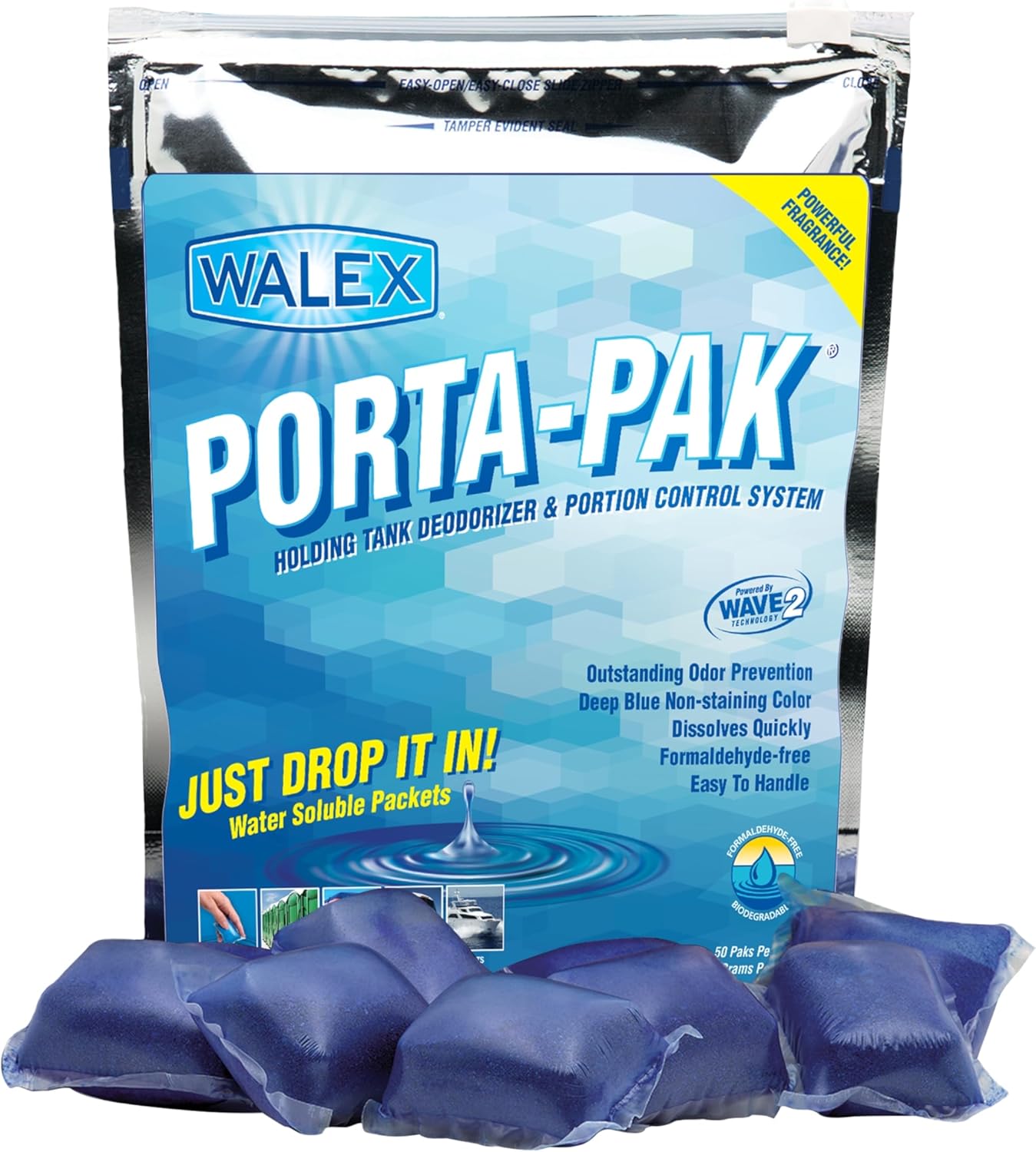
Walex Porta-Pak pods dissolve fully in the tank without any measuring or pouring. Each pod is individually wrapped, which makes storage straightforward and prevents accidental spills during travel. The enzyme-based formula is designed to help break down waste and control odors, and Walex lists the product as formaldehyde-free. For RVers who dump regularly and want a simple, consistent routine without handling liquid treatments, Porta-Pak pods are a practical option. Confirm current dosage recommendations and septic-safe status on the product listing.
Pros
- Fully dissolving pods – zero measuring or mess
- Individually wrapped – easy to store and travel with
- Listed as formaldehyde-free
- Enzyme formula designed to break down waste
Cons
- Enzyme performance may vary in very cold conditions
- May need more water in tank to activate fully
- Confirm current septic-safe and campground compliance on listing
3. Happy Campers Organic Holding Tank Treatment
Granular treatment with strong odor control feedback – particularly in hot weather
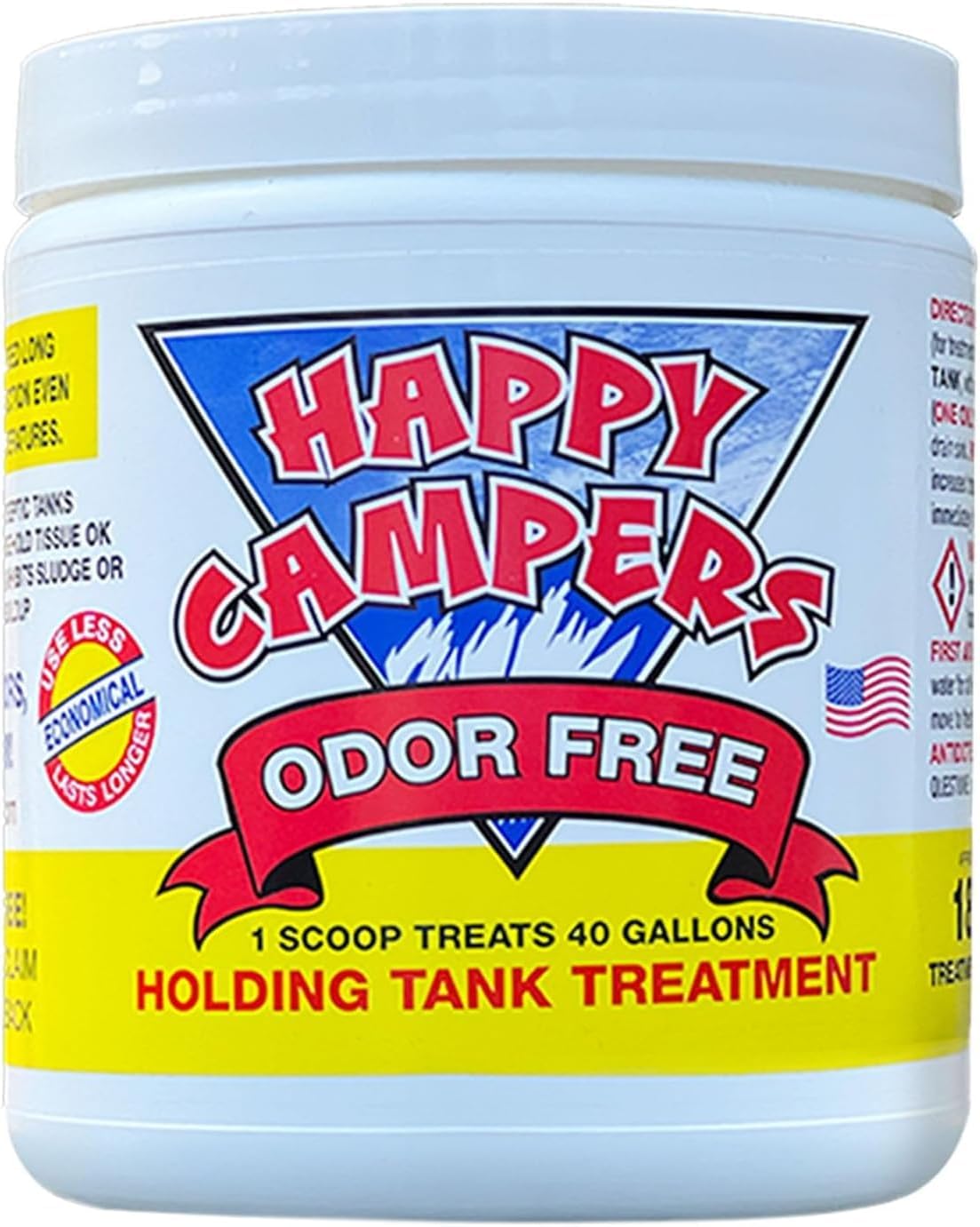
Happy Campers is a granular treatment that dissolves in water before going into the tank. It has a notably strong reputation in RV communities specifically for hot-weather odor control, where many liquid and enzyme treatments struggle to keep up. The product is marketed as “Organic” on its packaging (the brand name includes this term), but the manufacturer describes the formula as mineral-based – not enzyme or bacteria-based. It is frequently cited by full-timers as more effective in summer conditions than standard enzyme treatments, which slow down in heat. The granular format adjusts to different tank sizes by varying the amount used. Confirm current dosage, formula details, and septic-safe compliance on the product listing.
Pros
- Consistently strong user feedback for hot-weather odor control
- Works in both black and gray tanks
- Adjustable dosing – one container covers multiple tank sizes
- Listed as organic with no harsh chemicals
Cons
- Granular format requires dissolving before use
- Less convenient than pre-measured pod formats
- Confirm current dosage and septic-safe status on listing
4. Thetford Aqua-Kem Original Holding Tank Treatment
A long-established liquid deodorizer for reliable, quick odor control

Thetford Aqua-Kem has been a standard chemical deodorizer in the RV market for many years. It is a liquid treatment that works quickly to control odors rather than biologically breaking down waste. For RVers who primarily need fast, reliable odor suppression and dump frequently enough that waste breakdown is less of a concern, Aqua-Kem is a simple and widely available option. It is important to note that Aqua-Kem is a chemical deodorizer – not an enzyme treatment – so its approach is different from biological products. Check the current formula version and septic-safe requirements before use, as campground restrictions on chemical treatments vary.
Pros
- Works quickly for odor control
- Long-established product with wide availability
- Simple liquid format – pour and go
- Reliable standby option at many RV supply stores
Cons
- Chemical deodorizer – does not biologically break down waste
- Some campgrounds restrict chemical formaldehyde-based treatments
- Liquid format – requires careful storage to avoid spills
- Confirm current septic-safe and campground restrictions on listing
5. Unique RV Digest-It Ultra RV Toilet Treatment
Super-concentrated enzyme formula for waste breakdown, odor control, and sensor maintenance
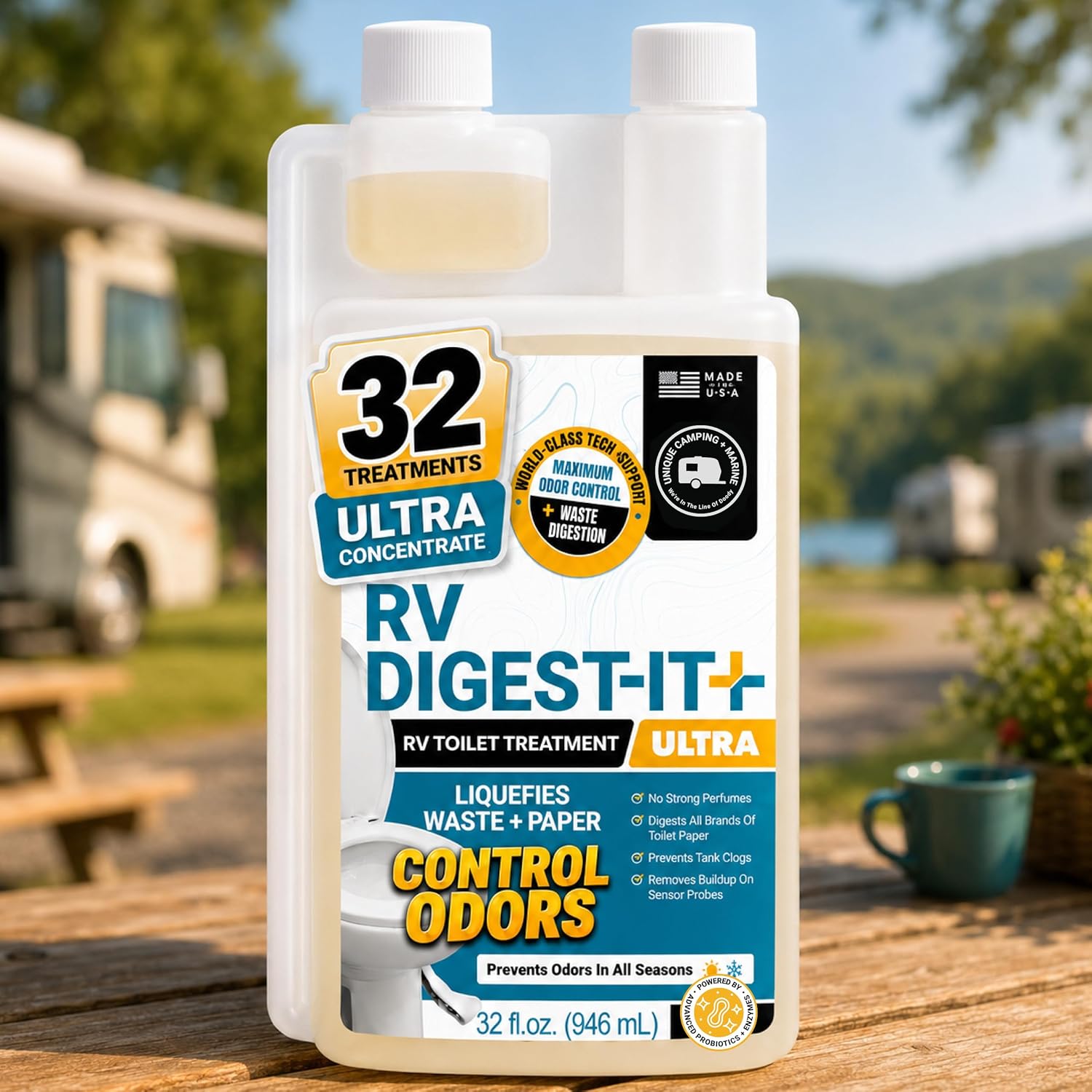
Unique’s Holding Tank Treatment uses live bacteria and enzyme cultures to biologically break down waste, toilet paper, and the organic residue that coats tank sensors over time. It has a strong reputation in full-timer communities specifically for helping with sensor inaccuracy caused by buildup – a common frustration when sensors read full when the tank has been recently dumped. Enzyme/bacteria treatments require adequate water in the tank and some time to work, so they are better suited to regular maintenance than emergency odor control. Confirm current formula, dosage, and septic-safe certification on the product listing before use.
Pros
- Live bacteria and enzyme formula breaks down waste and paper
- Strong user feedback for reducing sensor buildup over time
- Works in both black and gray tanks
- Generally considered septic-safe – confirm on current listing
Cons
- Requires adequate water to activate bacteria cultures
- Slower acting than chemical deodorizers – not for immediate odor emergencies
- Performance reduced in very cold temperatures
- Sensor improvement takes consistent use over multiple dumps
How to Choose an RV Tank Treatment
The right treatment depends on your camping style, climate, how often you dump, and whether odor control or waste breakdown is your primary concern:
If fast, reliable odor suppression is your top priority, a chemical deodorizer like Aqua-Kem works quickly. If you want odor control that comes from actually breaking down the waste causing the smell, an enzyme/bacteria product takes longer to work but addresses the root cause.
Fast odor fix: chemical deodorizer – Long-term odor reduction: enzyme/bacteriaEnzyme and bacteria-based treatments biologically break down waste and paper over time, are generally septic-safe, and support sensor health. Chemical treatments deodorize faster but don’t break down solids. Some campgrounds prohibit formaldehyde-based chemical treatments – check restrictions before choosing.
Septic-safe requirements or sensor issues: enzyme/bacteria treatmentsLiquid treatments work immediately and can cover multiple tank sizes with dose adjustment, but require storage care to avoid spills. Pre-measured pods and packets are mess-free and convenient but offer less dosing flexibility. Granular products offer adjustable dosing without the spill risk of liquids.
Convenience: pods – Flexibility: liquid or granularDosage recommendations vary by product and tank size. Using too little reduces effectiveness; using too much wastes product without extra benefit. Check the manufacturer’s current dosage chart for your specific tank capacity before each use.
Always confirm dosage for your tank size on the current product listingHeat accelerates waste breakdown but also intensifies odors and can overwhelm standard treatments. Enzyme cultures may work faster in heat but some standard treatments lose effectiveness. If you regularly camp in hot climates, look for products specifically noted for hot-weather performance in user feedback.
Hot climate camping: prioritize products with strong warm-weather feedbackFull-time RVers dumping frequently may benefit more from biological treatments that support ongoing tank health. Weekend campers making 2-4 dumps per month may get adequate results from simpler deodorizing treatments. Match the product to your actual dump frequency rather than the worst-case scenario.
Full-time use: enzyme-based – Occasional use: drop-ins or liquid deodorizerMany RV parks and campgrounds require septic-safe treatments. Formaldehyde-based chemical treatments may be restricted in some areas. Enzyme and bacteria-based products are generally more campground-compatible, but always confirm septic-safe status on the current product listing for your specific region and campground requirements.
Check campground rules and confirm septic-safe claim on the product listingIf your tank sensors read inaccurately due to residue buildup, regular use of an enzyme/bacteria treatment is one approach to gradual improvement over multiple dump cycles. Dedicated tank cleaner products exist for more intensive periodic cleaning. Note that sensor problems from physical damage or scale buildup may not respond to treatment alone.
Sensor issues: try enzyme treatment over several dump cycles before replacing sensorsLiquid treatments stored in under-bay storage can spill during travel if containers aren’t sealed tightly. Drop-in packets and pods eliminate this risk entirely. If storage space is tight or you’ve had liquid spills before, pod or packet formats are worth the trade-off in flexibility.
Small storage space or spill concern: pods or packet formatCommon RV Tank Treatment Mistakes
Most tank treatment problems aren’t product failures – they’re the result of how the treatment is used or combined with other habits:
Not using enough water in the black tank
Tank treatment requires adequate water to activate and distribute. Adding treatment to a near-dry tank with minimal water produces poor results regardless of product quality. Always use enough water to cover the waste and allow the treatment to circulate – a general guideline is at least a few gallons after each dump, but confirm with your specific product’s instructions.
Leaving the black tank valve open at full-hookup sites
Keeping the valve open drains liquid while solids accumulate – creating a dry, hardening mass that no treatment can address effectively. Treatment only works when waste remains in liquid suspension. Keep the valve closed and dump when the tank is around three-quarters full. See our RV sewer waste management guide for proper dumping technique.
Expecting treatment to replace tank flushing
Treatment helps manage odor and break down waste, but it doesn’t substitute for regular tank rinsing. Flushing your black tank after dumping removes residue, toilet paper buildup, and the organic material that coats sensors. Treatment and flushing work together – one doesn’t replace the other.
Mixing incompatible chemicals
Adding a chemical deodorizer on top of an enzyme treatment can kill the bacteria cultures and neutralize the biological action. If switching treatment types, dump and flush the tank first before starting a new product. Don’t mix products from different treatment approaches in the same tank cycle.
Overusing treatment
More treatment does not mean better results. Over-dosing wastes product and can create excessive foam or interfere with normal tank venting in some formulas. Follow the manufacturer’s dosage guidelines for your tank size rather than adding extra in hopes of better performance.
Using household cleaners in the black tank
Standard household bleach, antibacterial sprays, and strong cleaners can damage rubber seals, degrade the tank lining over time, and kill enzyme cultures in biological treatments. Use only RV-approved or septic-safe products in your tanks and toilet.
Not treating the tank during hot weather
Heat accelerates odor development significantly. Many RVers use a standard dose in spring and fall but need to treat more frequently or switch to a stronger formula during summer camping. If you’re getting odors despite treatment, hot-weather intensity may require a product specifically noted for warm-climate performance.
Blaming the treatment when the real problem is tank management
Persistent odors, sensor problems, and slow draining are often the result of poor tank management habits – leaving the valve open, insufficient water, infrequent dumping, or not flushing – rather than treatment failure. Before switching products, review the basics: adequate water, closed valve, regular flushing, and correct dosage.
Skipping treatment during storage or winterization
Tanks that sit unused for weeks without treatment can develop persistent odors from residue left after the last dump. If storing your RV for an extended period, add a tank treatment and some water before closing up – or fully sanitize and dry the tanks as part of your winterization routine.
Frequently Asked Questions
What is the best RV tank treatment?
There isn’t a single best treatment for all situations. For everyday convenience, pre-measured drop-in packets like Camco TST are commonly recommended. For hot-weather odor control, Happy Campers has strong user feedback. For sensor buildup and biological breakdown, enzyme/bacteria products like Unique are more effective. The best choice depends on your climate, camping style, and primary concern – odor control, waste breakdown, or sensor maintenance.
Do RV tank treatments really work?
They do – but results vary by product type, how they’re used, and whether good tank management practices are in place. A treatment added to a dry tank with poor water volume will underperform. The same treatment added correctly after a fresh dump, with adequate water, in good conditions will perform much better. Treatment is one part of the system, not a complete solution on its own.
Are RV tank treatments necessary?
For black tanks, some form of treatment is strongly recommended. Without it, waste doesn’t break down effectively, odors are harder to control, and sensor buildup is more likely. Gray tanks are less critical but can benefit from occasional treatment, particularly if you notice odors from the sink or shower drains. For a tank that’s dumped very frequently and flushed thoroughly each time, the need for heavy treatment is reduced – but some treatment is still generally advisable.
How often should I add RV tank treatment?
The standard approach is to add treatment after each dump, when you’ve just emptied the tank and added fresh water. Some full-timers add a maintenance dose mid-cycle on longer stays. Follow the manufacturer’s current dosage recommendations for your tank size – the frequency guidance on the product is typically calibrated to your dump cycle rather than a set number of days.
Are enzyme RV tank treatments better than chemical ones?
It depends on what you mean by “better.” Enzyme and bacteria treatments biologically break down waste and paper, support sensor health, and are generally septic-safe – but they work more slowly and are affected by temperature. Chemical deodorizers control odors faster and are more temperature-stable, but they don’t break down waste and some formulas are restricted at certain campgrounds. Many experienced RVers use enzyme treatments as their primary maintenance product and keep a chemical deodorizer for situations where fast odor control is needed.
Can RV tank treatment fix sensor problems?
Enzyme/bacteria treatments may help reduce the organic residue coating sensors over time with consistent use – typically over multiple dump cycles rather than immediately. If sensors read full after a fresh dump, persistent use of a biological treatment alongside thorough tank flushing can sometimes improve accuracy over weeks of regular camping. Sensors that are physically damaged or coated with mineral scale may not respond to treatment and may need replacement.
Can I use RV tank treatment in gray tanks?
Yes – most black tank treatments are also suitable for gray tanks, and some products are marketed specifically for both. Gray tanks collect soap, food particles, and grease from sinks and showers, which can cause odors over time. Adding a small dose of treatment to the gray tank can help reduce drain odors and keep the outlet valve sealing cleanly. Confirm that your specific product is labeled as safe for gray tank use.
Is RV tank treatment septic safe?
Enzyme and bacteria-based treatments are generally considered septic-safe and campground-compatible. Chemical treatments – particularly older formaldehyde-based formulas – may be restricted at some campgrounds and septic systems. Always check the current product label for septic-safe certification and review your campground’s specific requirements before choosing a treatment type. Regulations and product formulas change, so confirm on the current listing rather than relying on older packaging or reviews.
Why does my RV black tank still smell after treatment?
Persistent odors after treatment usually point to a management issue rather than a treatment failure. The most common causes are: the black tank valve left open (drying solids), insufficient water in the tank (treatment can’t distribute), a blocked or cracked vent stack (gas backing up into the RV), a deteriorated toilet seal (direct pathway for gases), or the wrong treatment type for the conditions (standard formula in extreme heat). Check these fundamentals before switching products.
Disclosure: This guide contains affiliate links. If you purchase through these links, we may earn a small commission at no extra cost to you. Recommendations are based on available product information, user feedback patterns, and suitability for different RV use cases – not commission rates. Always confirm current specs, formulas, and dosage on the product listing before purchasing or using.