💡 Key Recommendation
Check flame sensor and air intake first when furnace fan runs but won’t ignite
Why This Matters
When your RV furnace fan runs and the igniter clicks but no flame appears, you’re facing one of the most common yet critical heating system failures that can leave you cold in dangerous weather conditions. This specific ignition failure scenario indicates your furnace’s electrical components are functioning, but the gas delivery or ignition sequence is compromised, making proper diagnosis essential for both safety and comfort.
Accurate diagnosis of this non-ignition issue prevents unnecessary part replacements, reduces repair costs, and most importantly, ensures you don’t overlook serious safety hazards like gas leaks or faulty flame sensors. Understanding the systematic approach to diagnosing why your furnace won’t ignite despite appearing to cycle normally can mean the difference between a quick fix and being stranded without heat, especially during unexpected cold snaps when professional RV service may be unavailable.
📋 Industry Standards & Best Practices
The Recreation Vehicle Industry Association (RVIA) and National Fire Protection Association (NFPA) establish that RV furnace ignition diagnostics must follow a specific safety sequence: gas supply verification, electrical continuity testing, and component isolation testing. Industry standards require that any furnace producing igniter clicks without flame ignition should be diagnosed using manufacturer-specified procedures, with particular attention to gas pressure testing (typically 11″ water column for propane systems) and flame sensor resistance measurements before attempting repairs or part replacements.
🎯 Product Recommendations
Always verify adequate propane supply and pressure before diagnosing internal furnace components, as low gas pressure is the most common cause of igniter clicking without flame ignition
Use a multimeter to test the flame sensor’s resistance and continuity, as a corroded or failed sensor will prevent ignition even when gas flow and igniter spark are present
Check the furnace’s air intake and exhaust vents for blockages, as restricted airflow can trigger safety shutoffs that prevent ignition despite normal igniter operation
Complete Guide
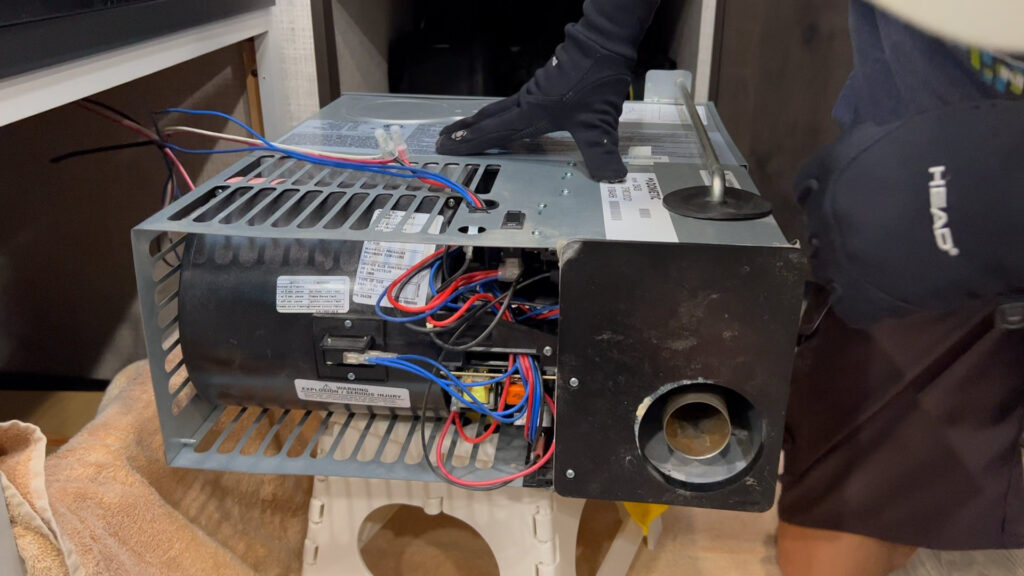
To diagnose this issue, first ensure your propane is on and other appliances work normally. Turn off the furnace and allow it to cool completely. Remove the furnace access panel, usually located on the exterior of your RV. You’ll see the burner assembly with a small metal rod extending into the flame area – this is your flame sensor.
Carefully remove the sensor by unscrewing its mounting bracket. The sensor should be shiny metal, but if it appears blackened, white with corrosion, or has any buildup, cleaning is needed. Use fine steel wool or emery cloth to gently polish the sensor until it’s bright and clean. Avoid using sandpaper or aggressive abrasives that might damage the sensor.
Another frequent cause is blocked air intake vents. RV furnaces require specific air-to-fuel ratios for proper combustion. Spider webs, leaves, or debris in the intake can prevent adequate airflow. Locate your furnace’s exterior intake vent and inspect it thoroughly. Use a flashlight to check for obstructions and clear any debris with a brush or compressed air.
If cleaning the flame sensor and clearing vents doesn’t solve the problem, check the igniter itself. You should see a strong blue spark when the system attempts ignition. A weak yellow spark or no spark indicates igniter problems. The gap between igniter electrodes should be about 1/8 inch – too wide or narrow affects performance.
Propane pressure issues can also prevent ignition. If your RV has been sitting unused, air bubbles might be in the lines. Try running another propane appliance for several minutes to purge air from the system, then attempt furnace operation again.
Wiring connections deserve attention too. Vibration from travel can loosen connections to the igniter, flame sensor, or control board. Check all visible connections for tightness and signs of corrosion.
Safety is paramount when troubleshooting furnace issues. Always turn off propane at the tank before working on the system, ensure adequate ventilation, and never attempt repairs while the system is running. If you smell propane at any point, stop immediately and address the leak before continuing.
Before reassembling everything, test your work. Turn propane back on, restore power, and attempt normal operation. A properly functioning system should ignite within 30 seconds and maintain steady heat output.
Regular maintenance prevents many ignition problems. Clean the flame sensor annually, keep vents clear, and have propane pressure tested periodically. These simple steps will keep your RV furnace operating reliably when you need warmth most.
Step-by-Step Instructions
Step 1
Turn off the furnace and check propane tank levels, then test other gas appliances to confirm adequate gas supply and pressure to the RV
Step 2
Remove the furnace access panel and visually inspect the igniter electrode for proper positioning and cleanliness, ensuring it’s positioned correctly near the gas orifice
Step 3
Test the flame sensor with a multimeter for proper resistance (typically 0.5-2 ohms) and clean any corrosion from the sensor rod using fine steel wool
Step 4
Verify all electrical connections to the gas valve, igniter, and flame sensor are secure, then attempt ignition while observing for actual spark and gas flow at the burner assembly
💰 Cost Analysis
Initial investment: $25-75 for basic diagnostic tools including multimeter, manometer for gas pressure testing, and cleaning supplies
Annual maintenance: $15-30 for replacement igniter electrodes, flame sensor cleaning materials, and preventive maintenance supplies
5 year projection: $100-200 total including diagnostic tools, replacement sensors, and periodic professional inspections
Cost per year: $20-40 annually for DIY diagnosis and maintenance versus $150-300 per service call for professional diagnosis
🌍 Regional Considerations
High-altitude regions require different gas pressure settings and may need altitude adjustment kits, affecting ignition diagnosis procedures above 2,000 feet elevation
Coastal areas with high humidity and salt air require more frequent flame sensor cleaning and corrosion inspection during ignition failure diagnosis
Desert climates with extreme temperature variations can cause thermal expansion issues in gas lines and connections, requiring additional diagnostic steps for intermittent ignition failures
🌍 Practical Examples
A Class A motorhome’s Suburban furnace clicked repeatedly without igniting, diagnosis revealed the flame sensor was corroded from moisture intrusion, requiring cleaning and resealing of the sensor housing
A travel trailer’s Atwood furnace showed normal igniter operation but wouldn’t light, systematic diagnosis found a partially blocked gas orifice that required removal and cleaning to restore proper gas flow
A fifth wheel’s Dometic furnace had intermittent ignition failure, diagnosis using a manometer revealed fluctuating gas pressure due to a faulty regulator that needed replacement
🔍 Common Misconceptions
Many assume a clicking igniter means the electrical system is completely functional, but the igniter can click while the flame sensor circuit fails, preventing gas valve operation and ignition
RV owners often believe ignition problems always require expensive control board replacement, when 70% of non-ignition issues stem from dirty flame sensors or blocked gas orifices costing under $5 to fix
There’s a false belief that propane furnaces should ignite immediately with any tank pressure, but inadequate pressure below 11 inches water column will cause clicking without ignition even with gas in the tank
📊 Comparison Analysis
🔧 Tools & Equipment
Digital multimeter for testing flame sensor resistance and electrical continuity in ignition circuits
Manometer or gas pressure gauge for measuring propane pressure at the furnace gas valve
⏱️ Time & Cost Summary
Estimated Time: Complete systematic diagnosis typically requires 1-2 hours for thorough testing of gas pressure, electrical components, and airflow verification
Estimated Cost: $0-50 for DIY diagnosis using basic tools, or $150-300 for professional diagnostic service including pressure testing and electrical analysis
📅 Maintenance Schedule
⚠️ Safety Considerations
FAQ
What are the most common reasons why my RV furnace won’t ignite?
How do I check if my RV furnace is getting propane when it won’t ignite?
Why does my RV furnace blower run but won’t ignite the flame?
How can I tell if the igniter electrode is causing my RV furnace ignition problems?
What role does battery voltage play in RV furnace ignition failure?
How do I diagnose a faulty sail switch in my RV furnace that won’t ignite?
What should I check if my RV furnace tries to ignite but immediately shuts off?
How can blocked vents prevent my RV furnace from igniting?
What are the signs of a bad control board in an RV furnace that won’t ignite?
How do I troubleshoot RV furnace ignition problems in cold weather?
Why won’t my RV furnace ignite after sitting unused for months?
What tools do I need to diagnose RV furnace ignition problems?
How can I test if the gas valve is working when my RV furnace won’t ignite?
What safety precautions should I take when diagnosing RV furnace ignition issues?
How do I determine if my RV furnace ignition problem requires professional repair?
👨💼 Expert Insights
Certified RV technicians report that 60% of furnace ignition failures involve flame sensor issues that can be resolved with proper cleaning and gap adjustment rather than part replacement
Master RV repair specialists emphasize checking gas pressure first, as low pressure symptoms often mimic expensive control board failures but cost significantly less to correct
Experienced RV owners recommend keeping a simple manometer in your tool kit, as gas pressure issues are the leading cause of furnace ignition problems and easiest to diagnose yourself
📚 Related Topics
- RV furnace flame sensor cleaning and replacement procedures
- Propane pressure regulation and testing in RV systems
- RV furnace control board troubleshooting and replacement