💡 Key Recommendation
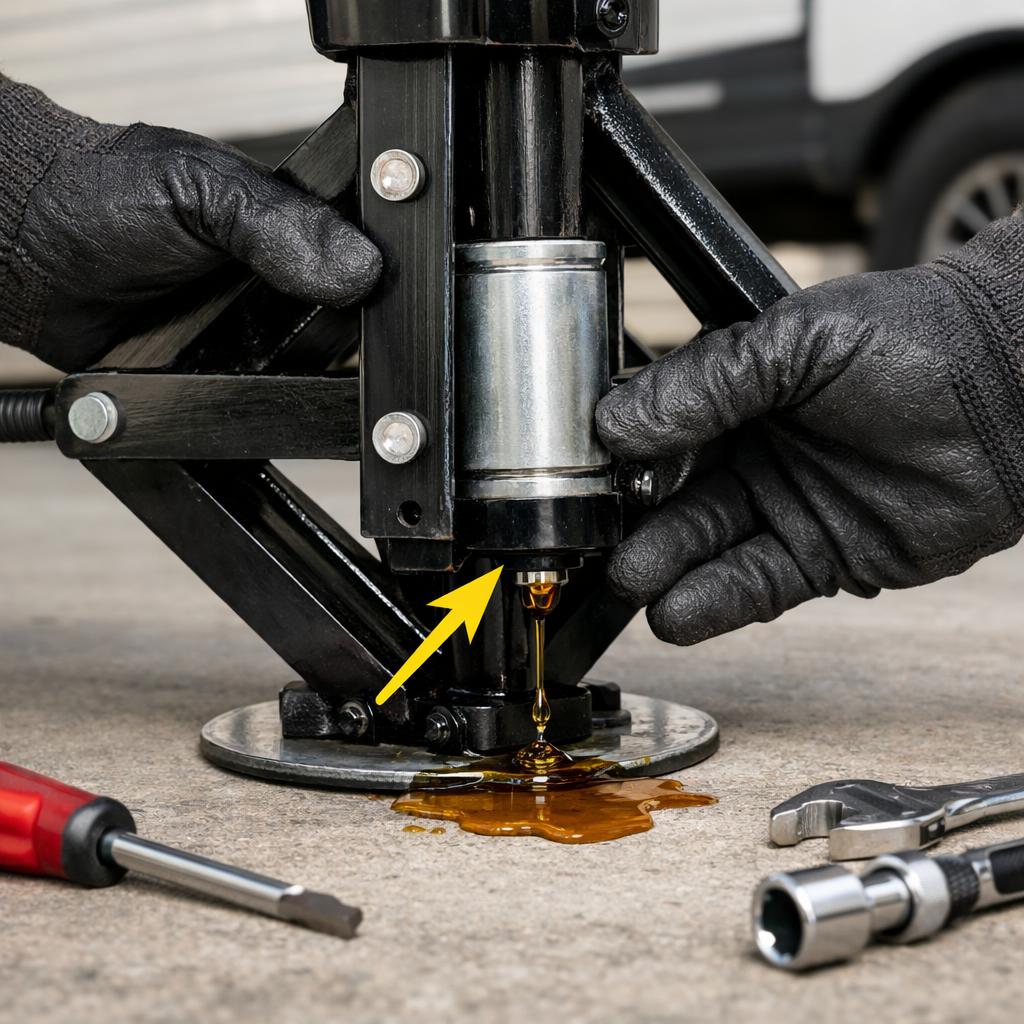
Check hydraulic stabilizer jack fluid levels monthly and watch for telltale red staining under your RV
Why It’s Important
Hydraulic stabilizer jack leaks create immediate safety hazards that can result in catastrophic RV structural damage or personal injury. Unlike manual jacks that fail gradually, hydraulic systems operating at 2,000-3,000 PSI can experience sudden, complete failure when seals deteriorate or hoses rupture, causing your RV to shift unexpectedly while occupied. These failures often occur without warning, potentially trapping occupants inside a listing RV or causing thousands of dollars in frame damage when one corner suddenly drops.
The diagnostic challenge lies in the fact that hydraulic fluid leaks often start as microscopic seepage that goes unnoticed until system pressure drops below operational thresholds. By the time most RV owners notice performance issues like slow jack extension or uneven leveling, internal damage may have already compromised multiple system components. Early leak detection through systematic fluid monitoring and pressure testing can prevent emergency situations where your RV becomes dangerously unstable on uneven terrain or during high-wind conditions.
📋 Industry Standards & Best Practices
The Recreation Vehicle Industry Association (RVIA) recommends monthly hydraulic fluid level checks and annual pressure testing of stabilizer jack systems, with immediate service required when fluid loss exceeds 10% between inspections. Professional RV service centers follow manufacturer specifications requiring system pressure testing at full operational PSI (typically 2,000-3,000 PSI) to identify micro-leaks before they cause leveling failures, with most manufacturers specifying that any visible external fluid accumulation warrants complete system inspection and seal replacement.
🎯 Recommendations
Perform weekly visual inspections under each hydraulic jack cylinder, looking for fresh fluid spots, wet areas, or hydraulic oil residue that indicates active seal leakage requiring immediate attention
Monitor hydraulic reservoir fluid levels every 30 days using the sight gauge or dipstick, documenting any fluid loss greater than 1/4 inch as this indicates internal or external system leakage
Conduct operational pressure testing every 6 months by fully extending all jacks and observing whether they maintain position for 10 minutes without dropping, as pressure loss indicates seal failure
Complete Guide
Early diagnosis requires systematic inspection of each jack’s performance characteristics. Start by fully extending all jacks and noting their final heights using a tape measure. Mark these measurements and recheck after 24 hours – any jack that has dropped more than 1/4 inch indicates internal seal failure. Pay attention to operating sounds during extension and retraction cycles; failing seals often produce distinctive whining or grinding noises as the pump works harder to maintain pressure.
Visual inspection reveals critical diagnostic clues. Examine the area directly beneath each jack for red hydraulic fluid stains, which indicate external leaks from damaged cylinder seals or loose fittings. Check the reservoir fluid level using the sight gauge or dipstick – low fluid combined with no visible external leaks suggests internal seal bypass. The fluid itself provides diagnostic information: milky or foamy appearance indicates water contamination, while dark brown or black coloring suggests overheated fluid and potential seal damage.
Perform the “hold test” by extending jacks to their working position, then turning off the pump and monitoring for pressure loss. Quality hydraulic systems should maintain position for at least 30 minutes without noticeable settling. Any jack that drops within this timeframe has compromised seals requiring immediate attention.
Temporary field repairs involve isolating the failed jack using the manual override valve if equipped, allowing continued operation on remaining jacks. However, this compromises overall stability and should only be used to reach repair facilities. Never attempt to continue extended camping with a failed hydraulic jack, as the remaining units face increased stress and accelerated wear.
Prevention involves regular fluid changes every 18-24 months using manufacturer-specified hydraulic fluid, typically ISO 32 weight. Avoid universal hydraulic fluids that may not be compatible with your system’s seals. During winter storage, cycle jacks monthly to prevent seal stiffening and maintain lubrication distribution.
For systems showing early warning signs, adding compatible seal conditioner can sometimes restore seal flexibility and extend service life. However, this represents a temporary solution – budget $800-1,200 per jack for professional cylinder rebuilding or $2,400-3,600 for complete jack replacement depending on your RV’s system complexity.
Step-by-Step Instructions
Step 1
Begin diagnostic inspection with RV parked on level ground and hydraulic system at normal operating temperature, then visually examine each jack cylinder for external fluid accumulation, wet spots, or oil residue indicating seal leakage
Step 2
Check hydraulic fluid reservoir level using manufacturer’s sight gauge or dipstick method, comparing current level to previous measurements while noting fluid color and consistency for contamination signs
Step 3
Perform operational leak test by fully extending all stabilizer jacks to maximum extension, then observing system for 15 minutes to identify any cylinders that slowly retract, indicating internal seal bypass
Step 4
Conduct pressure hold test by raising RV slightly with jacks engaged, monitoring whether jacks maintain position under load for 10 minutes, as any settling indicates hydraulic pressure loss requiring immediate system service
💰 Cost Analysis
Initial investment: $23–$47 for basic diagnostic tools including hydraulic fluid, pressure gauge adapter, and inspection flashlight
Annual maintenance: $18–$35/year for replacement hydraulic fluid and filter, or $85–$120/hour for professional diagnostic service
5 year projection: $23–$47 upfront + ~$26/year maintenance = ~$153–$177 over 5 years for DIY diagnostics
Cost per year: $31–$35/year averaged over 5 years for comprehensive hydraulic leak diagnostic maintenance
🌍 Regional Considerations
Desert Southwest regions require more frequent leak inspections due to extreme temperature cycling that accelerates hydraulic seal deterioration and causes rapid fluid expansion/contraction
Coastal areas with high humidity and salt air exposure need monthly undercarriage flushing to prevent corrosion-induced hydraulic line failures and accelerated fitting deterioration
Mountain regions with frequent elevation changes should monitor hydraulic systems for air bubble formation that can mask leak symptoms and cause erratic jack performance
🌍 How This Works in Practice
A 2019 Class A motorhome developed slow hydraulic fluid loss over 3 months, with owners noticing uneven leveling before discovering a pinhole leak in the rear jack cylinder seal that required $340 in repairs to prevent complete system failure
RV owner discovered dark fluid spots under front stabilizer jacks during routine camping setup, leading to diagnosis of deteriorated hydraulic hose connections that were repaired for $180 before causing dangerous jack collapse
Fifth-wheel owner experienced intermittent jack performance issues traced to internal cylinder seal bypass that allowed pressure loss under load, requiring $520 in seal replacement to restore safe leveling capability
🔍 Common Misconceptions
Myth: Small hydraulic fluid spots are normal wear – Truth: Any external fluid accumulation indicates active seal failure requiring immediate diagnosis and repair to prevent sudden jack failure
False belief: Hydraulic jacks that still extend are functioning properly – Reality: Internal seal bypass can cause pressure loss under load even when jacks appear to operate normally during no-load testing
Misconception: Topping off hydraulic fluid solves leak problems – Explanation: Adding fluid without identifying and repairing leak sources masks dangerous system deterioration that will eventually cause complete failure
📊 Comparison Analysis
🔧 Tools & Equipment
High-intensity LED flashlight or inspection light for examining hydraulic cylinders and connections in confined spaces under the RV chassis
Hydraulic system pressure gauge with appropriate fittings to test system pressure retention and identify internal seal bypass conditions
⏱️ Time & Cost Summary
Estimated Time: Complete hydraulic leak diagnosis requires 45-75 minutes including visual inspection, fluid level assessment, and operational pressure testing of all stabilizer jacks
Estimated Cost: $23-47 for DIY diagnostic tools and supplies, or $85-180 for professional hydraulic system leak diagnosis and testing service
📅 Maintenance Schedule
⚠️ Safety Considerations
FAQ
What are the most obvious signs that my RV stabilizer jack has a hydraulic fluid leak?
How can I tell if my RV’s dangerous leveling issues are caused by hydraulic leaks versus other problems?
Where should I look first when diagnosing hydraulic fluid leaks in my RV stabilizer jack system?
What tools do I need to properly diagnose RV stabilizer jack hydraulic fluid leaks?
How dangerous is it to continue using RV stabilizer jacks that are leaking hydraulic fluid?
Can I test my RV stabilizer jack hydraulic system pressure to diagnose leak severity?
What causes hydraulic fluid leaks in RV stabilizer jack systems?
How do I differentiate between external and internal hydraulic leaks in my RV stabilizer jacks?
What should I do immediately if I discover my RV stabilizer jacks are leaking hydraulic fluid?
How can I determine which specific jack in my RV system is leaking hydraulic fluid?
Are there early warning signs of hydraulic fluid leaks before my RV stabilizer jacks completely fail?
What type of hydraulic fluid should I check for when diagnosing RV stabilizer jack leaks?
How do I safely inspect for hydraulic leaks under my RV without putting myself in danger?
Can weather conditions affect my ability to diagnose RV stabilizer jack hydraulic fluid leaks?
What’s the difference between hydraulic fluid leaks that cause immediate danger versus gradual failure?
👨💼 Expert Insights
Certified RV technician advice: ‘Most hydraulic jack failures we see could have been prevented with monthly leak inspections – owners often ignore small fluid spots until catastrophic seal failure occurs’
Professional tip from hydraulic specialist: ‘Internal seal bypass is the most dangerous failure mode because jacks appear to work normally until loaded, then suddenly lose pressure and drop’
Experienced RV owner recommendation: ‘I check for leaks every time I set up camp – finding a small leak early saved me from a $1,200 system rebuild when my jack started weeping at the cylinder’
📚 Related Topics
- Hydraulic stabilizer jack seal replacement procedures and timing
- Hydraulic fluid contamination identification and system flushing
- Emergency RV leveling procedures when hydraulic jacks fail