💡 Key Recommendation
Check your propane tank relief valves for ice buildup and install protective guards before winter camping trips
Why This Matters
During winter camping, moisture and freezing temperatures can cause ice buildup around your RV’s propane tank pressure relief valve (PRV), potentially blocking its ability to function properly. The PRV is a critical safety component designed to release excess pressure if the tank becomes overpressurized due to temperature changes or other factors. When ice blocks this valve, dangerous pressure levels can build up inside the tank, creating a risk of tank rupture or explosion that could cause serious injury, property damage, or death.
Installing protective guards around your propane tank’s pressure relief valve prevents ice accumulation while still allowing the valve to operate normally when needed. These simple devices create a barrier against moisture and wind-driven snow while maintaining proper ventilation around the PRV. For winter RV enthusiasts, this inexpensive modification is essential safety equipment that can prevent catastrophic propane tank failures in freezing conditions, making the difference between a safe camping trip and a potentially fatal accident.
📋 Industry Standards & Best Practices
The National Fire Protection Association (NFPA) 58 Liquefied Petroleum Gas Code requires that pressure relief valves on propane tanks remain unobstructed and capable of discharging to the atmosphere at all times. While the code doesn’t specifically mandate PRV guards, it emphasizes that any protective device must not interfere with valve operation. The Recreational Vehicle Industry Association (RVIA) recommends that winter campers take additional precautions to ensure PRV functionality in freezing conditions, and many propane equipment manufacturers now offer cold-weather accessories specifically designed to prevent ice blockage while maintaining code compliance.
🎯 Product Recommendations
Choose PRV guards made from corrosion-resistant materials like stainless steel or UV-resistant plastic that can withstand temperature extremes from -40°F to 120°F without becoming brittle or degrading
Select guards with adequate clearance around the valve opening – minimum 2 inches on all sides – to ensure unrestricted pressure relief while still deflecting moisture and wind-blown snow away from the valve
Install guards with drainage holes or sloped surfaces to prevent water accumulation that could freeze and create the very ice blockage problem you’re trying to prevent
Complete Guide
This problem typically occurs during overnight temperature drops when your propane appliances are running heavily—precisely when tank pressure fluctuations are most likely. A frozen PRV can’t perform its critical safety function, potentially leading to dangerous over-pressure conditions if your regulator fails or if rapid temperature changes cause pressure spikes.
The solution involves installing specialized PRV guards with integrated heat deflectors. These aren’t the basic plastic caps that come with some tanks—those can actually worsen the problem by trapping moisture. Instead, look for stainless steel or aluminum guards with ventilation slots and small heat deflector fins that direct warm air from your RV’s exterior vents toward the valve area.
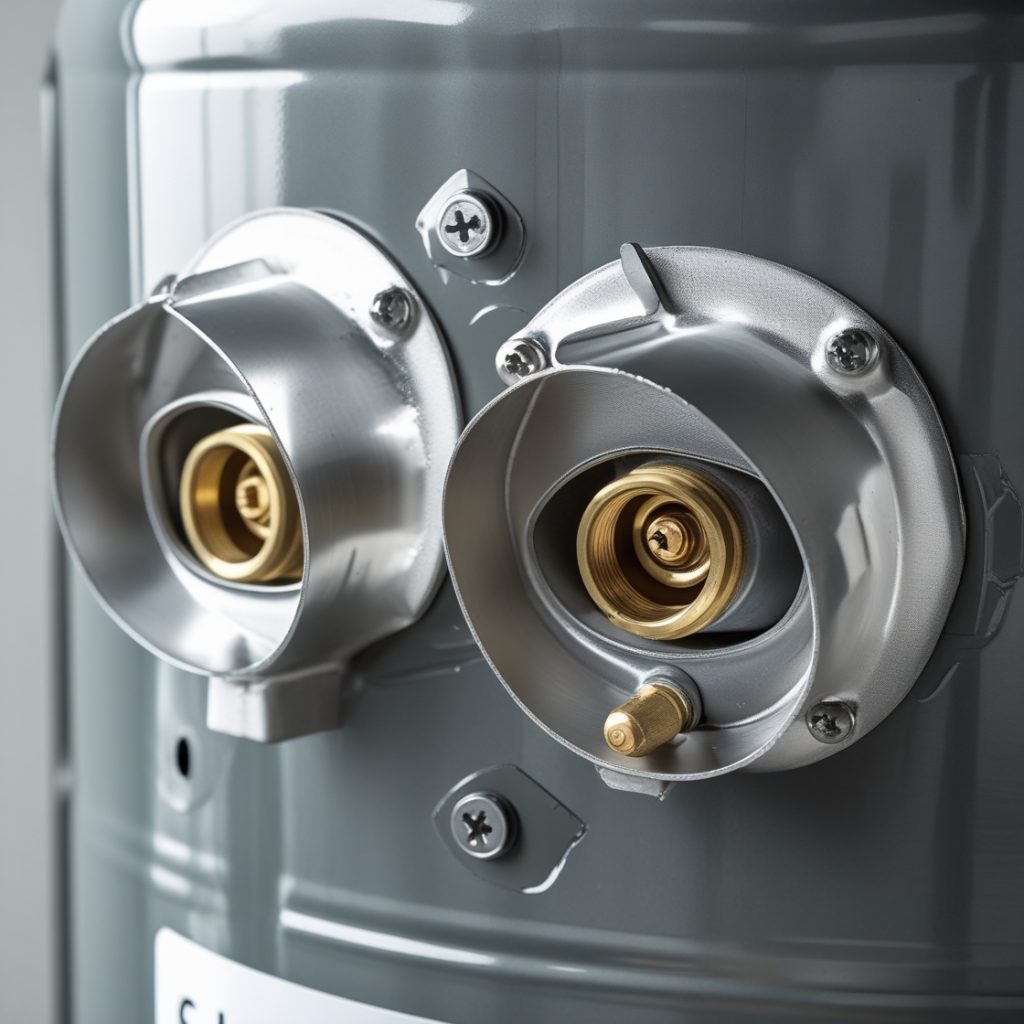
Installation requires locating your tank’s PRV, which appears as a small brass fitting with a spring-loaded center pin, usually positioned on the tank collar near the main valve. Clean the area thoroughly, removing any existing ice or debris. The guard typically threads or clamps around the PRV assembly, maintaining clearance for proper valve operation while deflecting wind-driven moisture.
Some advanced guards include small 12-volt heating elements that draw minimal power from your RV’s battery system. These connect via weatherproof wiring to your existing exterior lighting circuit, providing gentle heat that prevents ice formation without affecting propane flow. Installation typically costs $23-$47 per tank depending on whether you choose passive deflector guards or heated versions.
Regular winter maintenance involves visually checking PRVs before each trip, looking for ice accumulation or frozen condensation around the valve opening. If you discover ice, never attempt to chip it away with tools—this can damage the valve seat. Instead, use a hair dryer on low heat or warm (not hot) water to gently melt ice formations.
Testing PRV function requires extreme caution and should only be done by experienced RVers. The valve’s center pin should move slightly when gently pressed with a small screwdriver, though this will release propane. Never test while smoking or near ignition sources, and always have someone monitor from a safe distance.
Additional winter precautions include positioning tanks to minimize exposure to prevailing winds, ensuring adequate ventilation around tank compartments to prevent moisture buildup, and carrying backup tanks during extended cold-weather camping. Some RVers install tank blankets with integrated heating pads, though these require careful temperature monitoring to prevent overheating.
Remember that PRV freezing often coincides with regulator icing, another winter camping hazard. Installing guards addresses only one component of your propane safety system—comprehensive winter preparation includes regulator covers, tank rotation schedules, and emergency shutdown procedures for extreme weather conditions.
Step-by-Step Instructions
Step 1
Turn off propane tank valve and disconnect tank from RV system, then visually inspect the pressure relief valve location and measure the available space around it to ensure your chosen guard will fit properly without interfering with tank mounting or connections
Step 2
Clean the area around the pressure relief valve thoroughly, removing any dirt, debris, or old sealant, then test-fit the guard to verify proper alignment and clearance before permanent installation
Step 3
Mount the guard using the manufacturer’s recommended hardware, typically stainless steel screws or brackets, ensuring the guard sits securely without touching or putting pressure on the actual pressure relief valve mechanism
Step 4
Test the installation by reconnecting the propane tank and checking that all connections are tight, then perform a leak test using soapy water solution around all fittings to ensure the guard installation hasn’t compromised any seals
💰 Cost Analysis
Initial investment: $18-$45 for a quality PRV guard plus $3-$8 for stainless steel mounting hardware if not included
Annual maintenance: $2-$6 per year for replacement hardware or touch-up maintenance materials
5 year projection: $21-$53 initial investment + approximately $10-$30 in maintenance costs = $31-$83 total over 5 years
Cost per year: $6.20-$16.60 per year averaged over 5 years
🌍 Regional Considerations
In extremely cold regions like Alaska and northern Canada where temperatures drop below -30°F, double-wall PRV guards with insulation chambers provide superior ice prevention compared to single-wall designs
Coastal winter camping areas require guards made from marine-grade stainless steel or specially treated aluminum to resist salt corrosion that can accelerate in freeze-thaw cycles
High-altitude mountain camping locations need guards designed to handle rapid temperature swings and increased UV exposure, often requiring more frequent inspection and maintenance
🌍 Practical Examples
A family winter camping in Yellowstone discovered their unprotected PRV had frozen shut after three days of blowing snow, requiring emergency tank replacement when pressure buildup triggered safety concerns – a $15 guard could have prevented this $200+ emergency
An experienced winter RVer in Minnesota installed mesh-style PRV guards on both propane tanks and successfully camped through a week-long storm with temperatures dropping to -25°F, with no ice buildup affecting valve operation
Ice fishermen using RVs on frozen lakes in Wisconsin report that solid-wall PRV guards work better than mesh designs in high-wind conditions where fine snow particles can penetrate mesh openings and still freeze around the valve
🔍 Common Misconceptions
Many RVers believe that simply covering the entire propane tank protects the PRV from freezing, but full tank covers can actually trap moisture and create worse icing conditions around the valve while also making it harder to detect problems
Some think that pressure relief valves don’t activate in cold weather so ice blockage isn’t dangerous, but propane tanks can still build dangerous pressure from temperature fluctuations even in freezing conditions, making PRV operation critical
There’s a false belief that aftermarket PRV guards void propane tank warranties, but properly installed guards that don’t modify the tank or valve actually help maintain warranty compliance by protecting safety equipment from damage
📊 Comparison Analysis
🔧 Tools & Equipment
Phillips head screwdriver or cordless drill with bits
Adjustable wrench for tank connections
Measuring tape
Soapy water solution for leak testing
⏱️ Time & Cost Summary
Estimated Time: 30-60 minutes per propane tank for complete guard installation and testing
Estimated Cost: $21-$53 total initial investment including guard and mounting hardware
📅 Maintenance Schedule
⚠️ Safety Considerations
FAQ
What are RV propane tank pressure relief valve guards and why do I need them for winter camping?
How do ice blockages form on propane tank pressure relief valves during winter RV camping?
What tools do I need to install pressure relief valve guards on my RV propane tanks?
Can I install propane tank pressure relief valve guards myself or do I need a professional?
What materials are the best pressure relief valve guards made from for winter RV camping conditions?
How do I know if my RV propane tank pressure relief valve is blocked by ice?
Will installing pressure relief valve guards affect the normal operation of my propane system?
At what temperatures should I be concerned about ice blockages on my RV propane tank pressure relief valves?
How often should I inspect my pressure relief valve guards during winter RV camping trips?
What’s the difference between pressure relief valve guards and tank covers for winter propane protection?
Can I use homemade covers instead of commercial pressure relief valve guards for ice protection?
Do all RV propane tank sizes require the same type of pressure relief valve guards for winter camping?
What happens if my RV propane tank pressure relief valve becomes ice-blocked during winter camping?
How do I properly maintain pressure relief valve guards throughout the winter camping season?
Are there specific pressure relief valve guard designs that work better in extreme winter RV camping conditions?
👨💼 Expert Insights
Professional RV technician: ‘PRV ice blockage is one of the most overlooked winter camping hazards – a $20 guard can literally save lives’
Propane system specialist: ‘The key is maintaining airflow while deflecting moisture – guards should never create a sealed enclosure around the valve’
Veteran winter RVer: ‘I’ve used PRV guards for 15 years of winter camping and never had a freeze-up, even in -40°F Alberta winters’
📚 Related Topics
- Winter propane tank heating pads
- Propane regulator freeze prevention
- Cold weather propane system maintenance