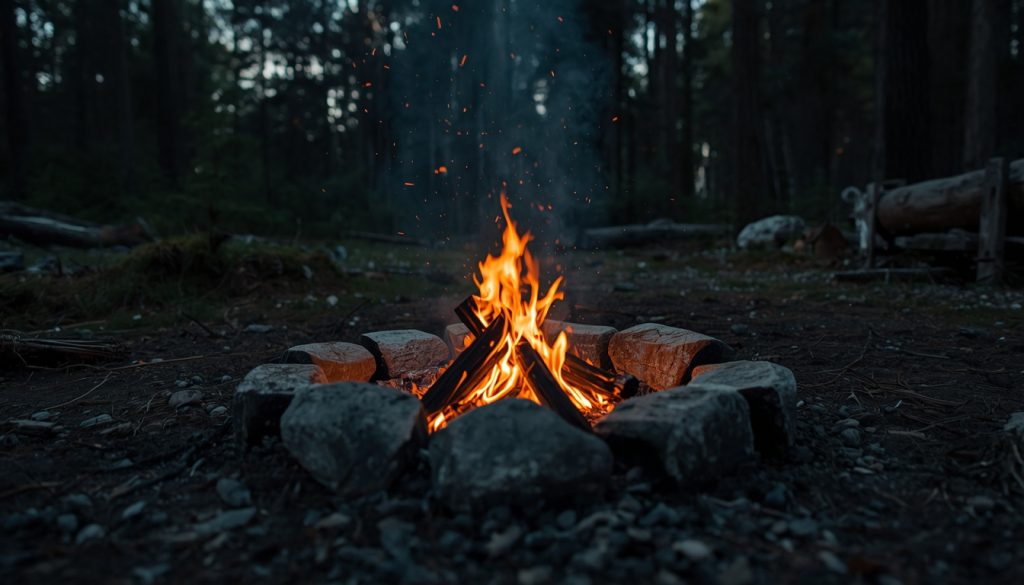
💡 Key Recommendation
Position your campfire 15+ feet from your RV on the downwind side
Why This Matters
Proper campfire positioning relative to your RV is a critical safety skill that can prevent devastating fires, property damage, and potential loss of life. RVs are essentially large fuel sources with propane tanks, plastic components, and flammable materials that can ignite rapidly when exposed to sparks or excessive heat from poorly positioned campfires. Even a small ember carried by wind can cause thousands of dollars in damage or completely destroy your home-on-wheels.
Beyond safety concerns, strategic campfire positioning enhances your overall camping experience by creating optimal wind protection, heat distribution, and social gathering spaces. When positioned correctly, your campfire becomes the perfect focal point for evening activities while protecting your RV’s exterior surfaces, awnings, and slide-outs from heat damage and smoke staining. Understanding wind patterns, safe distances, and terrain considerations transforms your campsite into a comfortable, functional outdoor living space that maximizes both safety and enjoyment.
📋 Industry Standards & Best Practices
The National Fire Protection Association (NFPA) and most campground regulations mandate maintaining a minimum 15-foot clearance between any open flame and RV structures, with many experts recommending 20-25 feet for optimal safety. The Recreation Vehicle Industry Association (RVIA) emphasizes positioning campfires downwind and away from propane tank compartments, electrical connections, and ventilation systems. These standards also require considering overhead clearances from awnings, slide-out rooms, and tree branches, typically maintaining at least 10 feet of vertical clearance to prevent heat damage and ember contact.
🎯 Product Recommendations
Position your campfire 20-25 feet away from your RV’s nearest point, ensuring adequate distance from propane tanks, electrical hookups, and slide-outs to prevent heat damage and ember ignition
Always locate your fire pit downwind from your RV based on prevailing wind patterns, and avoid positioning fires between your RV and neighboring campsites to prevent smoke and spark issues
Create a designated fire zone using a portable fire ring or established fire pit, clearing a 10-foot radius of all flammable materials including dry grass, leaves, camping gear, and outdoor furniture
Complete Guide
The most critical rule is maintaining adequate distance between your fire and RV. Position your campfire at least 15 feet away from your RV, awning, and any other combustible materials. This distance provides a crucial safety buffer against flying sparks and radiant heat that could damage your RV’s exterior, melt plastic components, or worse, cause a fire. Many experienced RVers recommend 20 feet when possible, especially if you’re planning larger fires or cooking over open flames.
Wind direction plays an equally important role in campfire placement. Always position your fire downwind from your RV to prevent smoke and sparks from blowing toward your vehicle. Before lighting your fire, observe wind patterns throughout the day, as they often change direction during evening hours when most campfires are enjoyed. A simple trick is to hang a lightweight ribbon or check which way smoke drifts from a small test fire before committing to your final fire ring location.
Many campgrounds provide designated fire rings, but their placement isn’t always optimal for RV camping. If the provided ring is too close to your RV or positioned poorly relative to prevailing winds, don’t hesitate to ask campground staff about relocating it or using a portable fire ring in a better location. Always check campground rules first, as some facilities require fires only in designated spots.
Consider your camping neighbors when positioning fires. Smoke drifting into adjacent campsites creates uncomfortable situations and potential conflicts. Position fires to minimize impact on nearby RVers while maintaining safe distances from all structures in the area.
Ground preparation is essential for safe campfire positioning. Clear a 10-foot radius around your fire location of dry leaves, pine needles, and other flammable debris. Create a mineral soil barrier by scraping away organic material down to bare earth. Keep a bucket of water, sand, or a fire extinguisher nearby, and never leave fires unattended.
Height considerations matter too. Overhanging tree branches should be at least 10 feet above your fire to prevent ignition. Check for dead branches that might fall into your fire area, and be aware of power lines that could be affected by heat or smoke.
Weather conditions significantly impact safe campfire practices. Avoid fires during high wind conditions, dry spells with elevated fire danger, or when burn bans are in effect. Many areas have seasonal restrictions or require permits for campfires.
For maximum enjoyment, arrange seating in a semi-circle on the upwind side of your fire, allowing smoke to blow away from your group while maintaining conversation distance. This positioning also provides easy access to your RV for supplies while keeping foot traffic away from the fire area. Proper campfire positioning transforms your camping experience from potentially hazardous to memorably magical.
Step-by-Step Instructions
Step 1
Survey your campsite and identify prevailing wind direction by observing tree movement, using a wind indicator, or checking weather apps to determine optimal fire placement downwind from your RV
Step 2
Measure and mark a safe zone 20-25 feet from your RV’s closest point, avoiding areas near propane compartments, electrical connections, awnings, and slide-outs while ensuring level ground for stability
Step 3
Clear the designated fire area of all combustible materials within a 10-foot radius, including dry vegetation, camping equipment, and debris, then establish your fire ring or pit on mineral soil or gravel
Step 4
Test your positioning by lighting a small starter fire and observing smoke patterns and ember drift, adjusting location if smoke blows toward your RV or neighboring campsites before building your main campfire
💰 Cost Analysis
Initial investment: $0-150 for portable fire ring, fire-resistant ground cloth, measuring tape, and basic positioning tools
Annual maintenance: $20-40 for replacing worn fire ring components, ground preparation tools, and safety equipment
5 year projection: $100-300 total investment including equipment replacement and campground fire permit fees
Cost per year: $20-60 annually for proper campfire positioning setup and maintenance
🌍 Regional Considerations
Western desert regions require extra distance (30+ feet) due to frequent high winds and dry conditions, with many areas mandating metal fire rings and prohibiting ground fires during fire season restrictions
Forested campgrounds in the Pacific Northwest and Northeast often have established fire pits with specific positioning requirements due to overhead canopy concerns and local fire regulations varying by elevation and season
Coastal camping areas require consideration of shifting wind patterns from sea breezes and may have seasonal burn bans, with sandy soils requiring special anchoring for portable fire rings to prevent shifting
🌍 Case Studies
At Yellowstone’s Canyon Campground, a family positioned their fire ring 25 feet southeast of their Class A motorhome after observing consistent northwest winds, creating a perfect windbreak effect while keeping smoke away from both their RV and neighbors
During a desert camping trip in Arizona, experienced RVers moved their fire pit twice after initial positioning sent sparks toward their travel trailer’s awning, finally settling on a spot 30 feet away behind a natural rock windbreak
At a Michigan state park, campers used the existing fire ring but repositioned their RV during setup to ensure their fifth wheel’s slide-out and propane tanks were positioned safely upwind from the established fire location
🔍 Common Misconceptions
Many believe that 10 feet is adequate distance from their RV, but this dangerous misconception ignores ember travel distance and radiant heat damage – proper positioning requires 20-25 feet minimum for true safety
Some campers think positioning fires upwind creates better heat circulation to their RV, when actually this creates extreme fire danger by directing sparks and flames toward your home-on-wheels and should always be avoided
The myth that campfire positioning only matters in windy conditions is false – even calm air can create unpredictable drafts and thermal currents that carry embers, making proper distance and positioning essential in all weather
📊 Comparison Analysis
🔧 Tools & Equipment
25-foot measuring tape or rope for accurately measuring safe distances from RV to fire location
Portable fire ring or fire-safe container if using sites without established fire pits, plus shovel for ground preparation and ember management
⏱️ Time & Cost Summary
Estimated Time: 15-30 minutes for initial site assessment and fire positioning, including wind observation, distance measurement, and ground preparation
Estimated Cost: $25-75 for basic fire positioning tools including measuring tape, portable fire ring, and ground preparation equipment
📅 Maintenance Schedule
⚠️ Safety Considerations
FAQ
How far should I position my campfire from my RV for optimal safety?
What’s the best direction to place my campfire relative to my RV’s entrance?
How do I choose the safest ground surface for positioning my RV campfire?
Should I consider wind direction when positioning my campfire near my RV?
What’s the ideal positioning for campfire seating around my RV setup?
How do I position my campfire to avoid damage to my RV’s awning and exterior?
What positioning mistakes should I avoid when setting up a campfire near my RV?
How do I position my campfire for the best enjoyment while RV camping?
What’s the best campfire positioning strategy for different RV sizes and types?
How should I position my campfire in relation to my RV’s propane tanks and utilities?
What’s the safest campfire positioning for overnight RV camping?
How do I position my campfire to maximize warmth for my RV outdoor living space?
What positioning considerations are important for campfires in crowded RV campgrounds?
How do I adjust campfire positioning based on my RV’s slide-out configuration?
What’s the optimal campfire positioning for cooking while RV camping?
👨💼 Expert Insights
Fire safety instructors emphasize that ember travel distance can exceed 100 feet in windy conditions, making generous spacing between RVs and campfires non-negotiable for preventing catastrophic losses
Veteran RV park managers report that most fire-related RV damage occurs from fires positioned 10-15 feet away – seemingly safe distances that prove inadequate when conditions change
Professional RV technicians note that heat damage to slide-out seals and exterior components often occurs from fires positioned too close, even when no direct flame contact occurs
📚 Related Topics
- RV fire safety and emergency procedures
- Campground fire regulations and permit requirements
- Wind pattern assessment for outdoor RV activities