⚠️ Important: Know Your Refrigerator Type First
Dometic makes two completely different types of RV refrigerators with different cooling systems and different failure modes. Identifying your type before servicing is essential – the thermistor plays a different role in each.
💡 Key Recommendation
Test your Dometic refrigerator’s thermistor sensor resistance with a multimeter every 6 months – and always identify your refrigerator type before ordering replacement parts
Two Refrigerator Types – A Critical Difference
Absorption Refrigerators (Dometic RM Series) use a heat-driven ammonia cycle powered by LP gas or AC electricity. There is no mechanical compressor. The thermistor signals the control board to adjust heating intensity. A failing thermistor causes the control board to overheat the ammonia cooling unit — leading to cooling unit failure, not compressor burnout. Identify this type by its dual LP gas + AC connection and near-silent operation.
Compressor Refrigerators (Dometic CFX Series) work like a household fridge – a mechanical compressor driven by 12V or AC power. The thermistor signals when to start and stop the compressor. A failing thermistor causes the compressor to run continuously, creating heat, mechanical wear, and eventual compressor failure. Identify this type by its electric-only connection and audible motor.
Why This Matters
In both refrigerator types, the thermistor is a temperature-sensitive resistor whose resistance changes predictably with temperature. The control board reads this value to decide when to heat (absorption) or run the compressor (CFX). When the sensor degrades through corrosion, mineral deposits, or thermal cycling stress, it sends incorrect readings – causing the system to overwork and fail prematurely.
A faulty thermistor sensor costs $20–$45 to replace. Ignoring the early warning signs leads to cooling unit failure ($400–$700) in absorption units, or compressor failure ($800–$1,200) in CFX units. Most RVers only discover the problem after failure has already occurred. Testing and servicing every six months – checking connections, cleaning terminals, and verifying resistance readings – catches sensor drift early and prevents the cascading failure that destroys expensive components.
📋 Industry Standards & Best Practices
Dometic recommends testing thermistor sensor resistance every 6 months and replacing sensors that show readings outside the specified range for your model. The RV Industry Association includes annual thermistor inspection as part of refrigerator preventive maintenance guidelines. Most absorption refrigerator warranties require documented thermistor maintenance to cover cooling unit failures, as sensor-related overheating is considered a preventable cause of premature wear. Always verify resistance values against your specific model’s service documentation – values differ between the RM and CFX product lines.
🎯 Maintenance Recommendations
Test thermistor resistance with a digital multimeter every 6 months, replacing any sensor reading outside manufacturer specifications for your model and temperature
Clean thermistor terminals and connections with electrical contact cleaner quarterly – every 3 months in coastal salt-air environments
On CFX compressor units: replace the thermistor immediately if the compressor runs continuously for more than 45 minutes or cycles on/off more than 8 times per hour. On RM absorption units: replace immediately if the rear panel is abnormally hot or the unit fails to reach set temperature after 12+ hours
Complete Guide
Your Dometic RV refrigerator relies on a small thermistor sensor to regulate its cooling system, but most RVers never service this critical component until something fails. The thermistor – a temperature-sensitive resistor typically located near the evaporator fins or inside the freezer compartment – sends resistance signals to the control board. When it malfunctions, the system overworks in ways that depend on your refrigerator type.
In absorption units (RM series), a faulty thermistor causes the control board to continuously over-heat the ammonia cooling unit. There is no compressor to burn out, but the cooling unit itself – the sealed ammonia system – will degrade and eventually fail irreversibly. In compressor units (CFX series), a faulty thermistor causes the mechanical compressor to run without rest, leading to the compressor burnout familiar from household refrigerators.
Thermistor failure happens gradually through three main causes: mineral deposits from humidity, wire corrosion at connection points, and thermal cycling stress. In coastal areas, salt air accelerates wire corrosion. In desert environments, extreme daily temperature swings stress the sensor element more rapidly. The sensor’s resistance should change predictably with temperature – for RM-series absorption units, typically around 16,000 –17,000 ohms at 32°F dropping to 5,000–6,000 ohms at 77°F. For CFX compressor units, values differ -always check your model’s service documentation.
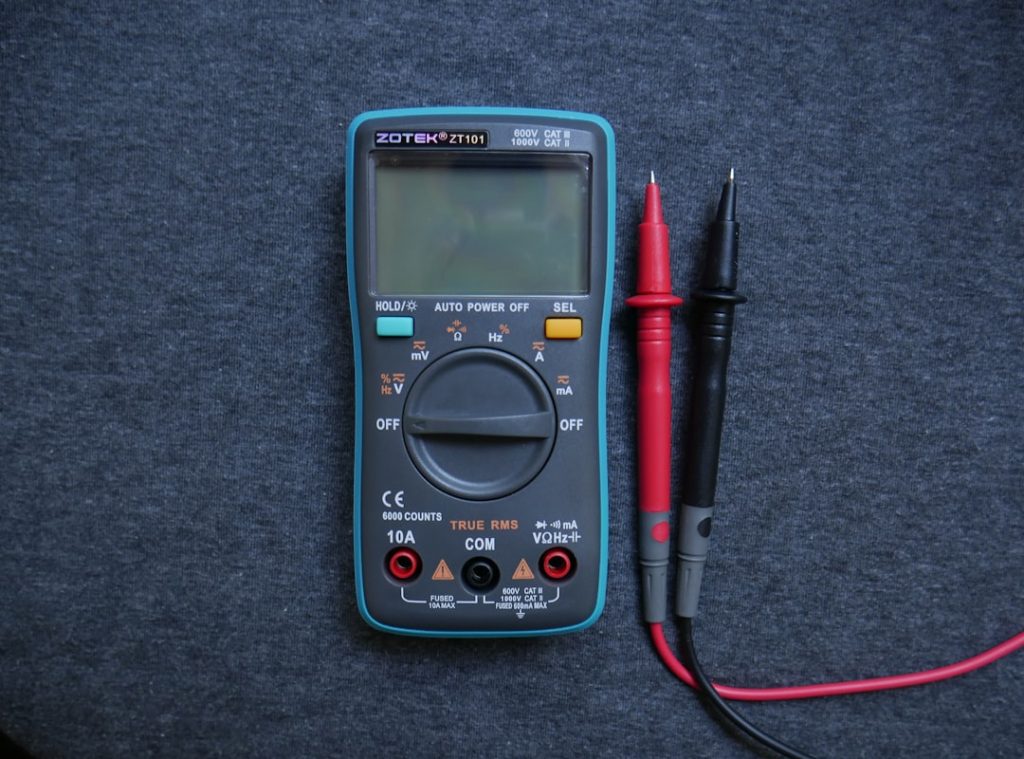
To service your thermistor, first disconnect shore power and, on absorption units, close the LP gas valve. Remove the refrigerator’s lower access panel on the exterior of your RV. Locate the thermistor probe – a small bead-like sensor on thin wires. Using a digital multimeter set to resistance mode, disconnect the thermistor wires from the control board and test resistance. Then gently warm the probe with a hair dryer and watch the reading drop smoothly. Jumps, stuck values, or no response indicate a failing sensor.
Clean the thermistor probe with 99% isopropyl alcohol and a soft brush to remove mineral deposits. Inspect wire connections for green corrosion — a sign of moisture intrusion. Apply dielectric grease to all connection points and ensure wires aren’t pinched against sharp edges. If resistance readings are erratic or don’t respond to temperature change, replace the thermistor immediately.
Replacement thermistors cost $20–$45 depending on your model. Common Dometic part numbers include 2932671044 for older RM models and 2932552017 for newer RM units – but always verify your exact model number before ordering. Installation takes about 30 minutes: route new wires carefully away from sharp edges, secure with zip ties, and apply dielectric grease to all connections.
Preventive maintenance significantly extends thermistor life. Every six months, test resistance values and clean connections. During winter storage, place moisture absorber packets near the refrigerator compartment. In high-humidity climates, run a small 12V fan inside the compartment during storage to maintain air circulation.
Monitor your refrigerator’s behavior as an early warning system. On absorption units, watch for inconsistent cooling or an abnormally hot exterior panel. On CFX compressor units, normal cycles run approximately 15–20 minutes on and 10–15 minutes off in moderate conditions – continuous running or very short cycles indicate thermistor problems. Address these symptoms promptly: waiting until complete failure turns a $40 sensor swap into a $400–$1,200 system repair.
Step-by-Step Instructions
Step 1
Identify your refrigerator type (RM absorption or CFX compressor) and disconnect all power. On absorption units, also close the LP gas valve. Wait 10 minutes before opening panels.
Step 2
Open the exterior access panel and locate the thermistor probe — a small bead-like sensor on thin wires, typically clipped near the evaporator fins or inside the freezer compartment.
Step 3
Disconnect the thermistor wiring harness and test resistance across the sensor terminals using a digital multimeter. Record the reading and compare it to your model’s specification for the current temperature. Then warm the probe gently with a hair dryer and verify that resistance drops smoothly.
Step 4
Clean sensor terminals and wiring connections with electrical contact cleaner. Inspect for green corrosion on wires. Apply dielectric grease to all connections before reconnecting.
Step 5
Replace the thermistor sensor if resistance readings fall outside specified ranges, if the sensor shows no response to temperature change, or if physical damage or corrosion is present. Verify your exact model number before ordering a replacement.
💰 Cost Analysis
Replacement thermistor sensor: $20–$45 depending on model
Maintenance supplies (one-time): $15–$25 for contact cleaner, dielectric grease, and wire supplies
5-year maintenance cost: approximately $120–$140 total including periodic sensor replacements
Cost of ignored failure — absorption unit: $400–$700 for cooling unit replacement
Cost of ignored failure — compressor unit: $800–$1,200 in parts and labor
🌍 Regional Considerations
High-humidity coastal areas require more frequent thermistor terminal cleaning (every 3 months) due to accelerated corrosion from salt air
Desert regions with extreme daily temperature swings stress thermistor sensors more rapidly, typically requiring replacement every 18 months instead of 2–3 years
Northern climates with frequent freeze-thaw cycles may cause thermistor mounting clips to loosen — check physical seating of the sensor at every inspection
🔍 Common Misconceptions
Absorption refrigerators do not have a mechanical compressor – a thermistor failure in an RM-series unit does not cause “compressor burnout.” It causes the ammonia cooling unit to overheat, which is a different and equally expensive failure
Thermistor sensors don’t fail suddenly – they drift gradually over months. A sensor may read correctly at one temperature but fail to respond smoothly to temperature change, which is itself a sign of failure even if the static reading looks acceptable
Cycling irregularities are often assumed to be control board failures. In practice, thermistor sensor faults are the most common cause of abnormal cycling or heating behavior in Dometic refrigerators of both types
📊 Comparison Analysis
🔧 Tools & Equipment
Digital multimeter capable of measuring resistance from 1,500 to 20,000 ohms
Electrical contact cleaner and small wire brush for terminal cleaning
Dielectric grease for connection protection, zip ties for wire routing, hair dryer for temperature-response testing
⏱️ Time & Cost Summary
Estimated Time: 30–45 minutes for complete thermistor testing and cleaning, or 15–20 minutes additional for sensor replacement if already diagnosed
Estimated Cost: $20–45 for replacement thermistor sensors, $15–25 for maintenance supplies
📅 Maintenance Schedule
⚠️ Safety Considerations
FAQ
How do I know if I have an absorption or compressor refrigerator?
Does a faulty thermistor in an absorption fridge damage the compressor?
What are the early warning signs that the thermistor needs servicing?
What resistance values should a healthy Dometic thermistor show?
Can I replace the thermistor myself?
How much does a thermistor replacement cost versus a full system repair?
Will my RV insurance cover failure caused by a neglected thermistor?
What’s the step-by-step process to replace a failing thermistor?
👨💼 Expert Insights
RV service technician with 15 years experience: ‘I see more cooling system failures from ignored thermistor problems than any other single cause – a $25 sensor replacement prevents an $800 repair, and most owners didn’t even know the sensor existed until it was too late’
Dometic factory trainer recommendation: ‘Test your thermistor resistance at the start and end of each camping season – consistent readings mean healthy sensors, while drifting values predict problems’
Full-time RVer tip: ‘I keep spare thermistor sensors in my parts box and test them every oil change – catching sensor problems early has saved me two potential system failures in eight years’
📚 Related Topics
- Dometic absorption refrigerator control board diagnosis and replacement
- Dometic CFX compressor refrigerator maintenance and failure prevention
- Absorption refrigerator cooling unit inspection and maintenance