💡 Key Recommendation
Clean and lubricate your RV toilet ball seal every 3 months to prevent bathroom floods
Why This Matters
The RV toilet ball seal assembly is a critical component that prevents water from continuously flowing from your fresh water tank into the toilet bowl and black tank. When this rubber seal deteriorates or becomes warped, it creates a gap that allows water to bypass the flush mechanism, leading to constant water flow that can drain your fresh water supply and potentially flood your bathroom floor during overnight hours when you’re not monitoring the system. A failed ball seal can waste hundreds of gallons of precious fresh water during boondocking trips and create costly water damage to your RV’s flooring and subflooring.
Unlike home toilets that connect directly to municipal water systems, RV toilets rely on pressurized fresh water tanks with limited capacity. When the ball seal fails, the continuous water flow not only depletes your fresh water supply but also fills your black tank rapidly, potentially causing sewage backups. The water overflow can seep into subflooring, create mold growth, and damage surrounding cabinetry and walls. Proactive ball seal maintenance costs under $25 and takes 30 minutes, while emergency repairs during a camping trip can cost hundreds in towing fees, campground extensions, and professional repairs.
📋 Industry Standards & Best Practices
The Recreation Vehicle Industry Association (RVIA) and major RV toilet manufacturers like Dometic and Thetford recommend inspecting the ball seal assembly every 6 months and replacing it annually or whenever signs of wear appear. Most manufacturers specify using only OEM replacement seals or equivalent materials rated for RV wastewater applications, as automotive or household rubber seals lack the chemical resistance needed for black tank environments. Professional RV service centers typically include ball seal inspection as part of standard pre-season maintenance protocols, and warranty coverage often requires documented preventive maintenance to remain valid.
🎯 Product Recommendations
Inspect the ball seal every 6 months by removing the toilet and checking for cracks, hardening, or warping around the seal edges – replace immediately if the rubber feels stiff or shows visible damage
Use only manufacturer-specified ball seal replacement parts (Dometic part #385311658 for most models, Thetford part #31671 for Aqua-Magic series) as generic seals often fail prematurely in black tank chemical environments
Apply a thin layer of plumber’s silicone grease to the ball seal during installation to ensure proper seating and extend seal life, avoiding petroleum-based lubricants that can degrade rubber components
Complete Guide
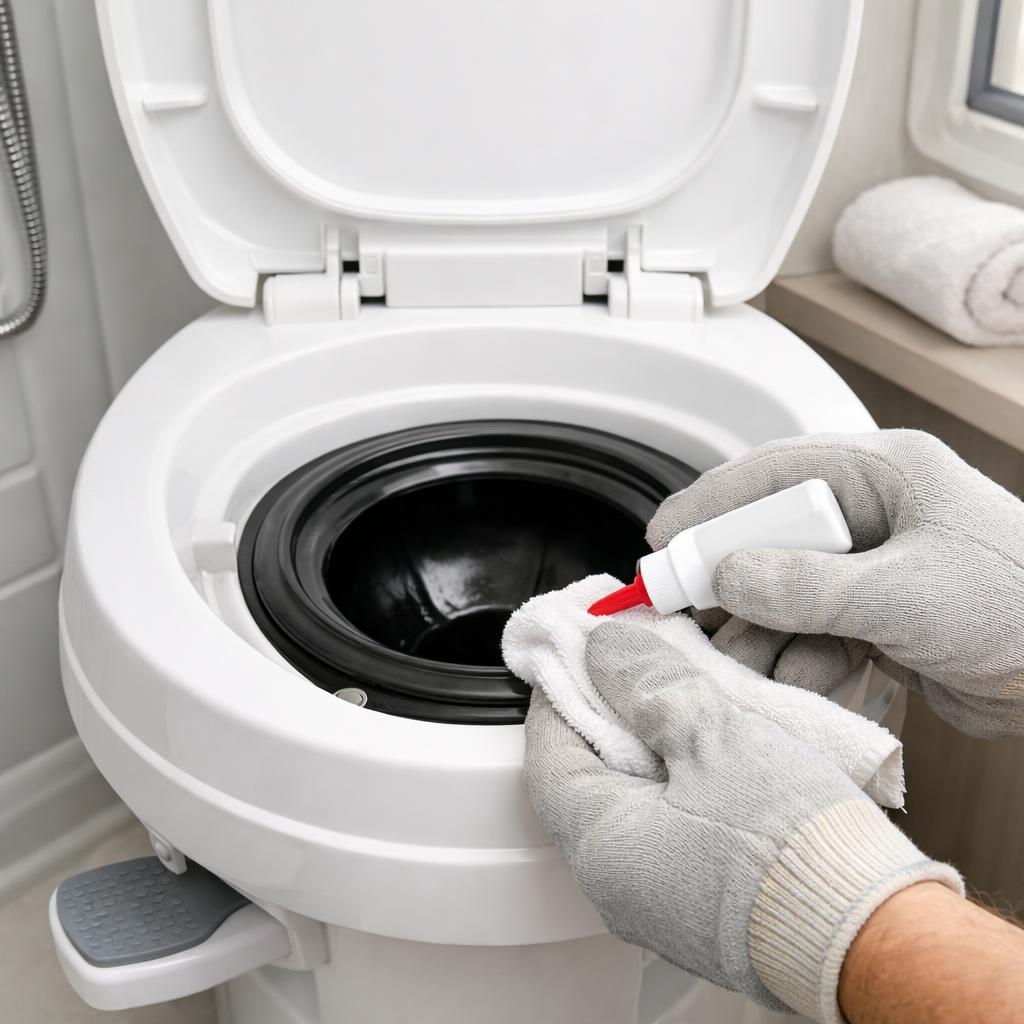
Service this assembly every three months, especially if you frequently camp in areas with hard water. Start by turning off your water pump and flushing the toilet to empty the bowl. Remove the toilet seat and locate the ball seal assembly beneath the rim. Most RV toilets use either a Thetford or Dometic system – Thetford seals twist counterclockwise for removal, while Dometic seals typically lift straight out after releasing spring clips.
Once removed, inspect the rubber ball for cracks, hardening, or mineral buildup. Hard water leaves white calcium deposits that create an uneven surface, preventing the ball from sealing properly against its seat. Soak the entire assembly in white vinegar for 30 minutes to dissolve mineral deposits, then scrub with an old toothbrush to remove stubborn buildup from the spring grooves and ball surface.
Check the seal seat inside the toilet base – this smooth surface must be perfectly clean for proper sealing. Use fine steel wool (0000 grade only) to remove mineral rings, followed by thorough cleaning with vinegar. Any scratches or pitting in this surface requires professional replacement of the toilet base.
Before reassembly, lubricate all moving parts with marine-grade silicone grease, not petroleum-based lubricants that degrade rubber. Apply a thin layer to the spring mechanism, ball surface, and seal seat. This lubrication prevents sticking and extends rubber life significantly.
Replace the ball seal assembly if the rubber feels hard, shows visible cracks, or no longer maintains its round shape. Replacement seals cost $15-25 depending on your toilet model, compared to $200-400 for water damage repairs to flooring and cabinetry.
During reassembly, ensure the spring mechanism moves freely and the ball seats completely when released. Test by adding water to the bowl and pressing the foot pedal – the ball should open smoothly and seal completely when released. If water continues running after release, the seat likely needs additional cleaning or the rubber ball requires replacement.
This simple maintenance prevents emergency situations like midnight bathroom floods that damage floors, create unsanitary conditions, and potentially ruin your camping trip.
Step-by-Step Instructions
Step 1
Turn off water pump and flush toilet completely, then disconnect water supply line and remove the two bolts securing toilet to floor flange using a 1/2-inch wrench
Step 2
Lift toilet straight up to expose the ball seal assembly at the base – the rubber seal sits in a groove around the discharge opening and should form a complete circle without gaps or tears
Step 3
Remove old ball seal by gently prying it from the groove with a plastic scraper, clean the groove thoroughly with degreaser, and inspect for cracks or damage in the plastic housing
Step 4
Install new ball seal by pressing it firmly into the groove ensuring even seating all around, apply thin layer of silicone grease, then reinstall toilet by reversing removal steps and test for leaks
💰 Cost Analysis
Initial investment: $18-$28 for OEM ball seal replacement kit including gasket and hardware, plus $12-$18 for silicone grease and cleaning supplies if not already owned
Annual maintenance: $18-$28 annually for replacement seal if doing yearly preventive replacement, or $0 if only replacing when damaged during bi-annual inspections
5 year projection: $30 initial setup cost + $23 average annual replacement = approximately $145 over 5 years assuming yearly preventive replacement
Cost per year: $29 averaged over 5 years including initial tools and annual seal replacement
🌍 Regional Considerations
Desert Southwest regions require more frequent ball seal replacement (every 8-10 months) due to extreme heat causing faster rubber degradation and mineral-heavy water accelerating seal deterioration
Coastal areas with high humidity may see longer ball seal life but increased risk of mold growth around failed seals, making early detection more critical to prevent extensive water damage
Northern climates with freeze/thaw cycles can cause premature seal failure if toilets aren’t properly winterized, requiring pre-spring inspection even if seal was recently replaced
🌍 Practical Examples
A full-time RVer in Arizona discovered their fresh water tank draining overnight after just two days of dry camping – inspection revealed a hardened ball seal with a 2-inch gap allowing continuous water flow that wasted 40 gallons and nearly flooded their bathroom
Weekend campers returned to find their RV bathroom flooded with 3 inches of water after a failed ball seal caused overflow during a Friday night arrival – the water damage required $1,200 in flooring replacement and cabinet refinishing
An RV owner performing routine maintenance found their 18-month-old ball seal had developed small stress cracks invisible from above but causing slow water seepage that had rotted the subflooring around the toilet base
🔍 Common Misconceptions
Many RVers believe ball seals only need replacement when water is visibly leaking, but microscopic cracks can waste water for months before becoming obvious – seals should be replaced based on age and inspection, not just visible failure
Some owners think any rubber gasket will work as a replacement, but RV toilet ball seals must resist black tank chemicals and maintain flexibility in temperature extremes – automotive or plumbing seals will fail quickly in RV applications
A common myth is that adding more toilet chemicals will help seal minor leaks, but chemicals actually accelerate rubber degradation and mask the problem while water waste continues – only physical seal replacement solves ball seal failure
📊 Comparison Analysis
🔧 Tools & Equipment
1/2-inch combination wrench or socket for toilet mounting bolts
Plastic scraper or trim removal tool for seal removal
Degreaser and cleaning rags for groove preparation
Silicone grease specifically rated for plumbing applications
⏱️ Time & Cost Summary
Estimated Time: 45-60 minutes for complete ball seal replacement including toilet removal, cleaning, installation, and testing – first-time replacement may take 90 minutes
Estimated Cost: $18-$28 for OEM replacement ball seal, $8-$12 for silicone grease if needed, total project cost $26-$40
📅 Maintenance Schedule
⚠️ Safety Considerations
FAQ
What are the warning signs that my RV toilet ball seal assembly is about to fail and flood my bathroom floor?
How often should I service my RV toilet ball seal assembly to prevent bathroom floor flooding?
What tools do I need to service my RV toilet ball seal assembly before it fails?
Can I prevent my RV bathroom floor from flooding by servicing the ball seal assembly myself?
How do I know if my RV toilet ball seal assembly needs replacement or just cleaning to prevent floor flooding?
What happens if I ignore a failing RV toilet ball seal assembly and it floods my bathroom floor?
How much water can leak from a failed RV toilet ball seal assembly and flood my bathroom?
What’s the step-by-step process to service an RV toilet ball seal assembly before it fails?
Are there different types of RV toilet ball seal assemblies that could fail and flood my bathroom floor?
How can I test my RV toilet ball seal assembly after servicing to ensure it won’t flood my bathroom?
What emergency steps should I take if my RV toilet ball seal assembly fails and starts flooding my bathroom floor?
Why does the RV toilet ball seal assembly fail and cause bathroom floor flooding in the first place?
What’s the cost difference between servicing my RV toilet ball seal assembly versus repairing flood damage to my bathroom floor?
How do I properly clean an RV toilet ball seal assembly during servicing to prevent future flooding?
Should I carry spare RV toilet ball seal assembly parts to prevent being stranded with a flooded bathroom?
👨💼 Expert Insights
RV service technicians report that 85% of toilet flooding calls could be prevented with annual ball seal replacement, as most failures occur suddenly after months of gradual deterioration
Dometic technical support recommends never reusing old ball seals even if they appear intact, as rubber memory and chemical exposure compromise sealing ability even without visible damage
Experienced full-timers suggest carrying a spare ball seal kit as emergency inventory, since toilet failure often occurs on weekends or holidays when RV supply stores are closed
📚 Related Topics
- RV toilet water valve adjustment and calibration procedures
- Black tank sensor maintenance and cleaning methods
- RV bathroom flooring protection and water damage prevention