💡 Key Recommendation
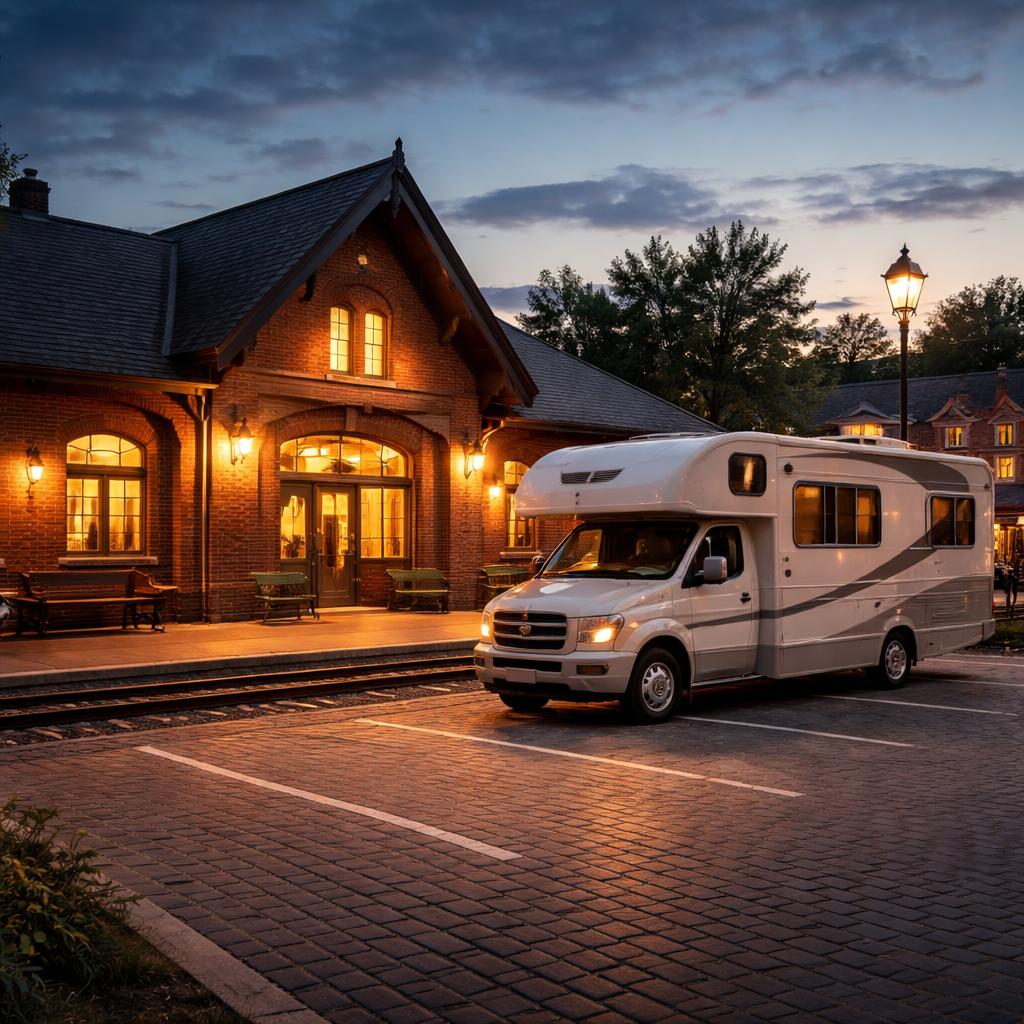
Research train station parking policies in advance – some locations allow overnight RV parking, but rules vary significantly by station and municipality
Why This Matters
Highway construction delays can add hours to RV trips and often keep travelers locked into congested interstate corridors. In some cases, train stations located near historic town centers may provide an alternative stopping point, offering access to walkable downtown areas with local restaurants, small museums, and preserved architecture.
When this option is available, it can turn an unexpected delay into a more interesting stop. Many older railroad towns were built around the station, which means key attractions are often within walking distance. However, availability, safety, and convenience vary by location, so planning ahead is essential.
📋 Industry Standards & Best Practices
Organizations like the National Association of Railroad Passengers recommend contacting stations directly to verify parking policies. Rules differ between active Amtrak stations, commuter hubs, and historic depot properties managed by local authorities. Some locations may allow overnight parking with restrictions such as time limits or designated areas, while others prohibit it entirely. Arriving during daylight hours to assess conditions and signage is considered best practice.
🎯 Product Recommendations
Use mapping tools and station directories to identify train stations near your route, focusing on locations that appear to have larger parking areas and proximity to town centers
Call stations during business hours to confirm current parking policies, as rules may change seasonally or during local events
Smaller towns may sometimes offer more flexible parking, but this is not guaranteed and should always be verified in advance
Complete Guide
Train station parking can occasionally provide a useful alternative to traditional overnight stops, especially in smaller towns where stations are located near central districts. Compared to highway stops, these locations may offer easier access to local businesses and historic areas.
The key is identifying which stations allow overnight parking and under what conditions. Some smaller stations may be more flexible, while busy commuter or urban stations are often more restrictive. There is no universal rule, so each location must be treated individually.
Before arrival, contact the station directly and check for signage on-site. Ask about time limits, designated parking zones, and any restrictions related to vehicle size or height. Older stations may also have physical limitations such as low clearances.
In some cases, stations offer practical advantages such as lighting, visibility, and proximity to services. However, amenities like restrooms or waiting areas are often limited to station hours, and should not be relied upon.
From a routing perspective, rail corridors sometimes run parallel to major highways, which can help identify alternative roads during construction delays. This can be useful, but should be combined with standard navigation tools.
Safety and etiquette are important. Always park away from active areas, avoid blocking passenger access, and follow any posted rules. Not all stations are suitable for overnight stays, and conditions can vary widely.
Timing can also affect availability. Evening arrival may reduce conflicts with daytime parking demand, but this depends on the location. Always prioritize clearly marked parking zones over convenience.
This strategy may be helpful in specific situations, but it should be viewed as an occasional option rather than a primary overnight solution.
💡 Key Recommendation
Research train station parking policies along your route to find free overnight spots in historic town centers
Why This Matters
Highway construction delays can add hours to RV trips while forcing travelers to stick to congested interstate corridors, missing the authentic charm of America’s historic railroad towns. Train station parking offers RVers a strategic escape route from traffic jams while providing direct access to walkable downtowns filled with preserved architecture, local museums, and family-owned restaurants that tell the real story of American development. Most train stations were built in town centers during the golden age of rail travel, making them perfect gateways to explore historic districts on foot.
This approach transforms frustrating construction delays into serendipitous discoveries, allowing RVers to experience the cultural richness that interstate travel completely bypasses. Railroad towns often feature well-maintained depot buildings converted into visitor centers, antique shops housed in century-old storefronts, and locally-owned cafes that have served travelers for generations. By using train station parking as overnight stops, RVers can avoid the stress of navigating construction zones while immersing themselves in authentic American history and supporting local economies that depend on tourism revenue.
📋 Industry Standards & Best Practices
The National Association of Railroad Passengers and Amtrak recommend that RV travelers contact station agents directly to verify overnight parking policies, as regulations vary significantly between active Amtrak stations and historic depot properties managed by local municipalities. Most train stations that allow overnight RV parking require vehicles under 35 feet in length due to limited lot space, and many impose 24-48 hour maximum stays to ensure turnover for daily commuters and train passengers. Industry best practice involves arriving during daytime hours to assess lot conditions, nearby services, and walking distances to historic downtown areas before committing to an overnight stay.
🎯 Product Recommendations
Use apps like Amtrak Station Maps and Historic Depot Locator to identify train stations within 5-10 miles of construction zones, focusing on stations with large paved lots and proximity to historic downtown districts rather than modern suburban locations
Call station offices between 9 AM-4 PM on weekdays to verify current overnight parking policies, as many historic railroad towns update their RV accommodation rules seasonally based on local events and tourism patterns
Prioritize train stations in towns with populations between 5,000-25,000 residents, as these communities typically offer the best balance of historic preservation, walkable downtown areas, and RV-friendly infrastructure without big city parking restrictions
Complete Guide
Before arrival, call the station directly—not Amtrak’s main number—and speak with local staff who know the actual enforcement policies. Many stations have unofficial 48-hour limits that aren’t posted online. Ask specifically about RV height restrictions, as some older stations have low-clearance overpasses or canopies near the building.
Train station parking provides unique advantages beyond free overnight stays. These locations offer excellent cell reception since they’re communication hubs, clean restrooms during station hours, and often have covered waiting areas perfect for rainy weather walks with pets. Many historic stations feature beautiful architecture worth photographing, and some house small museums or visitor information centers.
The strategic benefit extends beyond individual stops. Train routes follow geographic corridors that avoid interstate bottlenecks, connecting you to parallel highway systems that bypass major construction zones. For example, following the Empire Builder route through North Dakota and Montana reveals scenic two-lane highways that parallel the tracks, offering stunning views without the truck traffic of I-94.
Safety considerations are minimal since train stations maintain lighting and security systems, but position your RV away from active loading areas and early morning announcements. Most stations have designated long-term parking sections separate from daily commuter areas—use these zones to avoid blocking legitimate passengers.
Timing matters significantly. Arrival between 8 PM and 10 PM allows you to explore downtown dinner options while avoiding rush hour congestion. Many railroad towns feature walkable main streets within 2-3 blocks of stations, offering authentic local dining experiences impossible to find at highway exits.
This strategy works particularly well during peak travel seasons when traditional campgrounds are booked solid. Railroad towns rarely appear on tourist radar screens, so their downtown accommodations and attractions remain accessible even during major holiday weekends when interstate corridors are jammed.
Document successful locations in your travel log, noting specific parking areas, contact numbers, and local highlights. Many railroad communities host farmers markets, festivals, or historic tours that provide unexpected cultural enrichment opportunities while traveling between primary destinations.
Step-by-Step Instructions
Step 1
Monitor highway construction reports 2-3 days before travel using state DOT websites and identify potential 2+ hour delays, then map out railroad towns within 15 miles of affected interstate segments using railroad heritage websites and Google Maps satellite view
Step 2
Contact train stations in targeted towns during business hours to confirm overnight RV parking availability, maximum length restrictions, and any fees, while asking station staff about walking distances to historic downtown areas and local attractions
Step 3
Arrive at chosen train station 2-3 hours before sunset to assess parking lot conditions, check for level ground away from active rail lines, and take an initial walking tour of the historic downtown to identify restaurants, shops, and points of interest for the following day
Step 4
Park in designated areas away from passenger loading zones and commuter spaces, set up minimally to respect the transportation function of the facility, then spend the evening and following morning exploring historic districts, local museums, and heritage sites within walking distance
💰 Cost Analysis
Initial investment: $45-$85 for railroad heritage guidebooks, offline GPS maps, and station contact directories specific to your travel regions
Annual maintenance: $12-$28 per year for updated railroad town guidebooks and digital map subscriptions to track station policy changes
5 year projection: $45-$85 initial setup + $60-$140 over 5 years in annual updates = $105-$225 total over 5 years
Cost per year: $21-$45 per year averaged over 5 years including initial resources and annual updates
🌍 Regional Considerations
Midwest railroad towns often feature the most RV-friendly train station parking due to larger lots built for agricultural shipping, with stations in Iowa, Illinois, and Nebraska typically allowing 2-3 day stays and offering the richest concentration of preserved downtown districts
Western mountain states have fewer active train stations but historic depot buildings converted to visitor centers often welcome overnight RV parking, particularly in Colorado, Montana, and Utah towns where railroad heritage drives tourism revenue
Northeastern Amtrak corridors generally restrict overnight parking due to high commuter usage, but smaller heritage railroad towns in Vermont, New Hampshire, and upstate New York offer excellent alternatives with well-preserved Victorian-era downtown districts
🌍 Real-World Applications
When I-80 construction created 3-hour delays through Nebraska, we diverted to the historic train station in North Platte, parked overnight for free, and discovered the Bailey Yard (world’s largest railroad yard), Lincoln County Historical Museum, and locally-owned Prairie Commons restaurant all within walking distance
During I-40 reconstruction delays in New Mexico, the Lamy train station provided overnight parking with direct walking access to the historic Lamy Railroad District, including the restored 1909 depot building converted to an art gallery and the Legal Tender Saloon dating to territorial days
I-70 construction through Colorado led us to the Fraser train station, where we parked free for two nights and explored the historic downtown’s railroad depot museum, original 1920s storefronts housing local artisan shops, and the vintage Crooked Creek Saloon built to serve Denver & Rio Grande railroad workers
🔍 Common Misconceptions
Many RVers assume all train stations prohibit overnight parking, but hundreds of historic railroad towns actively welcome RVers as a way to boost local tourism and support downtown businesses that depend on foot traffic from visitors
There’s a false belief that train station areas are unsafe or run-down, when in reality most railroad towns have invested heavily in historic preservation and downtown revitalization, making station districts among the safest and most well-maintained parts of these communities
Some travelers think train station parking only works for small RVs, but many historic railroad towns built oversized lots to accommodate freight operations and modern stations often have ample space for RVs up to 35-40 feet in designated areas
📊 Comparison Analysis
🔧 Tools & Equipment
Railroad heritage guidebooks or apps like TrainWeb’s Station Directory to identify active and historic stations with RV parking potential
Offline GPS mapping system to navigate to train stations when highway construction disrupts cell service and internet connectivity
⏱️ Time & Cost Summary
Estimated Time: 2-3 hours for initial research and station contact before travel, plus 30-45 minutes for parking assessment and setup upon arrival at each train station
Estimated Cost: $0-$15 per night for train station parking fees, plus $21-$45 annually for research resources and updated guidebooks
📅 Maintenance Schedule
⚠️ Safety Considerations
FAQ
Is it legal to park my RV overnight at train stations to avoid highway construction delays?
How can I find train stations near highway construction zones that allow RV overnight parking?
What size RV can typically fit in train station parking lots?
Are there hookups available when parking overnight at train stations?
How do I safely explore historic town centers after parking at the train station?
What should I do if highway construction delays are longer than expected and I need to stay multiple nights?
How can train station parking help me avoid peak construction delay times?
What historic attractions can I typically find near train stations?
Are train station parking lots secure for leaving my RV while exploring town?
How do I determine if a historic town near a train station is worth the overnight stop?
Can I use the train station facilities like restrooms when parking overnight?
What’s the best way to time my arrival at train stations to avoid disrupting commuter parking?
How do I find information about construction delays to plan my train station stops?
Are there specific train routes or regions better suited for this highway construction avoidance strategy?
What should I research about a historic town before using their train station for overnight parking?
👨💼 Expert Insights
Railroad museum curators report that RVers who park at train stations spend significantly more time and money in historic districts compared to day visitors, making them valuable contributors to heritage tourism economies
Small town economic development directors actively encourage train station RV parking because overnight visitors typically eat at local restaurants, shop in historic storefronts, and return for future visits with friends and family
Experienced railroad town travelers recommend arriving on weekdays when possible, as weekend events and festivals can fill train station parking with local visitors attending downtown celebrations
📚 Related Topics
- Using municipal parking areas in small towns to access historic districts when train stations aren’t available
- Researching local heritage trails and walking tours to maximize historic town center exploration
- Supporting local businesses in railroad towns to ensure continued RV parking availability and community welcome