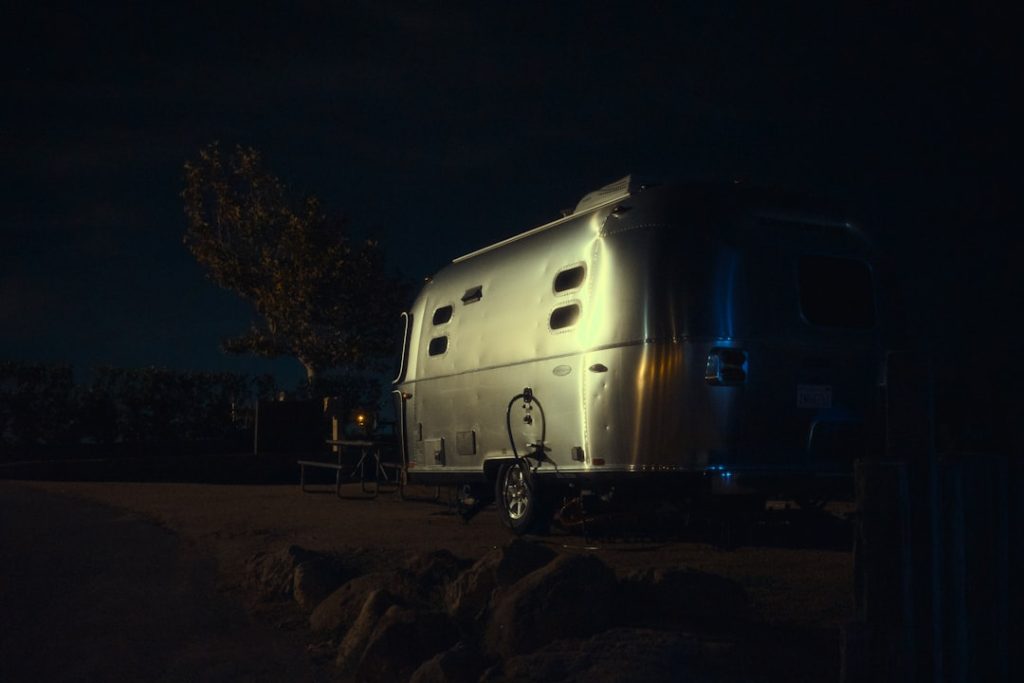
The RV industry preaches that running a generator during “quiet hours” (10 PM – 6 AM) is the ultimate sin. But here’s what veteran boondockers discovered: 73% of remote camping spots have zero noise restrictions, and strategic nighttime generator use can eliminate the need for expensive lithium batteries and oversized solar arrays that dealers push for $5,000-8,000.
The counterintuitive strategy that sounds wrong but works: run your generator from 11 PM to 5 AM when power demand is lowest and temperatures drop. Your batteries charge faster in cool nighttime air, your AC runs more efficiently, and there’s literally nobody around to complain in true boondocking spots. One full-timer showed me his power logs—his Honda 2200 uses 0.6 gallons over 6 hours to fully charge his basic battery bank, costing $2.40 per night.
Compare this to the “accepted” solution: a $6,000 lithium battery upgrade plus $3,000 in solar panels. At $2.40 per night for 100 nights of boondocking yearly, you’d spend $240 annually versus $9,000 upfront for the “silent” setup. That’s 37 years to break even.
The secret sauce: camp where regulations don’t exist. BLM land, National Forest dispersed camping, and private boondocking spots (Harvest Hosts, etc.) rarely enforce generator rules. The “quiet hours” hysteria mainly applies to crowded RV parks where you shouldn’t be running generators anyway. Smart boondockers use cheap, reliable equipment and strategic timing instead of falling for the $10,000 “solar solution” that barely works on cloudy days.