RV Insurance – What to Know Before You Buy
RV Insurance Guide
RV Insurance: What You Need to Know Before You Buy
A complete, data-backed guide to RV insurance in the USA and Canada – coverage types, real costs, legal requirements, and how it fits with travel insurance.
Last updated: April 2026
⚡ Quick Summary: Two Types of Protection Every RV Traveler Needs
🚐 RV Insurance
Covers the vehicle – liability, collision, comprehensive, and campsite liability. Required by law for motorhomes.
🏥 Travel Insurance
Covers you – medical emergencies, evacuation, trip cancellation, and personal belongings. RV insurance does not cover these.
Most RV travelers need both. For a full guide to the personal protection side, see our complete guide to travel insurance for RV trips in the USA.
If you’re shopping for RV insurance in the USA or Canada, this guide walks you through what’s required, what coverage actually does, how much people really pay, the pitfalls to avoid, and how to save – using current, verifiable data.
Whether you’re a weekend warrior with a travel trailer, a full-time RVer, or a snowbird crossing the border, understanding your coverage options before you buy is the single most useful thing you can do.
RV Insurance Basics: Who Needs What
Not all RVs are treated the same by insurers – and the distinction matters for what coverage you’re required to carry.
🚐 Motorhomes (Class A, B, C)
Drivable vehicles that must carry auto liability coverage meeting your state or province’s legal minimums. Non-negotiable for operation on public roads.
🏕️ Towable RVs (Trailers, Fifth Wheels)
No engine of their own – liability is typically covered by the tow vehicle’s auto policy. But you still need separate physical-damage coverage for the trailer itself.
Why this matters: If your travel trailer is damaged by hail, theft, or a collision while parked, your car’s liability insurance won’t fix the trailer – you need RV comprehensive/collision on the trailer’s own policy. Some carriers (e.g., Progressive) require comp/collision on travel-trailer policies as standard.
The RV Industry Association defines RVs as vehicular-type units designed as temporary living quarters – motorized or towed. This includes motorhomes and towables: travel trailers, fifth wheels, folding campers, and truck campers.
RV Insurance Laws and Minimums: USA and Canada (2025)
United States – Notable 2025 Updates
Your motorhome must meet your state’s minimum liability limits. Several states updated their minimums in 2025:
| State | Minimum Liability (2025) | Note |
|---|---|---|
| California | 30/60/15 | Effective Jan 1, 2025 |
| Virginia | 50/100/25 | Effective 2025; check your renewal date |
| Utah | 30/65/25 | Effective Jan 1, 2025 |
💡 Tip: Minimums are just that – minimums. Medical and legal costs can easily exceed them. Many RVers choose higher limits (e.g., 100/300/100 or more) or add an umbrella policy for extra liability protection.
Canada – Key Requirements
Ontario
Minimum $200,000 in third-party liability. Most drivers choose $1-2 million for adequate real-world protection.
British Columbia (ICBC)
Basic Autoplan includes $200,000 third-party liability with options to purchase extended coverage. Basic coverage applies in both Canada and the USA.
RV Insurance Cost: What People Actually Pay
Rates vary by RV class, value, usage, storage location, driving record, and ZIP code. The most reliable benchmarks available come from Progressive’s 2024 national averages:
$594
PER YEAR (AVG.)
Travel Trailer
Comp + collision included
$1,052
PER YEAR (AVG.)
Motorhome (A/B/C)
Liability + comp/collision
$125+
PER YEAR (FROM)
Liability Only
Where available by state
Source: Progressive national averages for 2024. These are indicative figures – your actual quote will vary based on location, RV specs, usage, and driving record.
Core RV Insurance Coverages Explained
Here’s what each coverage type does and who it’s most relevant for:
| Coverage | What It Does | Best For / Notes |
|---|---|---|
| Liability (BI/PD) | Pays if you’re legally responsible for injuries or property damage | Required for motorhomes; minimums vary by state/province |
| Collision | Repairs/replaces your RV after a crash, regardless of fault | Deductible applies; all RVs |
| Comprehensive | Non-collision losses: theft, hail, fire, vandalism, animals, glass | Required by lenders; recommended even if you own outright |
| UM/UIM | Helps if you’re hit by someone with little or no insurance | Limits vary by jurisdiction |
| Vacation Liability | Liability while parked and using RV as temporary residence | Often $10k base; upgradeable to $500k (Progressive) |
| Full-Timer’s Liability | Functions like homeowners liability for your RV as primary home | Critical for those living in their RV 6+ months/year |
| Personal Effects | Covers belongings inside the RV | You choose the limit; read exclusions carefully |
| Total Loss Replacement | Replaces a totaled RV with a new same/later model year | Best for newer RVs; scope and eligibility vary by insurer |
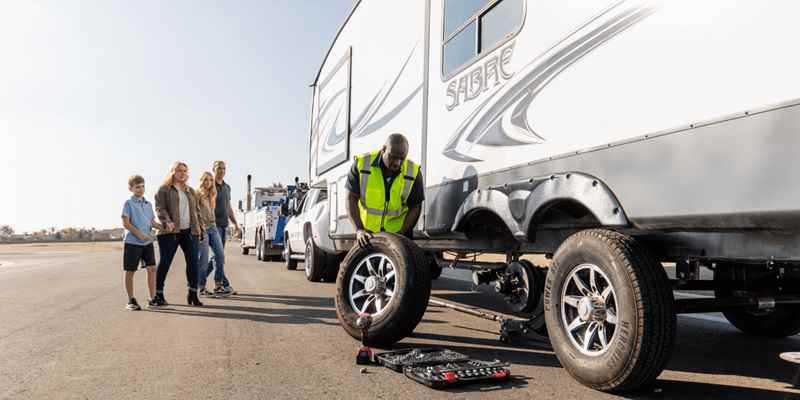
| Roadside + Emergency Expense | Towing, tire, fuel; hotel/food if a covered loss strands you | Strong value for travelers far from home |
RV Insurance vs Travel Insurance: An Important Distinction
This is one of the most common misunderstandings among RV travelers – and it’s worth clearing up clearly before your next trip.
🚐 RV Insurance Covers…
- Damage to the vehicle (collision, hail, fire, theft)
- Liability if you cause an accident
- Campsite liability while parked
- Personal belongings inside the RV (up to limits)
- Roadside assistance for the vehicle
🏥 Travel Insurance Covers…
- Your medical expenses if you get injured or ill
- Emergency evacuation from remote locations
- Trip cancellation and interruption
- Your personal gear and electronics
- Adventure and outdoor activity coverage
The key point: RV insurance protects the vehicle. Travel insurance protects you. If your RV gets in an accident, RV insurance handles vehicle damage. If you get hurt in that accident – or on a hike, or in a remote national park – travel insurance handles your medical bills. Most serious RV travelers need both.
This is especially important in the USA where a single hospital visit can cost thousands of dollars and helicopter evacuation from a remote area can run $15,000 to $50,000 or more. RV insurance doesn’t touch those costs.
For a full overview of travel insurance options for RV trips, see our complete guide to travel insurance for RV trips in the USA. If you’re comparing providers, the World Nomads vs SafetyWing comparison is a good starting point.
Cross-Border RV Insurance: USA and Canada
Planning to cross the border? Here’s what you need to know:
- USA policies in Canada: US policies generally remain valid in Canada. Bring your proof of insurance, and consider higher limits given that US exposures can exceed minimums quickly.
- Canada (ICBC) in the USA: BC’s Basic Autoplan covers you in both Canada and the USA. For extended US travel, consider boosting third-party limits to $1-2M.
- Mexico is different: Most US carriers provide only limited border-zone coverage (e.g., within 25 miles for up to 10 days). Longer Mexico trips typically require a separate Mexican insurance policy.
- Proof of insurance: Several Canadian provinces accept digital proof, but not all US jurisdictions do. Carry a paper copy when crossing borders.
Real-World Risk: What RV Claims Actually Look Like
🌨️ Hail Damage
Can dent panels, destroy roof membranes, and shatter skylights. Covered under comprehensive (minus deductible).
🔥 RV Fires
The US Fire Administration estimates ~4,200 RV fires annually (2018-2020) with ~$60.3M in losses. Install and test smoke and CO alarms.
🔓 Theft
Entire RV or contents theft is a comprehensive claim. Coverage limits and deductibles apply. Secure storage improves both safety and rates.
Three Realistic Buyer Profiles
These scenarios illustrate how coverage pieces fit together using actual industry averages. They are not quotes – your price will vary.
1. Weekend Warrior with a 27ft Travel Trailer (USA)
- Rig: 27ft travel trailer, financed
- Setup: Comp + collision (lender requires it), personal effects $3,000, roadside, vacation liability
- Why: Tow vehicle handles liability; trailer needs comp/collision for hail, theft, and collision damage
- Cost anchor: Progressive’s 2024 average for travel trailers was $594/year nationally
2. Full-Time RVer in a Class C (USA to Canada Snowbird)
- Rig: 2019 Class C motorhome, paid off; owner lives in it 8 months/year
- Setup: Liability at 100/300/100, comp/collision, full-timer’s liability, personal effects $10k, emergency expense, roadside
- Cross-border: US policy typically valid in Canada; confirm proof of insurance before crossing. Mexico needs separate coverage.
- Cost anchor: Progressive’s motorhome average was $1,052/year in 2024; full-timer endorsements add cost
3. BC Motorhome Owner Touring the US Northwest (Canada to USA)
- Rig: 2021 Class B camper van, BC plates
- Setup: ICBC Basic Autoplan ($200k TPL) + Extended TPL ($1-2M), comp/collision, travel medical as needed
- Why higher limits: US medical and legal exposures can quickly exceed $200k; most Canadians boost TPL to $1-2M for US travel
When You Also Need Travel Insurance
RV insurance is essential – but it doesn’t protect you as a person. Here’s when travel insurance becomes critical on an RV trip:
🚨 Situations RV Insurance Won’t Cover
- Medical emergency or injury during your trip
- Helicopter evacuation from a remote trail
- Hospital stay following a hiking accident
- Trip cancellation due to illness or family emergency
- Medical costs for outdoor activity injuries
✅ What Travel Insurance Adds
- Emergency medical coverage up to policy limits
- Evacuation from remote national parks
- Trip cancellation and interruption protection
- Coverage for adventure activities (hiking, kayaking, etc.)
- 24/7 emergency assistance
If you’re planning an RV trip, RV insurance alone is not enough.
US healthcare costs are among the highest in the world. A single ER visit can run $3,000 to $30,000. A helicopter evacuation from a national park backcountry area can cost $15,000 to $50,000 or more. None of that is covered by your RV policy.
Read our complete guide to travel insurance for RV trips to understand your options – or go straight to the World Nomads vs SafetyWing comparison if you’re ready to compare providers.
How to Save on RV Insurance Without Cutting Coverage
Carriers offer stackable discounts. A few examples from Progressive’s current list:
- Multi-policy bundle – combine with auto or home insurance
- Quote in advance – getting a quote before your policy starts
- Original owner discount – for first owners of a new RV
- Pay in full – avoiding installment fees
- Claim-free history – reward for no recent claims
- Secure/indoor storage – gated or indoor storage rates better than curbside
- Paperless and prompt payment – small but stackable
Important: Match coverage to actual usage. Misclassifying full-time RV use as recreational can lead to denied claims. If you live in your RV 6+ months per year, add the full-timer endorsement rather than skimping on classification to save a few dollars.
Shopping Checklist: What to Have Ready
📋 Documents and Details
- RV VIN, year, make, model, length
- Purchase price and lienholder (if financed)
- Primary storage address and type
- Usage: recreational vs. full-time; nights/year; mileage
- Travel plans: USA only, Canada, Mexico?
- Accessories to itemize (awnings, solar, satellite)
- Desired deductibles and liability limits
❓ Questions to Ask Your Agent
- Does the policy include vacation liability and at what limit?
- If I live in the RV, do I have full-timer’s liability?
- How does total loss work on my RV’s age?
- Is roadside assistance sized for RV towing weight/length?
- What proof of insurance should I carry cross-border?
- Any Mexico limitations on my current policy?
RV insurance covers your vehicle. But what about you?
Medical emergencies, evacuation from remote areas, and trip cancellation are not covered by your RV policy. Before your next road trip, make sure you have personal protection too.
Final Take: Five Things to Get Right
- Know your legal minimums – and consider higher limits. Minimums rarely reflect real-world costs.
- Match coverage to how you use the rig – recreational vs. full-time classification matters for coverage validity.
- Don’t skip comprehensive – hail, theft, and fire are real RV risks. Lenders require it; it’s worth having even if you own outright.
- Plan cross-border travel – Canada is usually straightforward; Mexico almost always needs separate coverage.
- Add travel insurance for personal protection – RV insurance covers the vehicle. Travel insurance covers you. You need both for full protection on the road.
Disclaimer: The information provided in this article is for general informational purposes only. It does not constitute professional advice, recommendation, or guidance of any kind. The content herein should not be relied upon as a substitute for consultation with a licensed insurance agent or other qualified professional. Always seek personalized advice before making any insurance-related decisions.