Can You Sleep Anywhere in an RV in the U.S.? (2026 Guide)
Short answer: No – but you have far more options than most people think.
You cannot legally sleep in an RV just anywhere in the U.S. Local laws, private property rules, and land-use regulations all apply. But with the right knowledge, finding legal RV overnight parking is straightforward. This guide covers where you can park, where you cannot, and how to avoid the most common mistakes.
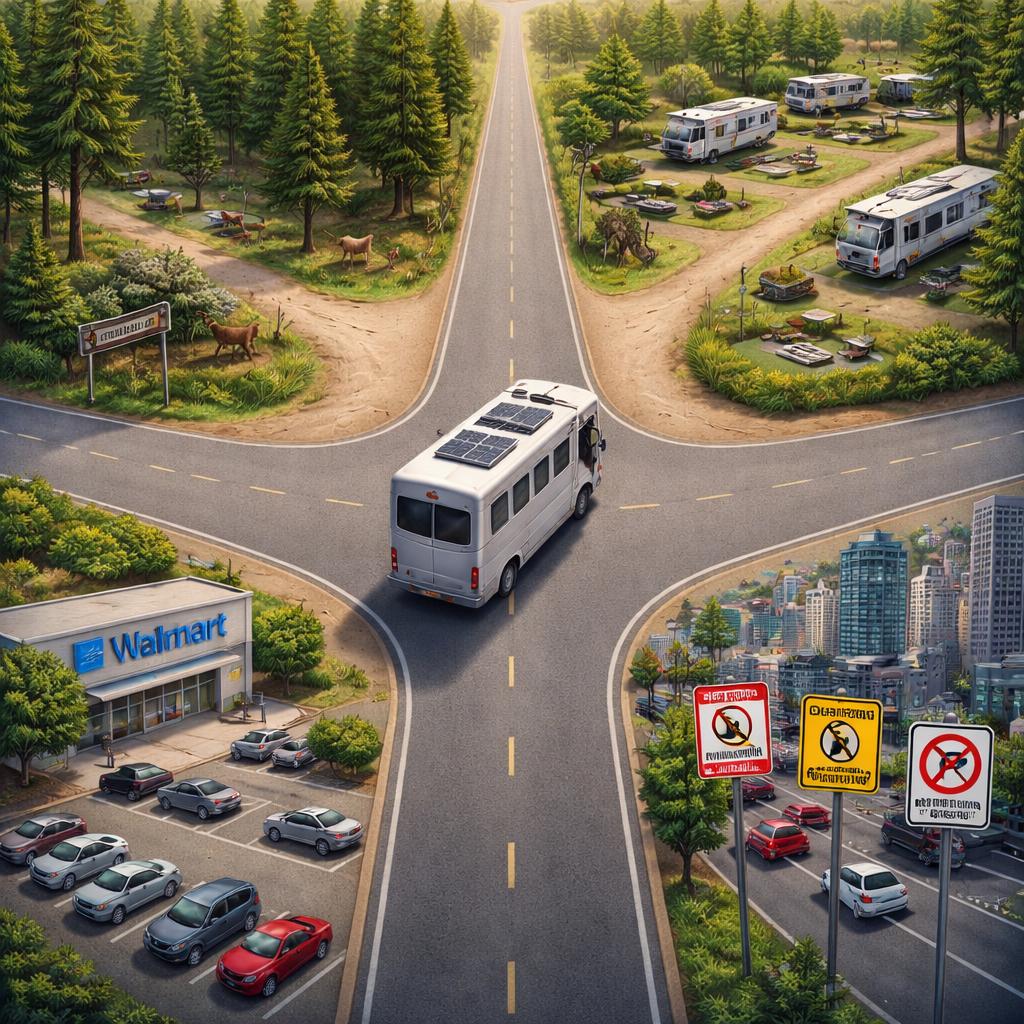
Where You CAN Sleep in an RV (Legally)
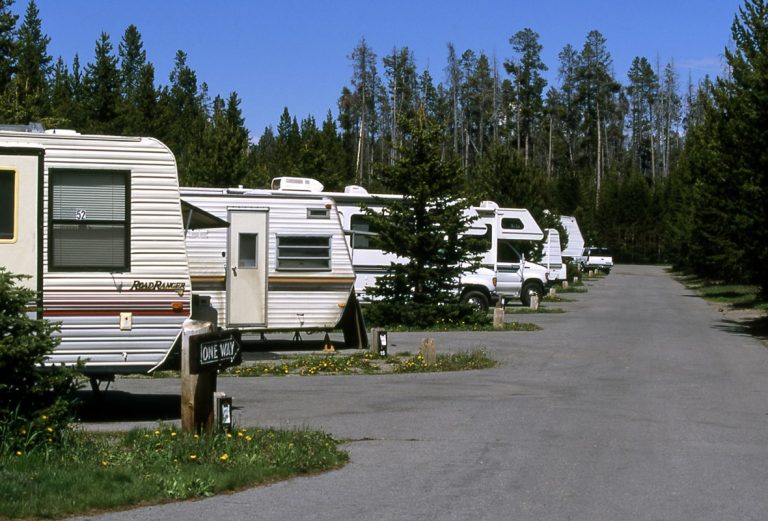
1. RV Parks and Campgrounds LEGAL
What it is: Designated facilities built for RVs – full hookups, restrooms, laundry, and often amenities like pools or Wi-Fi.
- Costs range from $30 to $100+ per night
- Reservations often required, especially May through September
- Some parks have rig-length or age restrictions on older RVs
- Quality varies significantly – research before booking
Best for: Travelers who want hookups, amenities, or a predictable nightly experience.
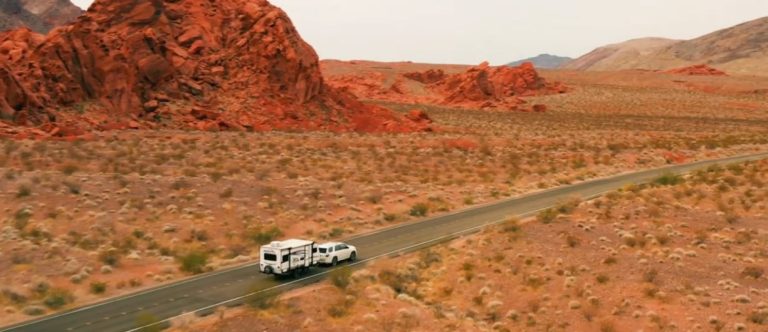
2. Public Lands – BLM and National Forests LEGAL
What it is: Land managed by the Bureau of Land Management (BLM) or U.S. Forest Service. Much of the American West is open for dispersed camping – you can camp outside of designated campgrounds.
- Generally limited to 14 consecutive days in one location
- Must move at least 25 miles after the 14-day limit (varies by district)
- No hookups – self-contained rigs required
- Some areas are closed to camping – check district maps
- Fire restrictions apply in dry seasons
- Concentrated in the West; limited BLM access in the East
Best for: Boondockers and travelers comfortable with off-grid living. Not sure whether BLM land or private camping suits your style? See our BLM land vs private land camping guide for a full comparison.
3. Walmart Parking Lots DEPENDS
What it is: Many Walmart stores have historically allowed RVers to park overnight in their lots at no charge.
- Walmart corporate policy does not guarantee overnight parking – store-manager discretion only
- Many urban and suburban stores now prohibit it
- Always check with the store manager before settling in
- Some cities have ordinances that override store permission
- One night only – not a long-term solution
Best for: A single night between destinations, not a regular strategy.
4. Truck Stops and Travel Centers GENERALLY LEGAL
What it is: Facilities like Pilot Flying J, Love’s, and TA/Petro that cater to long-haul truckers and travelers.
- Unwritten expectation that you purchase fuel or food
- Some locations restrict non-commercial vehicles
- Noisy and bright – not comfortable for extended stays
- Maneuvering can be challenging at busy stops
Best for: Emergency overnight stops or long cross-country travel days.
5. Casinos LEGAL WHERE PERMITTED
What it is: Many casinos, particularly in the West and South, allow free or low-cost RV parking as a customer courtesy.
- Must confirm with the casino in advance – policies change frequently
- No hookups in most cases
- Expectation (sometimes explicit) that you spend money inside
- Typically 1 to 3 nights maximum
6. Harvest Hosts and Membership Networks LEGAL
What it is: Membership programs allowing RVers to stay overnight at wineries, farms, breweries, museums, and golf courses. There are several RV membership options worth comparing before committing to one.
- Annual membership fee required (Harvest Hosts: ~$99/year)
- One-night maximum per location
- Self-contained RV required – no hookups
- Must support the host business
Where You CANNOT (or Usually Cannot) Sleep in an RV
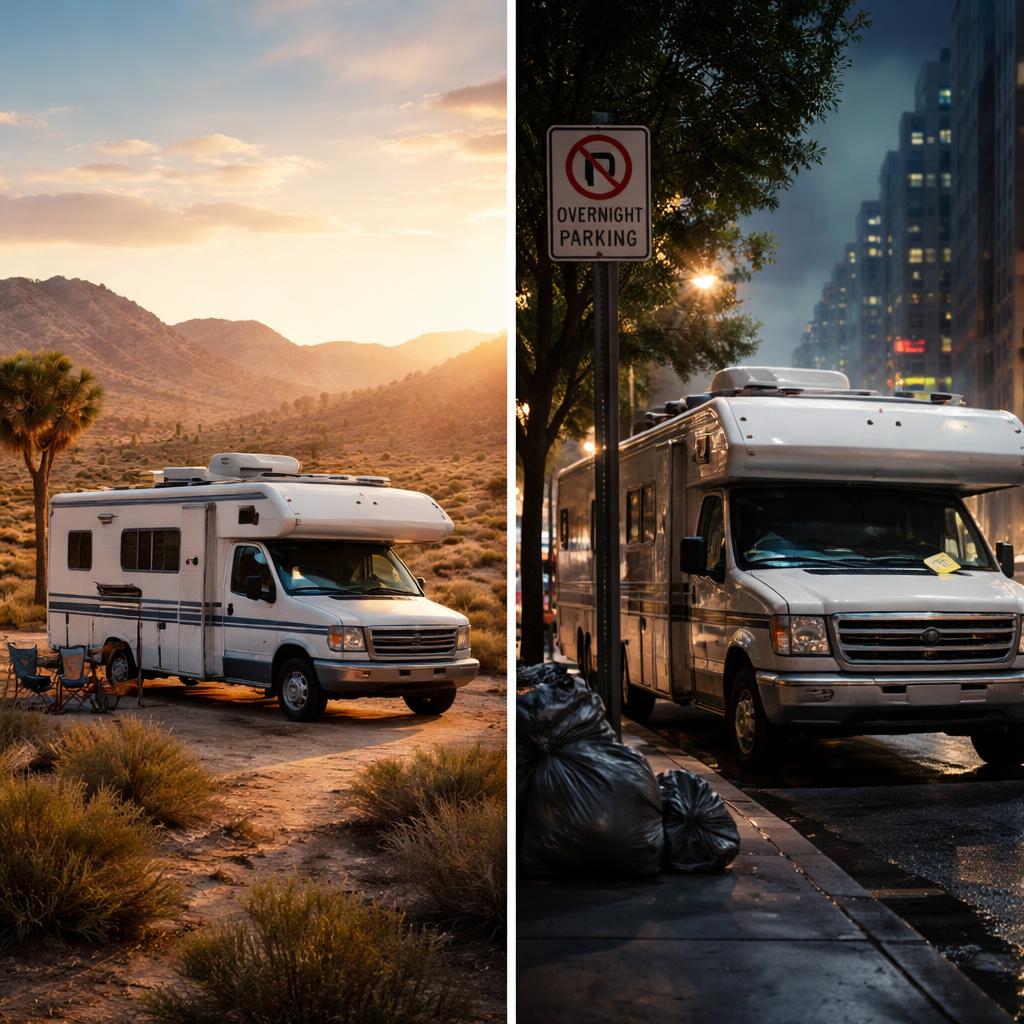
City Streets and Residential Areas USUALLY ILLEGAL
Most U.S. cities prohibit overnight RV parking on public streets, especially residential neighborhoods. San Francisco, Los Angeles, Seattle, and New York enforce this aggressively. Fines run $65 to $500+.
Why: Resident complaints, zoning laws, and anti-vagrancy ordinances.
Private Property Without Explicit Permission TRESPASSING
Parking on private land without the owner’s clear permission is trespassing. Verbal permission is better than nothing – written permission is better still.
Highway Roadsides ILLEGAL IN MOST STATES
Parking on a highway shoulder overnight is illegal in most states. Rest areas vary – some allow overnight stays, many limit stops to 2 to 4 hours.
National Parks (Outside Designated Campgrounds) NOT PERMITTED
You cannot park anywhere inside a National Park and sleep overnight. All stays must be in designated campgrounds or backcountry sites with permits.
Boondocking Explained (Simply)
Boondocking (also called dry camping or dispersed camping) means camping without hookups – no water, electric, or sewer connections. It is the primary form of free RV camping in the U.S.
Where Boondocking Is Allowed
- BLM land: Most open to dispersed camping, especially in Western states
- National Forests: Most allow dispersed camping outside designated campgrounds
- Adjacent federal land near National Parks: Often BLM or Forest Service parcels
For a deeper breakdown of where to actually find spots, our guide to boondocking locations – BLM land vs state parks vs Harvest Hosts covers the differences in detail.
Where Boondocking Is NOT Allowed
- Inside National Parks (outside designated sites)
- State parks (unless specifically designated)
- Private land without permission
- Urban or suburban areas
- Areas with posted “No Camping” signs
Standard Time Limits for Boondocking
- BLM standard: 14 days per location, then must move 25+ miles
- National Forest: Typically 14 days – varies by forest
- High-use areas: May have shorter 7-day limits or seasonal closures
Still weighing up whether boondocking is right for you? Read our boondocking vs private RV campgrounds comparison to figure out which camping style fits your trip.
Time Limits You Must Know
Ignoring time limits is one of the fastest ways to receive a citation or fine when sleeping in an RV in the U.S.
| Location Type | Typical Limit |
|---|---|
| BLM land | 14 consecutive days, then 25-mile move required |
| National Forest dispersed | 14 days (check each forest’s rules) |
| Walmart lots | 1 night maximum |
| Rest areas | 2 to 8 hours in most states; a few allow overnight |
| Casino lots | 1 to 3 nights depending on casino |
| State parks | Varies – typically 14 days |
| RV parks | Your reservation period; long-term sites available |
Most RV-Friendly vs. Most Restrictive States
Most RV-Friendly
Most Restrictive
Note: Restrictions are mostly urban. Rural areas in every state tend to be significantly more permissive.
Common Mistakes RV Travelers Make
- Assuming Walmart always says yes. Many stores – especially in cities – no longer allow overnight parking. Always ask the manager in person before settling in.
- Ignoring the 14-day rule on public land. BLM rangers do check. Overstaying is illegal and can result in fines and being barred from the area.
- Not verifying local city ordinances. State law may allow something a city bans. Always check both levels before parking.
- Camping on roadsides or highway shoulders. Almost always illegal and genuinely dangerous. Do not do it.
- Relying on outdated information. RV camping laws change frequently. A spot that was legal in 2022 may not be in 2026. Always verify with current apps or land management agency websites.
- Not leaving a site clean. Leave No Trace violations cause entire dispersed camping areas to be permanently closed – affecting every RVer who comes after you.
- Treating rest areas as campgrounds. Staying 12 hours at a 2-hour rest area is a ticketable offense in many states.
How to Find Legal Overnight Spots
These are the most reliable tools for finding free and legal RV overnight parking across the U.S.:
Pro tip: Cross-reference at least two sources before committing to an unfamiliar spot. Policies change and user reviews can be outdated.
Frequently Asked Questions
Sometimes – but not reliably. Walmart corporate policy defers to individual store managers, and many urban stores now say no. Always ask the manager in person, confirm the local city ordinance allows it, and treat it as one night only.
No. Boondocking is legal on most BLM land and National Forest land, primarily in the West. It is not legal in National Parks outside designated sites, most state parks, private land without permission, or urban and suburban areas. Always verify with the managing agency for the specific parcel.
Generally no. Roadside overnight parking is illegal in most states. Highway shoulders are for emergencies only. Interstate rest areas allow short stops – typically 2 to 8 hours – but most do not permit overnight camping.
On BLM land: 14 consecutive days. On most National Forest land: 14 days. At Walmart or casino lots: 1 night. At rest areas: 2 to 8 hours in most states. At RV parks: as long as your reservation covers. Always check the specific rules for each location.
Consequences range from a knock and a request to move, to formal citations, fines, and towing. In some cities, repeat violations lead to vehicle impoundment. On federal land, rangers can issue federal citations. The severity depends on location and local enforcement culture – but the risk is real.
For most dispersed camping on BLM land, no permit is required. However, some high-use areas – like parts of the California desert or popular sites near national parks – now require free or paid permits. Check the specific BLM field office website before arriving.
It depends on local zoning and HOA rules. Many cities prohibit using an RV as a primary dwelling, even on private property. Some allow short-term stays of a few nights. Understanding how U.S. zoning laws work can help clarify what is and is not permitted on your specific parcel. Check your municipality’s code before assuming it is permitted.
Bottom Line
- You can sleep in an RV in the U.S. legally in many places – public lands, campgrounds, some private lots – but not just anywhere
- Boondocking on BLM and National Forest land is the most flexible free option, concentrated in Western states, with a standard 14-day limit
- Urban areas are the hardest – most cities restrict or outright prohibit street RV overnight parking
- Always verify current rules before you arrive – RV camping laws shift frequently, and outdated information leads to fines
- The right apps make it easy: Freecampsites.net, The Dyrt, Campendium, and iOverlander are your best starting points
Last updated: 2026. Laws and policies change – always confirm with official land management agencies and local ordinances before your trip.