How to Plan an RV Trip: A Pre-Trip Framework That Actually Holds Up
Before You Map a Single Mile
Not a checklist of things to remember. A decision framework for the variables that actually determine whether a trip goes smoothly or sideways.
Why most RV trip planning fails early
The majority of RV trip mistakes are made before departure – not on the road. They cluster into three categories: route problems (bridge clearances, weight limits, roads the rig simply shouldn’t be on), resource planning problems (water, power, and dump stations not mapped against actual trip duration), and booking problems (assuming campsite availability without understanding reservation windows at popular parks).
Digital nomads and first-time RV owners tend to be most exposed to all three simultaneously, because they’re planning without a prior reference point. The sections below work through each category in sequence – starting with the rig, not the destination.
Start with the rig, not the destination
Most people open a map app and start drawing a route. The more useful starting point is the rig’s physical and mechanical constraints, because those define what’s actually possible before you commit to anything.
Height and weight limits
Bridge clearances, tunnel restrictions, and posted road weight limits are real constraints – not edge cases. Class A motorhomes and fifth wheels over 13 feet need active route filtering because standard GPS tools default to car routing. A route that looks fine on Google Maps may pass under a 12’6″ bridge on a state highway, or through a mountain tunnel with a 13-foot clearance limit. Neither will be flagged without RV-specific routing inputs.
Cargo Carrying Capacity (CCC)
CCC is the weight your rig can legally carry after accounting for its base weight – passengers, gear, water, propane, food. On multi-week trips, it’s easy to load a trailer over its CCC without realizing it. Packing decisions need to be made against the actual number before departure, not adjusted on the fly.
Tow vehicle limits
For trailers and fifth wheels, the tow vehicle’s rated towing capacity governs what’s safe – not just the rig’s GVWR. The combination of tongue weight, payload, and the vehicle’s tow rating all need to be within spec. Many owners know one number without tracking all three.
Slide-out considerations
Rigs with slide-outs require adequate site width to deploy them fully. Many campground sites – particularly older state park sites and some national forest sites – were built before large slides were common. A 50-amp full-hookup site that fits the rig’s length may not have enough lateral clearance for all slides.
Know your rig’s height, weight, CCC, and slide clearance requirements before you map a single mile. These aren’t refinements to the plan – they’re the filter the plan runs through.
Route planning: the variables that actually matter
RV-safe routing tools
What separates an RV-safe routing tool from a standard navigation app is the ability to input rig dimensions – height, weight, length – and have the routing algorithm actively avoid low clearances, weight-restricted roads, and routes unsuitable for large vehicles. Standard Google Maps applies none of those filters. It routes a 40-foot Class A the same way it routes a Toyota Camry.
RV-specific platforms also tend to preference truck routes, which typically have the clearance and road quality large rigs need. For a side-by-side look at how the main RV trip planning platforms handle routing – including RVLife and Roadtrippers – see our RV Trip Planner Comparison →.
Daily mileage and the 2/2/2 rule
The 2/2/2 rule is a common RV travel guideline: no more than 200 miles per day, arrive at your campsite by 2pm, stay a minimum of 2 nights. The logic is sound for most trips – fewer driving hours reduces fatigue, arriving by 2pm leaves time to set up in daylight, and two-night stays reduce the constant churn of hookups, leveling, and departure prep.
It doesn’t apply universally. Full-timers who relocate frequently – or those doing point-to-point drives to reach a specific destination – may cover more ground on fewer stops. The rule’s real utility is as a ceiling for new RVers who tend to overestimate comfortable daily range.
Elevation and seasonal conditions
Mountain passes and seasonal road conditions aren’t abstract risks. Donner Pass in winter requires checking chain control requirements and road conditions in real time – many RVers avoid it entirely between November and March. Desert travel in July means planning departure times before sunrise, monitoring tire pressure more frequently (heat accelerates pressure buildup), and ensuring AC load won’t stress an older chassis.
High-elevation routes also affect fuel economy significantly, which factors into fuel stop spacing – particularly for diesel pushers with smaller effective range at altitude.
Fuel stop planning
Large rigs, especially those over 35 feet, have limited fuel station options in practice. Many gas station canopies are too low for a tall Class A or a truck-and-fifth-wheel combination – and attempting entry under a low canopy is a costly mistake. Fuel stops need to be planned in advance for clearance, not just proximity. Some RV trip planning platforms include RV-friendly fuel stop filtering that accounts for canopy height and pull-through availability.
Campground booking: what new RVers get wrong
Reservation windows
National park campgrounds on Recreation.gov open reservations exactly 6 months in advance – to the day. Premium sites at Zion, Yosemite, Yellowstone, and similarly popular parks are frequently gone within hours of the window opening. This is not a luck problem. It’s a planning problem. If your trip includes national parks, booking 6 months out requires marking the window opening date on your calendar and being ready to book when it opens – not checking availability the week before you want to leave.
Site-specific fit
Not all sites accommodate all rigs. Pull-through sites allow entry and exit without reversing – important for longer motorhomes and those pulling a toad. Back-in sites require maneuvering into the spot, which is workable for experienced drivers but adds time and stress. Site length is a hard constraint: a 65-foot site won’t fit a 45-foot motorhome with a toad.
Before booking, check the campground’s site map if one is available. Call ahead to confirm dimensions if the listing is unclear. RV community forums – particularly threads with recent firsthand reports – often have up-to-date information on specific sites that campground listings don’t capture.
Dry camping vs. hookup sites
Whether a site has full hookups, water and electric only, or no services at all (dry camping or boondocking) determines the entire resource planning equation for that stop. A night at a full-hookup site is essentially a reset – you can refill water, dump tanks, and recharge batteries on shore power. A dry camping night is a draw-down. Your resource plan needs to account for which type of site you’re at for each stop, not just a trip average.
Cancellation policies
Recreation.gov charges a non-refundable booking fee and a cancellation fee if you cancel within a certain window of arrival. The specific structure has changed periodically, so confirm current policy before booking. Private campgrounds vary widely – some are fully refundable 48 hours out, others retain the full first night. This matters when weather or mechanical issues force a change of plans.
Power, water, and waste: the resource budget
This is the section most trip planning guides skip. It’s also the section most responsible for mid-trip surprises.
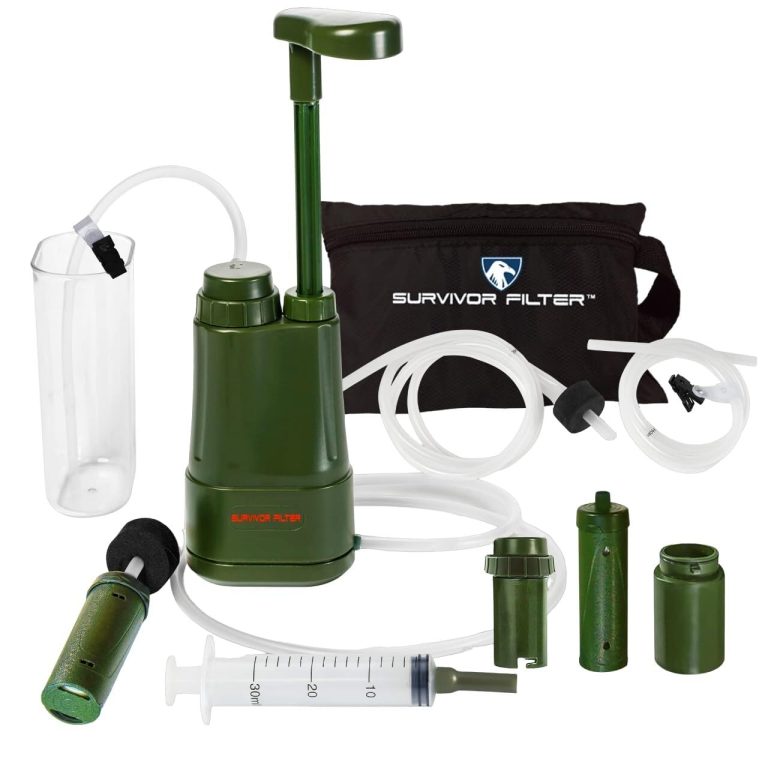
Fresh water
Fresh water tank capacity on most rigs ranges from 30 gallons (small trailers) to 100 gallons (larger Class A motorhomes). Average daily usage for a couple – with showers – runs 20–30 gallons. That means a 60-gallon tank gives you two to three days without a refill. On a route where hookup sites alternate with dry camping nights, you need to know whether you’ll run short before the next water connection. Calculate it stop by stop before you leave.
Power
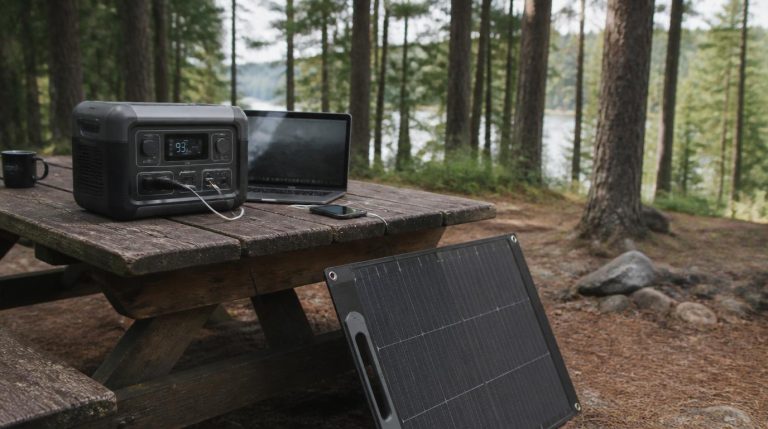
For boondocking and off-grid camping, the math on battery capacity, solar input, and daily load matters a great deal – see the off-grid section of our RV Accessories guide for a more detailed treatment. For campground users on 30-amp service, the practical constraint is appliance load competition: running the AC, microwave, and electric water heater simultaneously will trip the breaker. Full-hookup campers on 50-amp service have enough headroom that power planning is largely a non-issue.
Dump stations
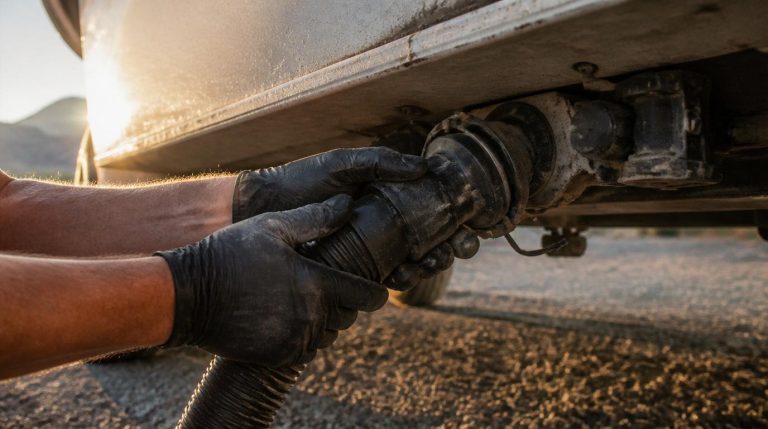
Not every campsite includes sewer hookup – and even when it does, black tank capacity can become a constraint on longer stays. Average black tank capacity runs 30–50 gallons. At typical usage, that’s 4–7 days before a dump is necessary. For stops without sewer hookup, find dump stations en route in advance using Campendium, Sanidumps.com, or the RVLife platform’s integrated dump station database. Waiting until the tank is full to find a dump station is a stress variable worth eliminating.
Propane
Propane usage varies significantly by season and use case. Cooking and water heating are relatively steady draws, but heating in cold weather – particularly in shoulder-season camping at elevation – can accelerate propane consumption significantly. Absorption refrigerators also run on propane when shore power isn’t available. A two-week trip in September that crosses mountain passes at night will burn through propane much faster than the same trip in July at sea level. Plan refill stops, don’t assume.
Resource planning should map against the hookup situation at every specific stop – not averaged across the trip. One dry camping night in a five-day stretch with full hookups changes the math entirely.
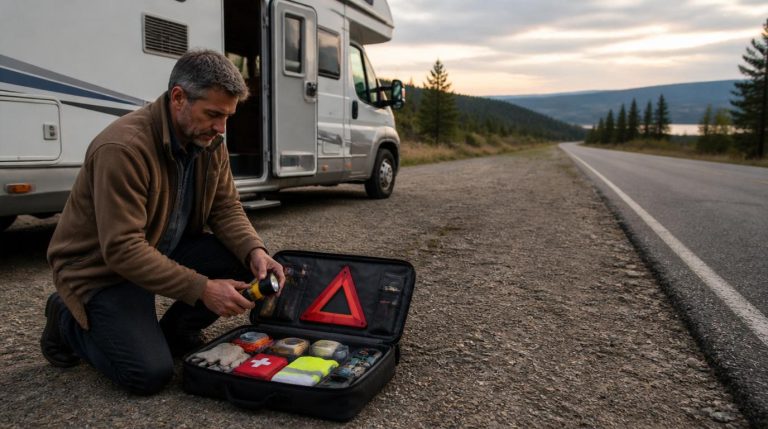
Pre-trip mechanical checklist
This isn’t a maintenance guide – just the pre-departure checks most likely to cause a problem if skipped.
- Tires: Pressure and condition on all tires, including spares and trailer tires. Cold inflation pressure matters – check before pulling out.
- Roof and slide seals: Visual inspection for cracks or gaps. A failed seal on the road means water damage accumulating while you drive.
- Battery state of charge: House batteries and chassis battery (motorhomes). Low battery state at departure compounds on a trip with limited shore power.
- Propane levels: Fill before departure if you’re going into cold weather or an area with limited propane access.
- Fluid levels (motorhomes): Engine oil, coolant, transmission fluid, brake fluid, windshield fluid. A motorhome chassis is a working truck engine.
- Brake controller calibration (trailers): Verify gain setting against trailer weight and test trailer brake response before getting on a highway.
For a complete maintenance schedule and cost breakdown, see our RV Maintenance Guide.
Trip planning tools worth using
Recreation.gov is non-negotiable if national parks are on the itinerary. There is no alternative booking path for federal campgrounds – and understanding the reservation window structure (see Section 4) is the difference between getting into Yosemite Valley and being turned away at the gate.
Route-specific weather matters more for RVs than for cars. Crosswinds above 30–40 mph make a tall Class A genuinely difficult to control on open highway. Mountain pass conditions determine whether a planned route is passable. Heat spikes affect tire pressure and increase AC load to the point where it can stress older systems. Using a weather app that shows forecasts along your route – not just at your destination – is worth building into your pre-departure routine.
RV-specific trip planning platforms are a distinct category from general navigation apps. They’re built around rig dimensions, integrate campground databases with site-specific information, and in some cases track service records and maintenance schedules. We compared the two leading platforms in detail – see the full RV Trip Planner comparison →.
If you only remember this
- Route first, destination second. Know your rig’s height, weight, and CCC before you map a single mile. These aren’t fine-tuning details – they determine what routes are actually available to you.
- Book early and verify site fit. The reservation window problem is a planning problem. Popular national parks require 6-month lead times. Site length, width, and hookup type all need to match your rig before you confirm.
- Resource planning is not optional. Map your power, water, and dump station needs against each specific stop – not just the trip averages. One dry camping night changes the math for the whole segment.