💡 Key Recommendation
Check your propane regulator vents for wasp nests every 30 days during camping season
Why This Matters
RV propane regulators contain essential vent holes that serve as critical safety features, allowing excess pressure to escape and preventing dangerous buildup within your propane system. These quarter-inch diameter vent holes are unfortunately the perfect size for mud wasps to build their nests, effectively sealing off this crucial safety mechanism. When these vents become blocked, your propane system cannot release excess pressure as designed, creating a potentially catastrophic situation where pressure buildup could lead to regulator failure, gas leaks, or even explosions.
Mud wasp blockages are particularly insidious because they often go unnoticed until a dangerous situation develops. The wasps typically target these small, protected openings during warmer months when RVs may be stored or parked for extended periods. Installing proper vent covers creates a physical barrier that prevents wasps from accessing these critical safety vents while still allowing proper airflow and pressure release. This simple preventive measure can literally be the difference between safe propane operation and a life-threatening emergency, making it one of the most important safety modifications any RV owner can make.
📋 Industry Standards & Best Practices
The National Fire Protection Association (NFPA) 1192 standard for RV propane systems requires that regulator vent openings remain unobstructed at all times to ensure proper pressure relief function. The Recreational Vehicle Industry Association (RVIA) recommends that RV owners inspect propane regulator vents monthly and install protective covers specifically designed to prevent insect intrusion while maintaining adequate ventilation. These standards emphasize that any modification to regulator venting must not impede the flow of gases or compromise the safety relief function, which properly designed vent covers achieve by providing protection without restriction.
🎯 Product Recommendations
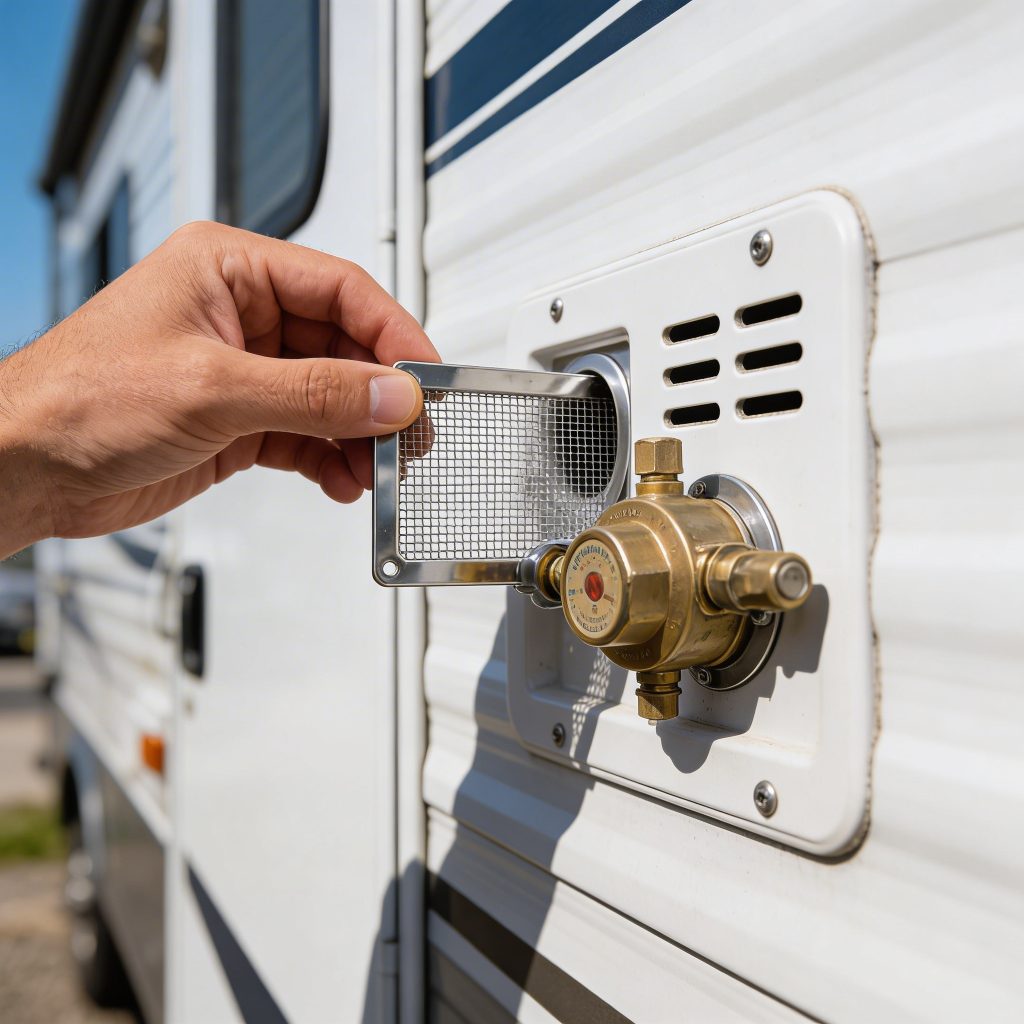
Install mesh-style vent covers with openings smaller than 3/16 inch to prevent mud wasp entry while ensuring unrestricted airflow through the regulator’s safety vents
Choose stainless steel or UV-resistant plastic vent covers that can withstand outdoor elements without degrading, cracking, or allowing gaps that wasps could exploit
Inspect and clean vent covers every 30 days during peak wasp season (spring through fall) to ensure no debris or partial nest construction is blocking the protective mesh
Complete Guide
Inspect your regulator monthly by visually examining the vent opening with a flashlight. Look for mud clumps, wasp activity, or debris blocking the hole. The vent should show clear passage to daylight when viewed from the opposite side. If you discover a blockage, never attempt to burn it out or use compressed air, which can damage internal regulator components.
For active nests, spray wasp killer into the opening at dusk when insects are dormant, wait 24 hours, then use a thin wire or pipe cleaner to carefully extract nest material. Work slowly to avoid pushing debris deeper into the mechanism. Some nests require regulator replacement if packed too tightly.
Preventive mesh covers solve this problem permanently. Install stainless steel mesh screens with 1/8-inch openings over each vent hole using marine-grade adhesive or small hose clamps. The mesh allows proper gas venting while excluding insects. Avoid plastic covers that can melt near heat sources or become brittle in cold weather.
Check covers seasonally for damage or debris accumulation. Spider webs and dust can gradually reduce airflow through mesh openings, requiring periodic cleaning with compressed air or soft brush. Replace damaged screens immediately rather than operating without protection.
Some RVers mistakenly cover vents completely during storage, thinking they’re protecting the system. This creates dangerous pressure situations when appliances are first used after storage. Proper vent covers allow continuous airflow while preventing pest intrusion.
Regulator vent blockages cause symptoms that mimic other propane problems: appliances that won’t light, yellow flames instead of blue, or gas smell without visible leaks. Before replacing expensive components, always check vent clearance first.
This simple $3 mesh cover installation takes five minutes but prevents potentially fatal gas accumulation scenarios. Combined with regular visual inspections, vent protection represents one of the most cost-effective safety improvements available to RV owners, yet remains unknown to most recreational vehicle users.
Step-by-Step Instructions
Step 1
Turn off propane at the tank valve and disconnect the regulator from your propane tank, then locate the small vent holes on the regulator body (typically 1-4 holes depending on your regulator model)
Step 2
Clean around each vent hole using compressed air or a soft brush to remove any existing debris, mud, or partial wasp nest material, ensuring the holes are completely clear before proceeding
Step 3
Position the vent cover over each hole according to manufacturer instructions, typically using the provided adhesive backing or small screws, ensuring the mesh sits flush against the regulator surface without gaps
Step 4
Reconnect the regulator to your propane tank, turn on the gas supply, and test all propane appliances to verify normal operation and proper gas flow, confirming the vent covers do not restrict system function
💰 Cost Analysis
Initial investment: $8–$24 for a complete set of regulator vent covers depending on your regulator model and cover material (basic plastic mesh covers cost $8–$12, while stainless steel versions run $18–$24)
Annual maintenance: Free if you perform monthly inspections yourself, or $25–$35 if you have an RV service center check them during routine maintenance
5 year projection: $18 average upfront cost + potential $30/year if professionally maintained = approximately $168 over 5 years (or just $18 total if self-maintained)
Cost per year: $3.60 per year if self-maintained, or approximately $33.60 per year if professionally inspected and maintained
🌍 Regional Considerations
Desert Southwest regions experience higher mud wasp activity from March through October, requiring more frequent vent cover inspections and potentially more robust stainless steel covers to withstand intense UV exposure
Humid southeastern states see year-round wasp activity with peak nesting in late spring, making vent covers absolutely essential and requiring covers with superior moisture resistance to prevent corrosion
Northern climates may experience wasp problems primarily from May through September, but should choose covers rated for temperature extremes to prevent cracking during freeze-thaw cycles
🔍 Common Misconceptions
Myth: Any type of screen or tape over the vent holes will work. Truth: Only properly designed vent covers with specific mesh sizes and airflow characteristics should be used, as improvised covers can restrict necessary pressure relief and create safety hazards.
False belief: Vent covers will reduce propane system performance or efficiency. Reality: Properly installed regulator vent covers have no impact on normal propane flow or appliance operation since they only protect the safety vent holes, not the main gas pathway.
Misconception: Mud wasp blockages are just a minor inconvenience that affect appliance performance. Truth: Blocked regulator vents create serious safety hazards by preventing proper pressure relief, potentially leading to dangerous pressure buildup and system failure.
📊 Comparison Analysis
🔧 Tools & Equipment
Phillips head screwdriver (if installing screw-mount covers)
Compressed air canister or soft brush for cleaning existing debris from regulator vents
⏱️ Time & Cost Summary
Estimated Time: 15–30 minutes total for cleaning regulator vents and installing covers on a typical dual-stage regulator system
Estimated Cost: $8–$24 for vent covers plus 15–30 minutes of installation time
📅 Maintenance Schedule
⚠️ Safety Considerations
FAQ
Why do mud wasps target RV propane regulator vents specifically?
What are the warning signs that mud wasps have blocked my RV propane regulator vent?
How dangerous is the pressure buildup caused by mud wasp blockages in propane regulator vents?
What tools do I need to install RV propane regulator vent covers?
How do I choose the right vent cover for my specific RV propane regulator?
Can I install propane regulator vent covers myself, or do I need a professional?
Do propane regulator vent covers affect the regulator’s performance or ventilation?
How often should I inspect my RV propane regulator vent covers for mud wasp activity?
What’s the step-by-step process for installing RV propane regulator vent covers?
Are there different types of RV propane regulator vent covers available?
What should I do if I find mud wasp nests already blocking my propane regulator vent?
How much do RV propane regulator vent covers typically cost?
Do vent covers work against other insects besides mud wasps?
Can weather damage my propane regulator vent covers?
What maintenance is required for RV propane regulator vent covers?
👨💼 Expert Insights
RV propane technician with 20+ years experience: ‘I’ve seen too many dangerous situations caused by something as simple as a mud wasp nest. A $12 vent cover can prevent thousands in damage and potentially save lives.’
Certified RV inspector: ‘Blocked regulator vents are one of the most common and dangerous propane issues I encounter during inspections. Every RV owner should install vent covers as basic safety equipment.’
Full-time RVer with 15 years on the road: ‘After dealing with wasp-blocked vents twice in Arizona, I installed stainless covers on all my regulators. Haven’t had a single problem in five years since.’
📚 Related Topics
- Monthly propane system safety inspections and regulator maintenance procedures
- Identifying and removing existing mud wasp nests from propane equipment safely
- Recognizing signs of propane pressure problems caused by blocked regulator vents